
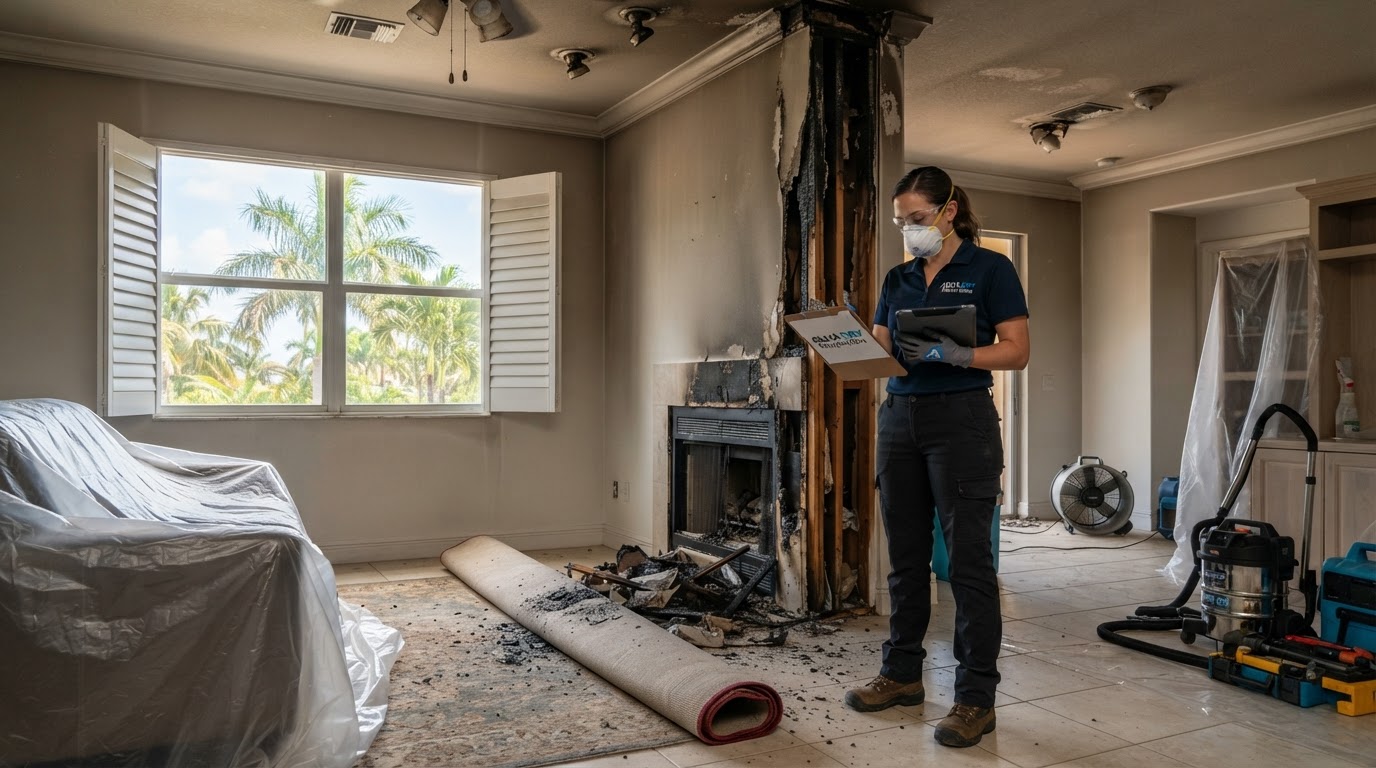
Fire Damage Restoration & Cleanup Port Charlotte
Fire damage restoration coordinates cleanup and recovery after a property fire — addressing burned materials, smoke and soot that travel far beyond the flames, persistent odors, and the water damage from firefighting suppression. In Port Charlotte and throughout Charlotte County, FL, explore professional assessment, residue removal, odor treatment, and structural restoration for residential and commercial properties.
Request Restoration Help
Tell us about the property damage and the location. Submit your inquiry so the appropriate next steps can be discussed.
Fire Damage Restoration Services in Port Charlotte
Fire damage restoration is the full coordination of cleanup and recovery after a property fire, and it almost always involves more than the visibly charred area. A fire leaves behind burned building materials, smoke and soot that travel through rooms and ventilation paths far from where the flames were, persistent odors absorbed into porous surfaces, and water damage from the firefighting suppression efforts used to put the fire out. A credible restoration plan addresses each of these as a related scope of work, not as isolated problems.
Smoke moves with heat and air currents, so residue can deposit in rooms that the fire never reached — behind closed doors, inside cabinets, in closet interiors, and across an entire HVAC distribution system. Soot characteristics also vary with what burned: a protein or kitchen fire leaves a greasy, hard-to-clean residue, while a fast, hot fire may leave a dry powdery soot. Identifying the residue type is part of determining the right cleaning approach, because the wrong method can smear and embed soot permanently into a finish.
Water from firefighting is an often-overlooked part of fire damage. Sprinkler discharge, hose lines, and the burst pipes that sometimes follow heat exposure can leave hundreds of gallons of water in a structure, creating the same moisture and mold concerns as any water damage event. Comprehensive fire restoration coordinates water extraction and structural drying alongside the smoke, soot, and odor work.
Signs of Fire, Smoke & Structural Damage
Fire damage is rarely limited to what you can see at first glance. These indicators suggest the fire's effects may extend well beyond the obviously charred area:
How Professional Fire Damage Restoration Works
Fire restoration proceeds in a defined sequence, beginning with safety and ending with reconstruction. The first priority is confirming the property is safe to enter — reentry should occur only when authorized by the responsible fire officials and the building has been determined safe for access. A fire-damaged structure can hide electrical hazards, weakened framing, and contaminated air, so professional assessment precedes any cleanup activity.
Once the site is cleared, the scope is documented for the property owner and insurer. Damage documentation, temporary protection such as board-up when needed, and an initial structural evaluation establish the foundation for the rest of the project. Smoke and soot residue removal is then performed using methods matched to the residue type and the surface material, with contaminated materials evaluated for salvageability versus removal.
Because most fires also involve water, extraction and drying run alongside the smoke and odor work. Odor source management addresses the porous materials that have absorbed smoke compounds, rather than masking them with fragrance. Finally, contents are evaluated, and reconstruction and finishing considerations — drywall, flooring, cabinetry, paint — bring the property toward its pre-loss condition.
1. Site Safety Assessment
Confirm reentry is authorized and the structure is safe, identifying electrical, structural, and contamination hazards before any work begins.
2. Damage Documentation
Photograph and document the full scope of fire, smoke, soot, and water damage for the property owner and insurance purposes.
3. Structural Evaluation
Assess building materials, framing, roofing, and assemblies for heat and fire damage; coordinate specialized structural evaluation where needed.
4. Temporary Protection
Apply board-up, roof tarping, or other temporary protection to secure the property against further weather or access exposure.
5. Smoke & Soot Removal
Remove residue using methods matched to the soot type and surface, from dry cleaning sponges to specialized wet cleaning of salvageable materials.
6. Water Extraction & Drying
Extract firefighting water and dry affected materials with structural drying equipment, preventing secondary moisture and mold damage.
7. Odor Source Management
Address porous materials that have absorbed smoke compounds using appropriate deodorization methods, rather than masking with fragrance.
8. Contents & Reconstruction
Evaluate and restore salvageable contents, then plan and complete drywall, flooring, and finish reconstruction toward pre-loss condition.
Fire Damage Restoration Near Port Charlotte Homes & Businesses
Fire damage in Port Charlotte and Charlotte County ranges from contained kitchen fires in residential homes to larger incidents affecting commercial properties. Because many area homes are seasonal residences, fire damage is sometimes discovered only after an extended absence — which means smoke residue and suppression water may have sat for days or weeks, deepening the contamination and the moisture exposure. The longer smoke and water remain in a structure, the more difficult and costly the restoration becomes, which is why prompt assessment matters.
Kitchen fires are among the most common residential fire events, and their greasy soot requires different cleaning than the dry soot of a fast, hot fire. Electrical fires can leave concealed damage inside wall cavities, and lightning-related fires can combine fire, electrical surge, and roof damage in a single incident. Each scenario calls for a restoration plan matched to its specific conditions rather than a one-size-fits-all approach.
Commercial building fires add the complexity of business interruption, contents and inventory, and larger HVAC systems that may have distributed smoke throughout the structure. The restoration plan for a commercial property must account for scope, documentation, and the coordination of multiple qualified professionals — including licensed electrical and structural evaluation where the building systems are involved.
Related Water Restoration Services
These related services often appear alongside fire damage restoration in Port Charlotte properties.
Fire Damage Restoration FAQs for Charlotte County
Clear answers to the questions property owners most often ask about fire damage restoration in Port Charlotte. Review them, then share your property details so the appropriate next steps can be discussed.
Request Fire Damage Restoration Help
Tell us about the property damage and the location. Submit your inquiry so the appropriate next steps can be discussed.