
Emergency Water Extraction & Removal Port Charlotte
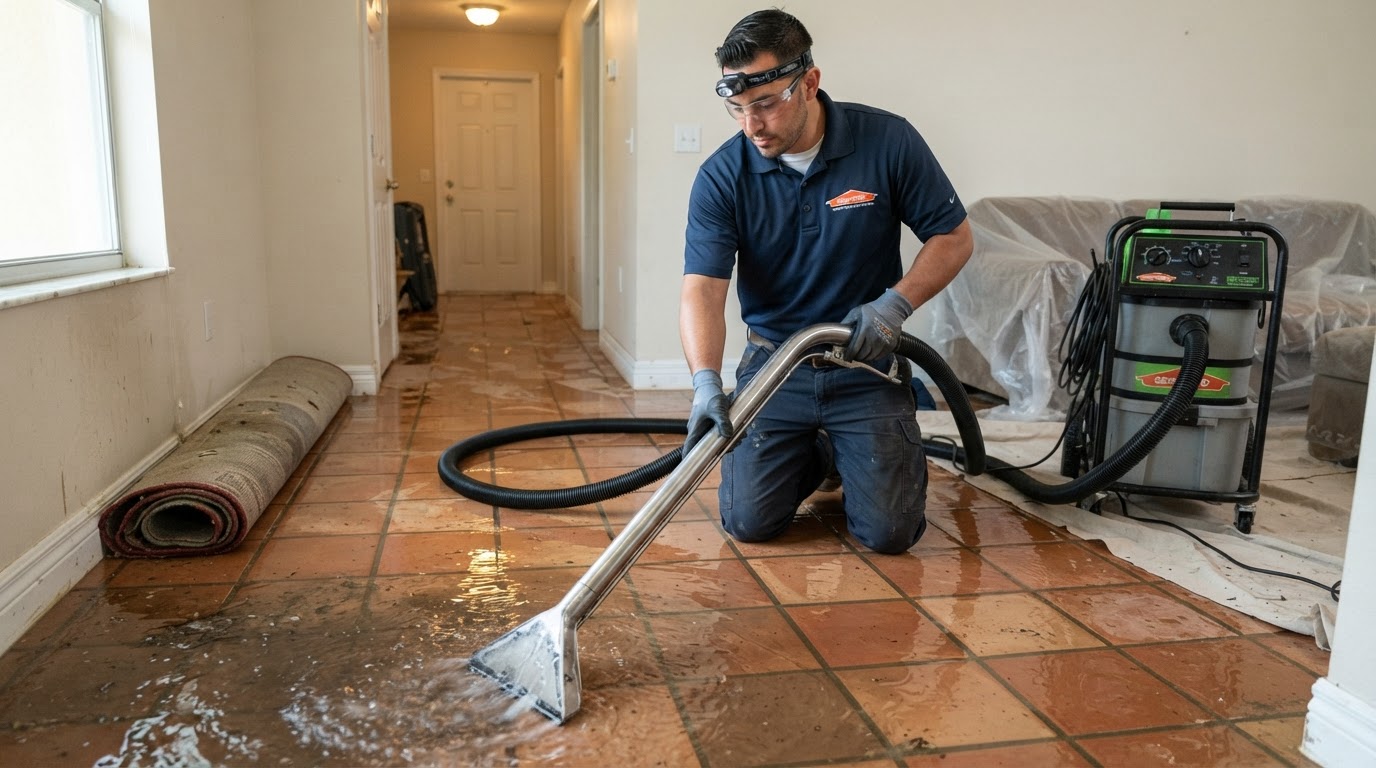
Emergency water extraction is the focused first-response step of removing standing and pooling water from inside a Port Charlotte property after a supply-line failure, appliance overflow, or stormwater breach. Explore how extraction is approached — safety assessment, source control, contamination classification, pump and vacuum removal — and why removing standing water is only the beginning of complete restoration.
Request Restoration Help
Tell us about the property damage and the location. Submit your inquiry so the appropriate next steps can be discussed.
Standing Water Removal Services in Port Charlotte
Emergency water extraction is the focused first-response step of removing standing or pooling water from inside a building. When a supply line bursts, an appliance overflows, or stormwater breaches a threshold, water collects in the lowest points of the floor and migrates into every porous surface it touches. Extraction is about getting that accessible water out fast, because every hour it remains, it soaks deeper into carpet padding, subfloor assemblies, drywall, and cabinetry.
The right extraction approach depends on several factors at once: the depth of the water, its contamination category, whether electrical systems in the area are energized, how accessible the pooled water is, and the structural safety of the room. A shallow clean-water spill on tile may respond to a commercial wet vacuum, while a deeper flood across multiple rooms typically requires submersible extraction pumps and a planned sequence of removal.
It is important to understand what extraction is not. Removing standing water does not, on its own, dry the building. Wet subfloors, damp drywall, and saturated carpet padding hold moisture that continues to drive microbial growth and material damage until a separate structural drying process pulls it back out. Extraction is the essential first step, but it is only the beginning of complete restoration.
When Standing Water Requires Professional Attention
These conditions indicate that pooled water has moved beyond a mop-and-bucket cleanup and warrants professional extraction and assessment:
How Professional Water Extraction & Removal Works
Extraction follows a deliberate sequence that keeps safety at the front. The area is first assessed for electrical hazards and structural stability before anyone enters. The water source is controlled — a main shutoff, appliance valve, or fixture shutoff — so the loss is not continuing. The contamination category is identified because it determines both the extraction method and what can be salvaged downstream. Only then is water physically removed with the appropriate equipment.
After accessible water is out, the affected materials are evaluated. Carpet and padding may be lifted to release trapped water, and the assembly is transitioned into the structural drying phase with air movers and dehumidification. Moisture is monitored because a floor that looks dry on the surface can still hold significant water in the subfloor and underlayment below.
Safety Assessment
Confirm electrical safety, structural stability, and safe access before entering the affected area.
Source Control
Stop the ongoing water source so the loss is no longer accumulating.
Contamination ID
Classify the water category to determine handling, salvageability, and disposal requirements.
Extraction
Remove standing water with submersible pumps or vacuum extraction suited to the depth and material.
Material Evaluation
Lift carpet, inspect subfloors, and assess which assemblies can be dried versus removed.
Drying Handoff
Transition the structure to monitored structural drying with air movers and dehumidification.
Water Extraction for Homes Near Port Charlotte & Charlotte County
In Port Charlotte and across Charlotte County, the calls for emergency water extraction come from a few recurring scenarios: a failed supply line in an occupied home, a leaking water heater in a garage utility closet, an AC condensate overflow into ceiling drywall, and storm-driven water through a compromised door or window. Each source carries a different contamination profile, and clean plumbing water, grey water from appliances, and Category 3 floodwater are not handled the same way.
Seasonal residences add another layer. A burst supply line discovered after the owner returns from months away can mean water has been pooling and migrating for an extended period, which changes both the extraction effort and the downstream drying scope. Fast removal of standing water is what limits how far that damage spreads.
Related Water Restoration Services
These related services often appear alongside emergency water extraction in Port Charlotte properties.
Emergency Water Extraction FAQs
Clear answers to the questions property owners most often ask about emergency water extraction in Port Charlotte. Review them, then share your property details so the appropriate next steps can be discussed.
Request Water Extraction Help
Tell us about the property damage and the location. Submit your inquiry so the appropriate next steps can be discussed.