Water Damage Restoration & Cleanup Port Charlotte
Water damage restoration returns a water-affected Port Charlotte property to a safe, dry, and stable condition after a plumbing failure, appliance leak, roof intrusion, or flood event. Explore the complete restoration process — source identification, water extraction, structural drying, and repair planning — for homes and businesses throughout Charlotte County.
Request Restoration Help
Tell us about the property damage and the location. Submit your inquiry so the appropriate next steps can be discussed.
Water Damage Restoration Services in Port Charlotte
Water damage restoration is the complete process of returning a water-affected property to a safe, dry, and stable condition after a plumbing failure, appliance leak, roof intrusion, or flood event. In Port Charlotte, where concrete block homes sit on monolithic slabs and seasonal residences can sit unoccupied for months, water damage often travels well beyond the visible puddle. Moisture migrates behind baseboards, wicks upward through drywall gypsum, soaks into carpet padding, and saturates subfloor assemblies long before it appears on the surface.
A thorough restoration begins with accurate source identification and a contamination assessment, then moves through water extraction, structural drying, material cleaning, and finally restoration planning for any building materials that cannot be saved. Emergency mitigation — the rapid work of removing water and stabilizing the structure — is distinct from final repairs such as drywall replacement, flooring installation, and trim finish. Both phases matter, and skipping the drying phase to move directly into reconstruction is one of the most common causes of recurring mold and hidden rot in Southwest Florida homes.
Because water behaves differently depending on its source, a restoration plan for a clean supply-line leak is not the same as the plan for a sewage backup or a storm-surge event. Understanding the category of water, the materials affected, and how moisture is moving through the assembly is what separates genuine restoration from simple water removal.
Signs Your Property Needs Professional Water Damage Cleanup
Surface appearance is not a reliable measure of whether a structure is dry. These are the indicators that warrant a professional moisture assessment:
How Water Damage Cleanup & Structural Drying Works
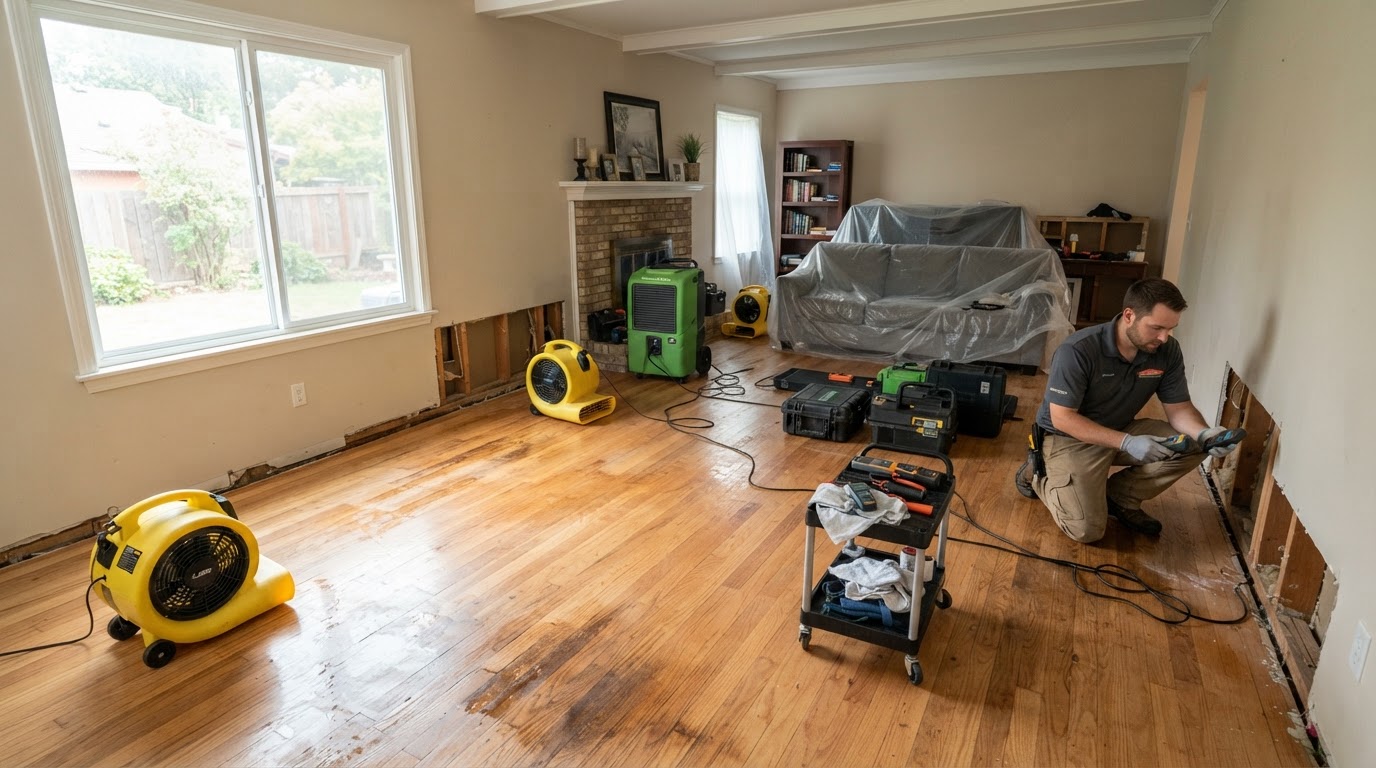
Restoration follows a logical sequence that prioritizes safety first, water removal second, and thorough drying before any reconstruction. A qualified provider assesses the category of water, the extent of migration, and the building materials involved before selecting equipment and methods. Equipment categories — submersible extractors, commercial air movers, LGR or desiccant dehumidifiers, and HEPA air scrubbers — are tools a qualified provider may deploy depending on conditions, not a guaranteed equipment list for every job.
Drying is monitored over multiple visits using moisture meters and thermal imaging rather than assumed complete once the floor looks dry. Materials are evaluated for salvageability versus replacement, and the full scope is documented for the property owner and, where applicable, their insurer.
Damage Assessment
Identify the water source, contamination category, and the full extent of visible and hidden moisture migration.
Water Extraction
Remove standing water and accessible moisture from flooring, carpet, and affected assemblies.
Moisture Mapping
Document the drying plan with meter readings and thermal imaging to establish a verifiable baseline.
Structural Drying
Operate air movers and dehumidification to pull trapped moisture out of framing, drywall, and subfloors.
Material Evaluation
Determine which materials can be dried in place and which require removal and replacement.
Restoration Planning
Scope and schedule the final repair, rebuild, and finish work needed to return the property to pre-loss condition.
Water Damage Restoration for Port Charlotte Homes & Businesses
Port Charlotte's combination of high ambient humidity, slab-on-grade construction, and a large share of seasonal and snowbird residences makes water damage particularly time-sensitive. When a supply line fails in an occupied home, the owner usually discovers it quickly. When the same failure happens in a vacant seasonal property, water can run for days, saturating drywall, flooring, and cabinetry before anyone arrives — which is why delayed-discovery water losses are so common along the canal-front and 55+ communities of Charlotte County.
Florida humidity also slows natural drying. A structure that would dry out on its own in an arid climate can hold moisture in wall cavities and subfloor assemblies for weeks here, raising the risk of microbial growth. A methodical drying plan with daily monitoring is what protects the building materials and the owner's repair investment.
Related Water Restoration Services
These related services often appear alongside water damage restoration in Port Charlotte properties.
Water Damage Restoration FAQs for Port Charlotte Property Owners
Clear answers to the questions property owners most often ask about water damage restoration in Port Charlotte. Review them, then share your property details so the appropriate next steps can be discussed.
Request Water Damage Help
Tell us about the property damage and the location. Submit your inquiry so the appropriate next steps can be discussed.