
Structural Drying & Dehumidification Port Charlotte
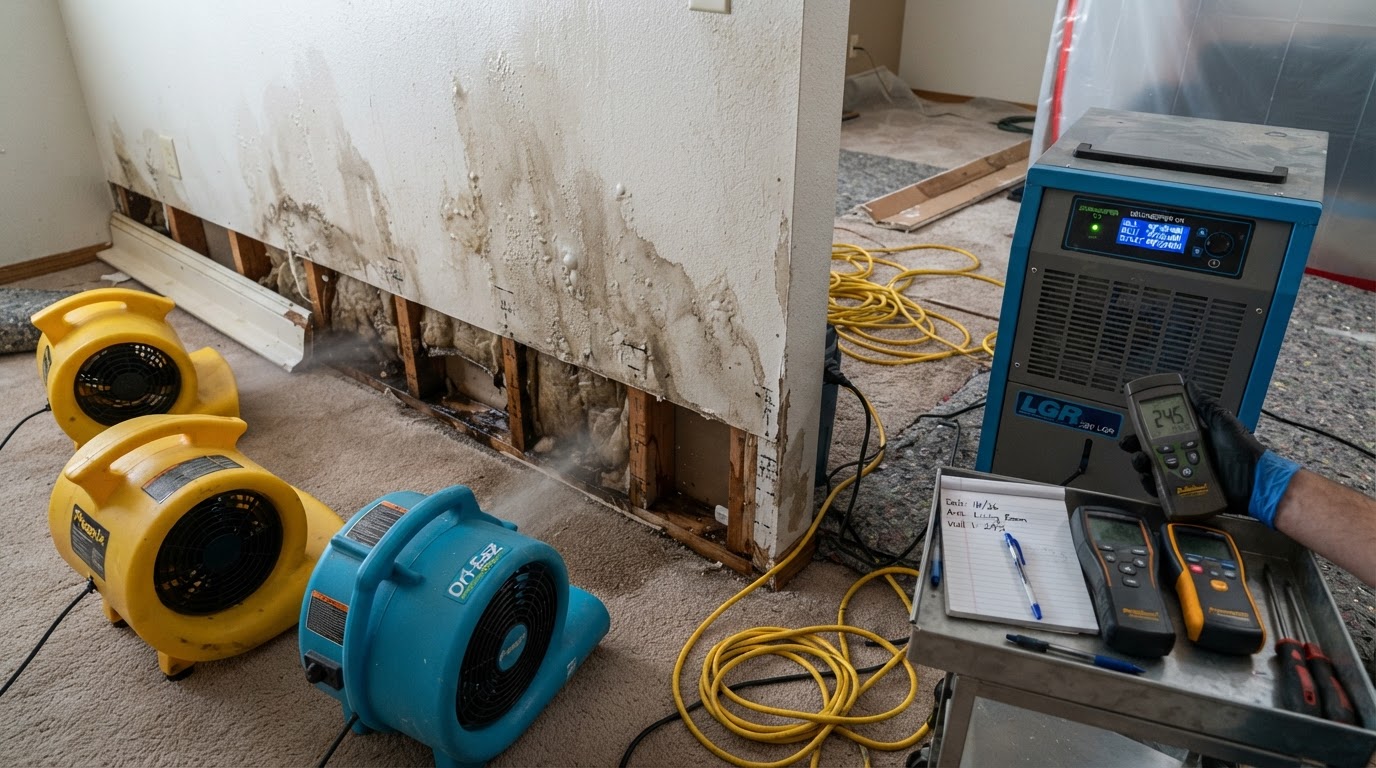
Structural drying and dehumidification is the science of pulling trapped moisture back out of building materials after standing water has been removed — the step that separates a complete restoration from a surface cleanup. Explore how moisture mapping, controlled air movement, dehumidification, and verified monitoring return water-damaged framing, drywall, subflooring, and cabinetry in Port Charlotte properties to a safe, dry standard.
Request Restoration Help
Tell us about the property damage and the location. Submit your inquiry so the appropriate next steps can be discussed.
Professional Structural Drying for Water-Damaged Buildings
Structural drying is the science of pulling trapped moisture back out of building materials after standing water has been removed. It is the step that separates a complete restoration from a surface cleanup. Once water is extracted, the assemblies that absorbed it — wood framing, subflooring, drywall, insulation, cabinetry — remain wet and continue to release that moisture into the surrounding air. Without controlled drying, that moisture stays in the building, especially in Florida's naturally humid environment where evaporation is slow.
Drying works by balancing three variables: air movement across wet surfaces to drive evaporation, dehumidification to remove that moisture from the air so it does not redeposit, and temperature control, because warmer air holds more moisture. The right combination depends on the materials involved, the category of water, how saturated the assembly is, and the ambient conditions. A concrete block wall saturated by a slab leak dries on a very different timeline than drywall dampened by a clean supply-line leak.
What makes structural drying different from simply removing water is that the moisture is no longer visible and no longer free-flowing. It is bound inside the pores and fibers of the building. Finding it requires moisture meters and thermal imaging; removing it requires sustained, monitored airflow and dehumidification over multiple days, verified by readings rather than by appearance.
Signs Your Home May Need Structural Drying
These indicators suggest trapped moisture may still be present even after the visible water is gone, and a moisture assessment is warranted:
How Structural Drying & Dehumidification Works
Drying begins with a moisture map — a documented baseline of where water has traveled and how wet each material is, measured with meters and thermal imaging rather than estimated. From that baseline, a drying plan is set: air movers positioned to create evaporation across wet surfaces, dehumidifiers sized to the space to pull that moisture out of the air, and temperature managed to support evaporation. Hygrometric measurements track humidity and temperature so the drying rate can be confirmed rather than assumed.
Progress is monitored across multiple visits. Readings are compared against the baseline and against dry-standard targets for each material. Drying duration is never a fixed number; it depends on the water category, the materials, the extent of saturation, the building conditions, and the ambient humidity. Some assemblies dry in a few days; a saturated concrete block wall or a whole-home seasonal loss can take considerably longer. The completion standard is verified moisture content, not a calendar.
Moisture Mapping
Document a baseline of wet areas and material saturation using meters and thermal imaging.
Drying Plan
Position air movers and dehumidifiers sized to the space and the materials involved.
Air Movement
Drive evaporation from wet surfaces and assemblies with controlled airflow.
Dehumidification
Remove evaporated moisture from the air so it cannot redeposit elsewhere.
Monitoring
Track hygrometric readings across visits and compare against the baseline and dry standards.
Verification
Confirm dried-to-target moisture content before clearing the assembly for reconstruction.
Structural Drying Considerations Near Port Charlotte
Southwest Florida's ambient humidity is the central challenge for structural drying here. In a dry climate, wet assemblies give up moisture readily to the air; in humid Florida air, natural evaporation is slow and the same humid air can redeposit moisture onto cooler interior surfaces. That is why dehumidification — not airflow alone — is essential to completing a drying plan in this market, and why a structure that 'feels dry' can still hold significant moisture in the subfloor or wall cavity.
Local construction adds its own variables. Concrete block walls exposed to a slab or exterior leak release moisture slowly from their cores, so block assemblies can need longer drying than frame walls. Tile over a moisture-sensitive underlayment, vinyl, and laminate each interact with subfloor moisture differently and dry at different rates. Not every concrete block wall or flooring system behaves identically, which is why drying is driven by measured readings, not assumptions about construction type. Seasonal residences, where a loss can sit undiscovered, tend to present the longest drying timelines of all.
Related Water Restoration Services
These related services often appear alongside structural drying & dehumidification in Port Charlotte properties.
Structural Drying & Dehumidification FAQs
Clear answers to the questions property owners most often ask about structural drying & dehumidification in Port Charlotte. Review them, then share your property details so the appropriate next steps can be discussed.
Request Structural Drying Help
Tell us about the property damage and the location. Submit your inquiry so the appropriate next steps can be discussed.