
Contents Cleaning & Pack-Out Port Charlotte
Contents cleaning and pack-out handles the furniture, household belongings, electronics, and business property affected by fire, smoke, water, or storm damage — separate from the structural restoration. Each item is evaluated individually for salvageability based on its material and exposure. In Port Charlotte, FL, explore inventory documentation, careful packing, cleaning methods, and restoration options throughout Charlotte County.
Request Restoration Help
Tell us about the property damage and the location. Submit your inquiry so the appropriate next steps can be discussed.
Contents Cleaning & Property Pack-Out Services in Port Charlotte
Contents cleaning and pack-out is the work of handling the furniture, household belongings, electronics, and business property affected by fire, smoke, water, or storm damage — separate from the structural restoration of the building itself. While the structure is being cleaned and repaired, the contents require their own evaluation, documentation, and restoration. Not every damaged belonging can be saved, and the determination of salvageability depends on the material, the type of exposure, the contamination, and the condition of the item.
Contents damage differs from structural damage in important ways. A wall can be dried, cleaned, or replaced as a single assembly. A household's contents are dozens or hundreds of individual items, each with its own material, exposure, and restoration potential. Soot contamination, smoke odor, water saturation, and mold-related moisture each affect different materials differently, and the cleaning method is matched to the specific item. The contents scope is itemized, not generalized.
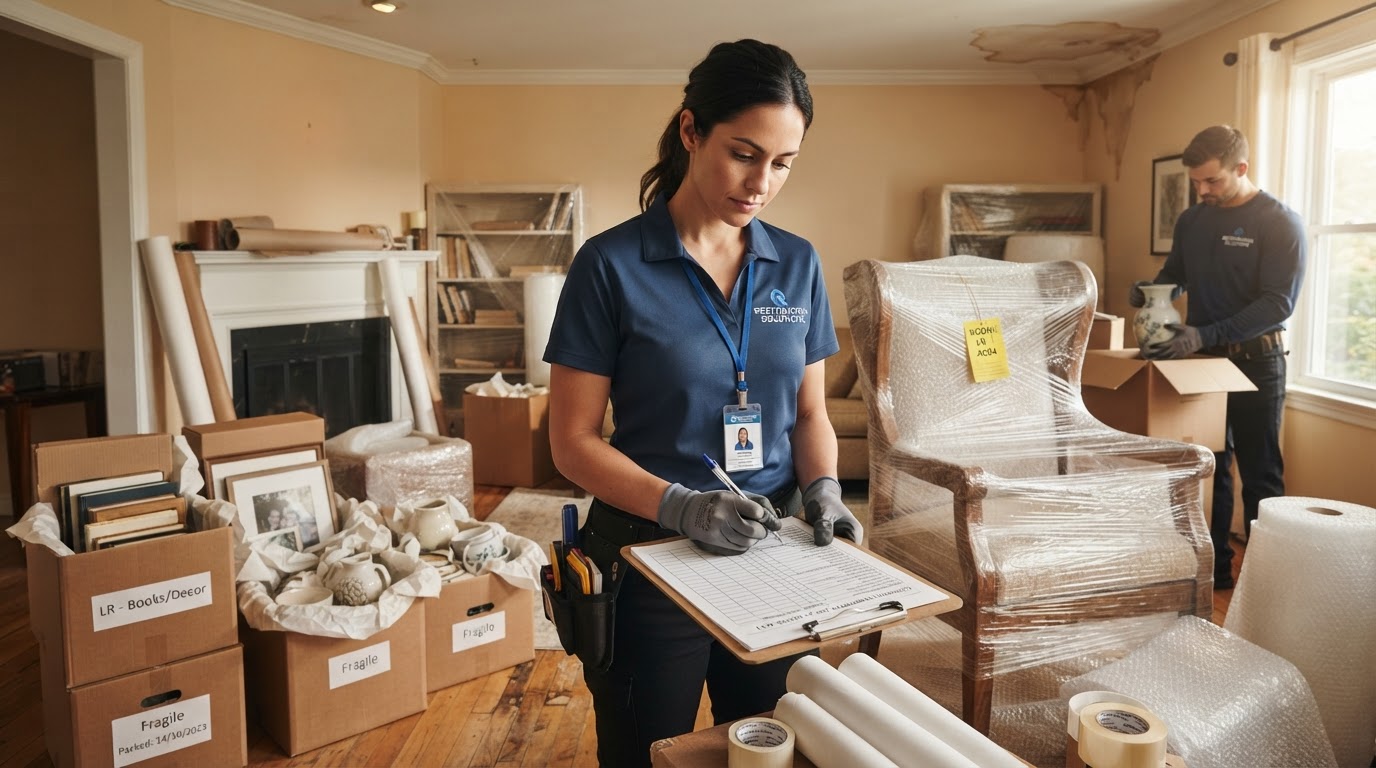
The pack-out process is the organized removal, inventory, and handling of belongings from a damaged property. It involves photographing and documenting each item, packing it carefully, separating items based on their contamination or damage, and evaluating cleaning and restoration methods. The goal is to preserve and restore what can be saved, document what cannot, and protect the belongings while the structural restoration proceeds. Chain-of-custody documentation matters, because the contents record supports both the restoration and any insurance claim.
When Fire- or Water-Damaged Belongings Need Professional Evaluation
Contents damage is assessed item by item, because the restoration potential varies with the material and the exposure. These conditions indicate professional evaluation is appropriate:
How Contents Pack-Out, Inventory & Restoration Works
The contents process begins with an initial assessment of what is in the property and what has been affected. Each item is photographed and documented, and an inventory is prepared that identifies and labels the belongings. This documentation is the foundation for both the restoration and any insurance claim, so it is performed carefully and completely before items are moved or discarded. Items are separated based on their contamination or damage — salvageable, requiring cleaning, potentially unsalvageable, and contaminated.
Safe handling and packing protect the belongings during removal. Items are packed carefully, labeled, and tracked. Cleaning methods are evaluated for each item based on its material and exposure — what works for a solid wood table may not work for an upholstered chair or an electronic device. Restoration feasibility is assessed for each item, and the determination of what can be saved versus what cannot is documented. Where secure handling or storage arrangements are available, items are protected during the structural restoration.
The contents scope distinguishes pack-out, inventory, cleaning, specialty restoration, and pack-back. Not every item can or should be cleaned using the same method, and some items — sensitive documents, electronics, art, or specialty valuables — require appropriately qualified specialty resources. The restoration provider does not claim to restore every category of item; where specialty resources are needed, they are coordinated. When the structural restoration is complete, the cleaned and restored contents are returned and placed.
1. Initial Contents Assessment
Evaluate the belongings in the property and identify what has been affected by fire, smoke, water, or storm damage.
2. Photo Documentation
Photograph each item and the overall conditions before anything is moved, to support restoration and any insurance claim.
3. Inventory Preparation
Prepare a documented inventory that identifies and labels the belongings and their condition.
4. Item Identification & Labeling
Label each item clearly so it can be tracked through the cleaning, storage, and return process.
5. Safe Handling & Packing
Pack belongings carefully to protect them during removal, separating items by contamination or damage level.
6. Damage Separation
Separate items into salvageable, requiring cleaning, potentially unsalvageable, and contaminated categories.
7. Cleaning Method Evaluation
Evaluate the appropriate cleaning method for each item based on its material and the type of exposure.
8. Restoration & Return
Restore salvageable items, document what cannot be saved, and coordinate the return and placement when the structure is ready.
Contents Restoration for Port Charlotte Homes & Businesses
In Port Charlotte and Charlotte County, contents restoration follows fire, smoke, water, flood, and storm events in residential homes, condominiums, rental properties, and commercial buildings. A residential fire loss may involve furniture, clothing, electronics, and household belongings, each with different restoration potential. A flood or water event may saturate absorbent contents that cannot be saved, while solid, non-porous items may be cleanable. The contents scope is tailored to the event and the property.
Seasonal homes present a familiar concern: when damage is discovered after an extended absence, contents may have been exposed to soot, water, or mold for days or weeks, which reduces salvageability and increases the documentation burden. Condominium contents and commercial inventory add their own considerations — shared ventilation, neighboring-unit contamination, and business contents that may include inventory, documents, and equipment. The contents plan adapts to each property's conditions.
Documentation matters before items are moved or discarded, subject to safety and contamination requirements. Items that cannot be restored are documented for the property owner and insurer before disposal, and items that can be restored are tracked through the cleaning and return process. The contents record supports the full restoration and any insurance claim, which is why careful, complete documentation is the foundation of the pack-out.
Related Water Restoration Services
These related services often appear alongside contents cleaning & pack-out in Port Charlotte properties.
Contents Cleaning & Pack-Out FAQs
Clear answers to the questions property owners most often ask about contents cleaning & pack-out in Port Charlotte. Review them, then share your property details so the appropriate next steps can be discussed.
Request Contents Restoration Help
Tell us about the property damage and the location. Submit your inquiry so the appropriate next steps can be discussed.