About Port Charlotte Fire & Water Damage Restoration
Port Charlotte Fire & Water Damage Restoration is a locally focused restoration information and inquiry resource serving property owners researching water, fire, mold, flood, and storm damage services in the Port Charlotte area and across Charlotte County. Property damage can interrupt daily life, business operations, and property occupancy — and navigating restoration work starts with understanding the relevant categories, identifying useful next steps, and submitting an inquiry for appropriate assistance. This website exists to make that process clearer.
Helping Port Charlotte Property Owners Navigate Damage Restoration
The purpose of this website is to give property owners clear, practical information about restoration work before they commit to anything. Water, fire, mold, and storm damage are different problems that require different professional approaches, and the same event can span several of them at once. Understanding the source of damage, the building materials affected, the safety considerations, the moisture conditions, and the contamination concerns helps property owners make better decisions about what comes next.
Restoration also involves a distinction that matters to homeowners and business owners alike: mitigation — the immediate work that stops ongoing damage and stabilizes the property — is separate from reconstruction, the build-back phase that returns the property to its pre-loss condition. Knowing which phase a property is in, and when specialized professionals such as licensed mold assessors, roofing contractors, or plumbers may be required, helps avoid missed steps and recurring damage.
Clear Information During Property Damage
Clear, practical restoration information matters most when a property owner is under stress. This website avoids unsupported claims — it does not promise the fastest response, decades of experience, or guaranteed results without verifiable evidence. The goal is to explain what each restoration category involves, what the process generally looks like, and how to request assistance, so property owners can act with useful context rather than guesswork.
Restoration Based on Actual Property Conditions
Restoration needs depend on the cause, the extent, and the condition of the loss. No two water or fire damage situations are necessarily identical, and there is no universal cleanup method that works for every scenario. A clean-water plumbing leak, contaminated floodwater, a grease fire, and wind-driven rain each call for different materials, drying timelines, and professional qualifications.
Water, Fire, Mold & Storm Restoration Resources
This website organizes restoration information around four main categories. Each category connects to dedicated service pages that explain the specific work, the building materials involved, and the considerations that affect how a property is assessed and recovered.
Water Damage Restoration
Emergency water extraction, flood cleanup, structural drying, plumbing leak recovery, and wet drywall and flooring restoration.
Fire & Smoke Restoration
Soot removal, structural cleaning, smoke odor treatment, and contents recovery after kitchen, electrical, and lightning-related fires.
Mold Remediation & Moisture
Moisture source correction, suspected mold assessment, containment and removal, and remediation coordinated to address the underlying water problem.
Hurricane, Storm & Reconstruction
Wind-driven rain, roof leak water damage, stormwater intrusion, emergency property protection, and coordinated reconstruction and build-back.
Understanding the Property Restoration Process
The steps below describe the general experience a property owner may encounter when seeking professional restoration assistance — from the first inquiry through recovery planning. The actual scope, timeline, and provider arrangements depend on the specific loss and confirmed operational capabilities.
Identify the Property Damage
The property owner or representative describes the observed damage, the property type, and the location. Clear descriptions and relevant photographs, taken only when safe to do so, help frame the situation accurately.
Understand the Immediate Concerns
Safety, water source control, contamination category, and safe property access shape what should happen next. Entering an unsafe structure is never recommended — electrical, structural, and floodwater hazards take priority.
Request Appropriate Assistance
An inquiry can be reviewed and routed or responded to according to the actual operational arrangements in place. A qualified provider is not assigned, dispatched, or committed unless that step has been confirmed.
Property Damage Assessment
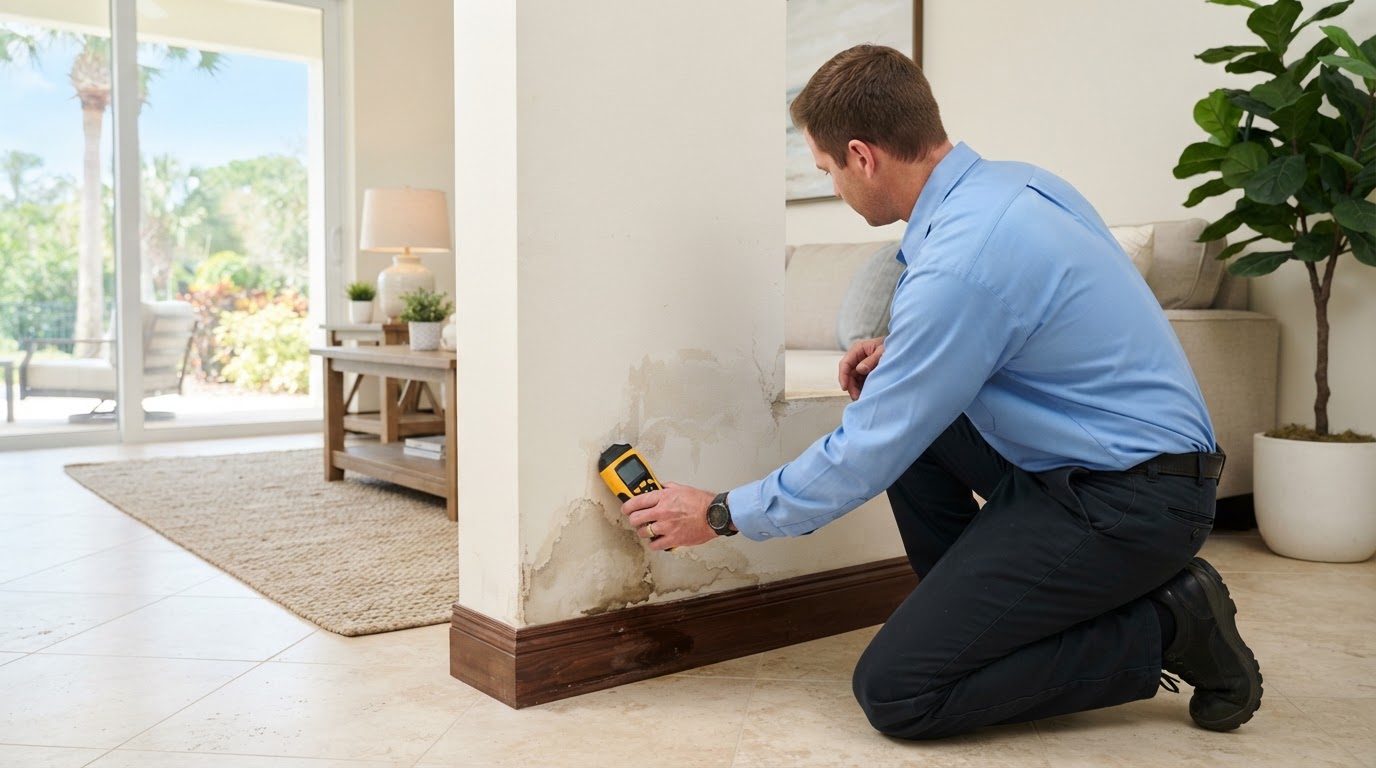
A qualified restoration provider may evaluate the property, the affected building materials, the moisture conditions, and the appropriate mitigation approach for the specific loss.
Restoration & Recovery Planning
The actual provider may discuss cleanup, structural drying, material restoration, reconstruction, and documentation requirements within the scope of their qualifications and applicable Florida standards.
Why Accurate Damage Documentation Matters
Accurate documentation supports both restoration planning and communication with an insurer. Useful records include photographs taken when safe, the discovery date, the known or suspected water source, moisture findings, mitigation records, damaged material descriptions, restoration invoices, and repair documentation. Organized records help communicate the known circumstances and the work performed — but they do not guarantee insurance approval, and this website does not provide public adjusting, coverage interpretation, or legal advice. Documentation is separate from claims advocacy.
Restoration Information for Port Charlotte & Southwest Florida
Port Charlotte is the primary market, and Charlotte County provides the surrounding regional context. Restoration concerns relevant to Southwest Florida include hurricane-related property damage, heavy rainfall, floodwater intrusion, plumbing failures, air-conditioning condensate moisture, seasonal residences, canal-front properties, roof and window water intrusion, residential flooring damage, and fire and smoke incidents. Not every home shares the same construction, elevation, or flood exposure — and this website treats each property and community on its own terms rather than assigning uniform risk.
The website connects to completed informational location pages across Charlotte, Sarasota, Lee, and DeSoto counties. Actual service coverage and logistics depend on verified provider arrangements, and the website does not claim separate business offices in each community. Selected communities include Punta Gorda, North Port, Englewood, Rotonda West, Babcock Ranch, Venice, Cape Coral, Fort Myers, and Arcadia.
Different Properties, Different Restoration Needs
Restoration priorities can differ considerably among property types — and the specialty pages address the scenarios that apply to each.
Explore Service Areas
Completed location pages across Charlotte, Sarasota, Lee, and DeSoto counties.
Explore Service AreasClear Restoration Information & Next Steps
This website provides restoration-related information and inquiry access. Actual assessment and service availability depend on verified provider arrangements. Different types of property damage require different responses, and some work requires appropriately licensed or qualified professionals — a Florida mold assessment, a roofing repair, or a plumbing correction each involve separate qualifications. Property owners should always prioritize safety, and restoration documentation is separate from insurance adjusting or legal advice. Inquiries should receive clear communication about the next steps that are actually available.
Tell us about the damage, the property location, and the type of assistance you are seeking. Your inquiry can be reviewed so the appropriate next steps are discussed — no dispatch or provider assignment is promised until confirmed.
Request Restoration HelpRequest Restoration Help
Tell us about the property damage and the location. Submit your inquiry so the appropriate next steps can be discussed.