
Burst Pipe Water Damage Restoration Port Charlotte
Burst pipe water damage restoration addresses the pressurized water a broken supply line releases into a Port Charlotte home — and the widespread migration that follows it across flooring, behind baseboards, and up drywall. Explore the cleanup sequence, from safe source shutoff and licensed plumbing repair coordination through extraction, moisture mapping, structural drying, and documentation for properties throughout Charlotte County.
Request Restoration Help
Tell us about the property damage and the location. Submit your inquiry so the appropriate next steps can be discussed.
Burst Pipe Water Damage Cleanup in Port Charlotte
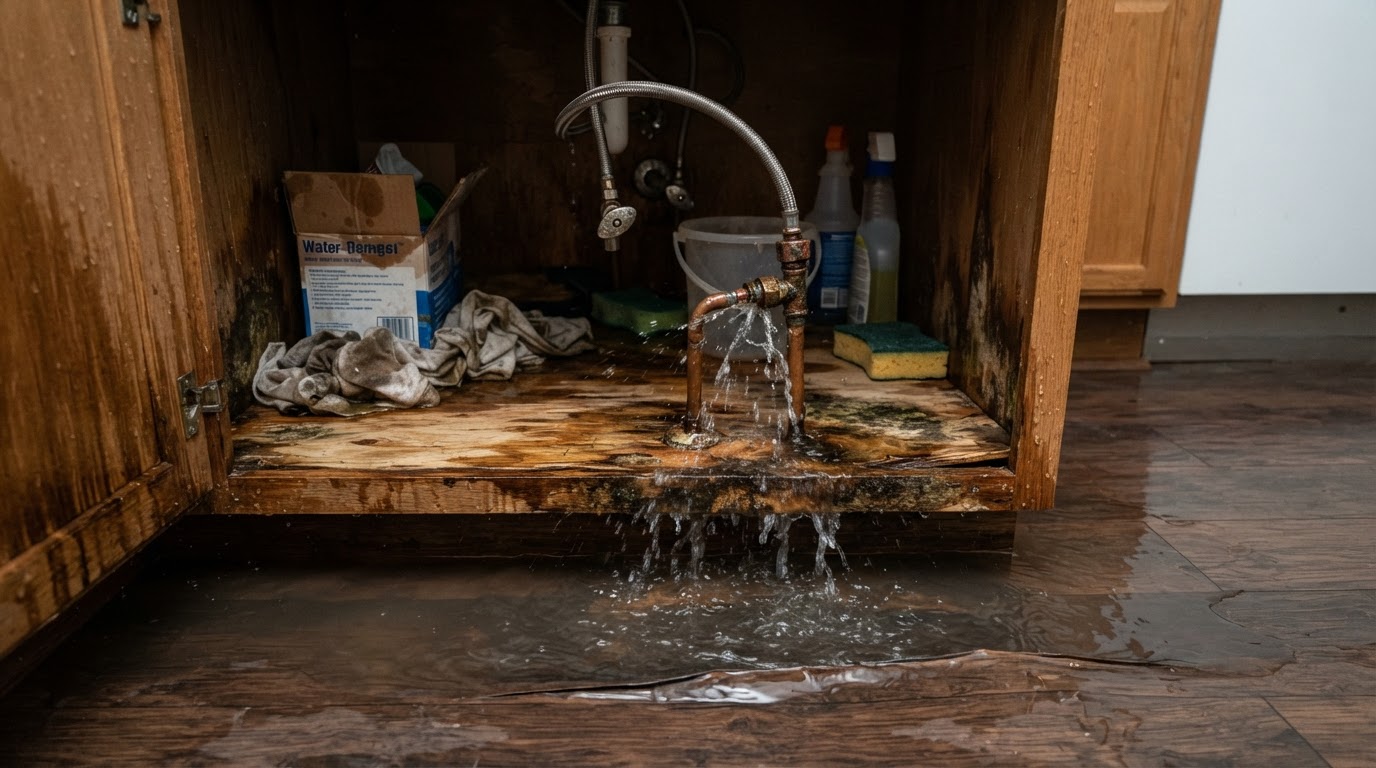
A burst supply line releases water under pressure, which means a broken plumbing line can move a large volume of water through a home in a short time. The water follows gravity into the lowest points, spreads across flooring, and migrates horizontally behind baseboards and vertically up drywall — affecting rooms well beyond where the failure occurred. A burst pipe under a kitchen sink can saturate the cabinetry, the subfloor, the drywall behind the stove, and the ceiling of the room below before the loss is even discovered.
In Port Charlotte, pipe failures are not dominated by freezing the way they are in colder climates. Florida plumbing failures more often trace to aging supply lines, corroded fittings, failed connections, pressure-related stress, or accidental damage during renovation. Older plumbing materials in some area homes carry their own failure modes. The cleanup conversation is therefore about the plumbing failure and the water it released — not about a seasonal freeze.
Because a burst supply line is pressurized, the first action is always to stop the source at the main shutoff. Restoration begins only after the water is stopped. From there the work is the same as any clean-water loss: assess the extent of migration, extract any standing water, map the moisture, dry the assemblies, and evaluate which materials can be saved versus replaced.
Signs of a Burst Pipe & Hidden Water Damage
A pressurized plumbing failure can produce both obvious and subtle signs. These warrant shutting off the water and scheduling an assessment:
How Burst Pipe Water Damage Restoration Works
The first step is always safe source control: shutting off the main water supply so the pressurized loss stops. Plumbing repair and restoration mitigation are separate scopes, and they may involve different qualified professionals — a water damage restoration provider mitigates the water damage, while a licensed plumber repairs the failed plumbing. It is important not to assume every restoration contractor is also a licensed plumber.
After the source is controlled, the restoration sequence proceeds: a damage assessment identifies the full extent of migration, water is extracted from any standing pools, moisture is mapped with meters and thermal imaging, and structural drying is set up and monitored. Affected materials are evaluated for drying in place versus removal, and the loss is documented — photos, moisture logs, and an itemized scope — to support any insurance process and the reconstruction plan that follows.
Safe Source Shutoff
Stop the pressurized water at the main shutoff so the loss is no longer accumulating.
Plumbing Repair Coordination
Engage a licensed plumber to repair the failed line; restoration addresses the resulting water damage.
Damage Assessment
Identify the full extent of visible and hidden water migration beyond the failure point.
Extraction & Moisture Mapping
Remove standing water and document the moisture baseline with meters and thermal imaging.
Structural Drying
Set up and monitor air movers and dehumidification until assemblies reach verified dry standard.
Documentation & Restoration
Document the loss for insurance and complete the repair and rebuild scope.
Broken Pipe Water Damage in Charlotte County Homes
Charlotte County housing includes a mix of vintages and plumbing materials, and burst-pipe losses here reflect that. Older supply lines and fittings can fail from corrosion or material fatigue, slab-on-grade construction can route plumbing beneath or within the concrete slab, and the high share of seasonal residences means a failed supply line can run for an extended period before anyone arrives to shut it off. The delayed-discovery pattern, common among snowbird properties, tends to produce the largest and most saturated losses.
Concealed leaks — a slow fitting failure inside a wall, or a pinhole in a supply line under a cabinet — can wet assemblies for days or weeks before staining appears, by which point the drying scope is already substantial. These conditions are why an assessment matters even when the visible water seems small. No local failure statistics are needed to make the point: pressurized water, hidden cavities, and humid air are a reliable combination for extended damage when discovery is delayed.
Related Water Restoration Services
These related services often appear alongside burst pipe water damage in Port Charlotte properties.
Burst Pipe Water Damage FAQs
Clear answers to the questions property owners most often ask about burst pipe water damage in Port Charlotte. Review them, then share your property details so the appropriate next steps can be discussed.
Request Burst Pipe Damage Help
Tell us about the property damage and the location. Submit your inquiry so the appropriate next steps can be discussed.