
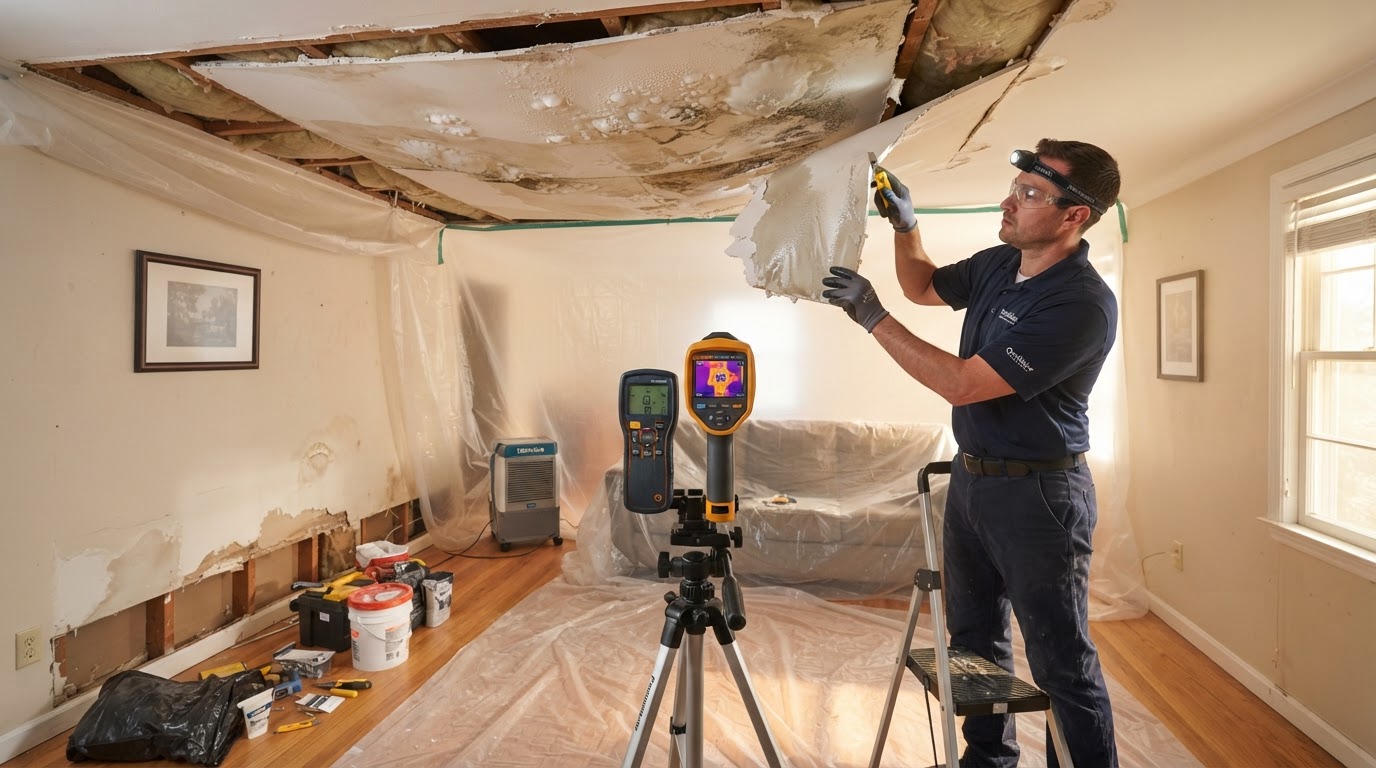
Hidden Water Damage Behind Walls in Port Charlotte, FL
Hidden water damage is moisture that has migrated into a wall cavity, ceiling assembly, or subfloor without producing an obvious visible sign on the surface — and it is one of the more common and more damaging forms of residential water loss. In Port Charlotte, FL, explore how concealed moisture is detected with meters and thermal imaging, and how the assembly is dried before it causes mold.
Request Restoration Help
Tell us about the property damage and the location. Submit your inquiry so the appropriate next steps can be discussed.
What Is Hidden Water Damage?
Hidden water damage is moisture that has migrated into a wall cavity, ceiling assembly, or subfloor without producing an obvious visible sign on the surface — and it is one of the more common and more damaging forms of residential water loss. Water travels behind baseboards, wicks upward through drywall gypsum, soaks into insulation, and saturates framing studs while the painted surface looks unaffected. By the time a stain, a soft spot, or a musty odor appears, the concealed assembly has often been wet for an extended period.
The causes are usually slow and concealed: a plumbing leak inside the wall, a slow supply-line drip beneath a sink, an AC condensate drain that overflows into a wall cavity, a roof leak that travels the roof deck before it appears at the ceiling, or a shower pan failure that saturates the framing behind the surround. Each path delivers water into a different part of the assembly, and each leaves the moisture hidden behind a surface that looks dry. This is why a moisture assessment that reads behind the surface — with meters and thermal imaging — is what catches concealed water damage before it becomes a larger mold or structural scope.
The risk of hidden moisture is that it stays wet. Inside an enclosed wall cavity, with limited airflow and Florida's humid air, the drying timeline is measured in weeks, not days — and that extended dampness is what drives microbial growth in the insulation and on the drywall backing or framing. Identifying and drying the concealed assembly is what prevents a hidden leak from becoming a mold remediation project, which is why the assessment extends beyond the visible damage into the wall cavity behind it.
Signs of Hidden Water Damage Behind Walls
Concealed moisture shows up through the surface before it is visible in the assembly behind it. These are the indicators that warrant a behind-the-wall moisture assessment:
Detecting & Drying Hidden Water Damage
Detection begins with non-invasive moisture meters that read the water content beneath a painted surface without opening the wall, and pin-type meters that confirm the reading inside the gypsum. An infrared thermal camera visualizes the temperature difference caused by evaporative cooling, which reveals the wet area behind the drywall even where the paint looks dry. Together these tools map the moisture that visual inspection misses and establish a verifiable baseline for the drying plan.
Where the assessment confirms concealed moisture, the wall cavity is inspected — a section of baseboard or drywall may be opened to reach the wet insulation and framing, because drying a closed cavity with airflow alone is often ineffective. Wet insulation that has compressed or lost its loft is evaluated for removal, because it holds moisture against the framing and slows the assembly's drying. Air movers and dehumidification are then directed at the exposed assembly and monitored to verified moisture targets, with repeated meter readings until the framing and remaining drywall reach an appropriate dry standard. The scope is documented, and the drywall and insulation are repaired and finished once the assembly is confirmed dry.
1. Non-Invasive Scan
Read moisture behind the painted surface with non-invasive and pin-type meters.
2. Thermal Imaging
Use an infrared camera to visualize the temperature difference that reveals concealed moisture.
3. Cavity Inspection
Open a section of baseboard or drywall to inspect the wet insulation and framing behind the surface.
4. Material Evaluation
Assess drywall, insulation, and framing for removal versus drying in place based on water category.
5. Structural Drying
Dry the exposed assembly with monitored airflow and dehumidification to verified moisture targets.
6. Repair & Documentation
Replace insulation, repair and finish drywall, and document the scope for the owner's record.
Hidden Moisture Detection Near Port Charlotte
In Port Charlotte and Charlotte County, the combination of slab-on-grade construction, concrete block walls, and high ambient humidity makes hidden water damage particularly persistent. Moisture that enters a wall cavity here dries slowly because the enclosed assembly has limited airflow and the humid air holds the evaporated moisture rather than removing it — which extends the window in which microbial growth can establish in the insulation or on the drywall backing. Seasonal residences compound the problem: a slow leak in an unoccupied home can saturate a wall assembly for weeks before it is discovered.
The assessment is what catches concealed moisture before it becomes a larger scope. Non-invasive meters, pin-type meters, and thermal imaging read behind the surface; where moisture is confirmed, the cavity is opened, the wet insulation is removed, and the framing is dried to verified targets before any drywall or finish repair proceeds. The documentation reflects what was wet, what was removed, and what was dried — which supports both the restoration scope and any insurance process.
Related Water Restoration Services
These related services often appear alongside hidden water damage behind walls in Port Charlotte properties.
Hidden Water Damage Behind Walls FAQs
Clear answers to the questions property owners most often ask about hidden water damage behind walls in Port Charlotte. Review them, then share your property details so the appropriate next steps can be discussed.
Request Hidden Water Damage Assessment
Tell us about the property damage and the location. Submit your inquiry so the appropriate next steps can be discussed.