Electrical Fire Damage Restoration Port Charlotte
Electrical fire damage restoration addresses the building and contents after a fire involving wiring, circuits, panels, or outlets — with electrical safety as the first priority. The system must be evaluated by licensed professionals before any reconnection. In Port Charlotte, FL, explore smoke and soot cleanup, concealed wall cavity damage, suppression water mitigation, and coordination of licensed electrical repairs throughout Charlotte County.
Request Restoration Help
Tell us about the property damage and the location. Submit your inquiry so the appropriate next steps can be discussed.
Electrical Fire Damage Cleanup in Port Charlotte
Electrical fire damage restoration addresses the building and contents after a fire involving wiring, circuits, panels, outlets, or appliances — and electrical safety is the first and overriding priority. A fire that originated in or spread through the electrical system can leave compromised wiring, burned insulation, and damaged components inside wall cavities that remain unsafe even after the visible fire is out. Before any cleanup or reconnection, the electrical system must be evaluated by appropriately qualified, licensed professionals.
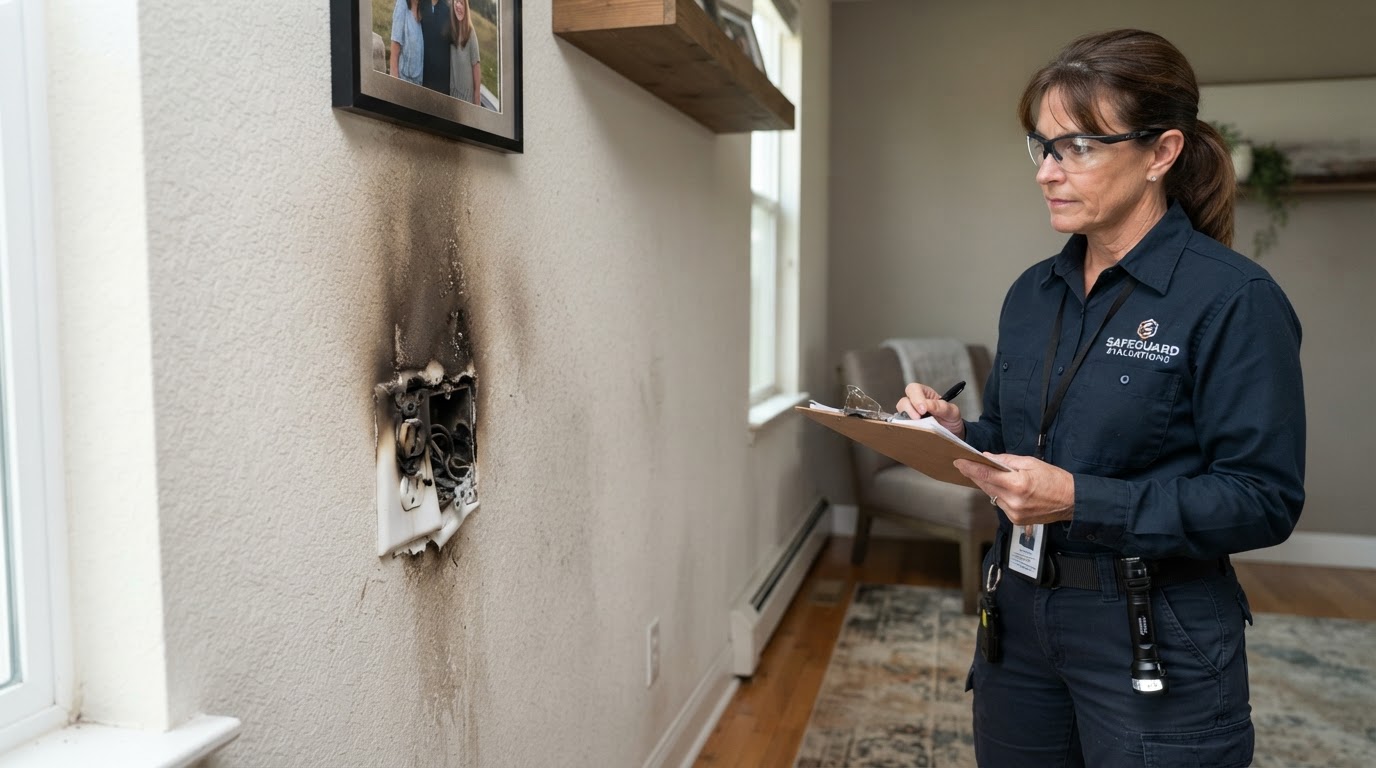
The damage from an electrical fire extends beyond the electrical system itself. Smoke and soot from burning wire insulation, plastic components, and building materials deposit throughout the structure, and the fire may have affected drywall, framing, and finishes at the point of origin. Water from firefighting suppression adds its own mitigation requirements. The restoration plan coordinates all of these scopes — smoke, soot, water, and structural — alongside the licensed electrical repairs, rather than treating them as separate and disconnected.
Determining the cause of an electrical fire is a task for qualified professionals and is not something a restoration project assumes. Overloaded circuits, wiring faults, damaged connections, appliance failures, and panel incidents each leave different damage patterns, and the cause must be established through investigation. What the restoration provider does is clean up and repair the damage the fire left behind, while coordinating with the licensed electrical professionals who evaluate and repair the system itself.
Property Damage Risks After an Electrical Fire
Electrical fire damage can be partly concealed inside wall cavities and the electrical system. These indicators suggest the scope may extend beyond the visible damage:
How Electrical Fire Damage Restoration Works
Electrical fire restoration begins with site safety clearance. The property is not entered for cleanup until fire officials have authorized reentry and the structure is determined safe. Because the fire involved the electrical system, the power situation must be confirmed safe — property owners should never attempt to reconnect power, inspect exposed wiring, or operate compromised electrical equipment themselves. Licensed electrical evaluation precedes any restoration activity that involves the system.
Once the site is safe, the fire damage is assessed — the smoke and soot spread, the structural damage at the point of origin, the concealed damage inside wall cavities, and any suppression water. Smoke and soot cleanup proceeds using methods matched to the residue type, and contaminated materials are evaluated for restoration or removal. Where the fire traveled inside a wall cavity, the affected drywall and framing are inspected and treated as part of the scope.
Licensed electrical repairs are coordinated as a distinct scope of work, performed by qualified professionals who evaluate and repair the wiring, devices, and panels. The restoration provider does not certify electrical safety — that is the role of the licensed electrician. Once the electrical system is repaired and the structural restoration is complete, the building moves toward its pre-loss condition, with all scopes documented for the property owner and insurer.
1. Site Safety Clearance
Confirm reentry is authorized and the electrical situation is safe; do not reconnect power or operate compromised equipment.
2. Electrical Evaluation
Coordinate licensed electrical evaluation of the wiring, devices, and panels affected by the fire before any related restoration work.
3. Fire Damage Assessment
Evaluate smoke and soot spread, structural damage at the origin, concealed wall cavity damage, and any suppression water.
4. Structural Material Inspection
Inspect drywall, framing, and finishes affected by heat or fire, including damage hidden inside wall cavities.
5. Smoke & Soot Cleanup
Remove residue using methods matched to the residue type, treating soot from burned wire insulation appropriately.
6. Water Damage Mitigation
Extract suppression water and dry affected materials to prevent secondary moisture and mold damage.
7. Licensed Electrical Repairs
Coordinate the repair of the electrical system by qualified, licensed professionals as a distinct scope of work.
8. Restoration & Reconstruction
Restore affected drywall, finishes, and structures, and document the complete scope for the property owner and insurer.
Electrical Fire Restoration Near Port Charlotte Properties
Electrical fire damage in Port Charlotte and Charlotte County can affect residential homes, condominiums, and commercial properties. The restoration considerations are similar across property types — smoke and soot cleanup, structural repair, and the critical coordination of licensed electrical evaluation — but the scope scales with the building. A single-family home may have damage isolated to one circuit or area, while a commercial property or multifamily building may have a larger electrical system and broader smoke distribution.
Seasonal homes present a familiar concern: if an electrical fire occurs and the damage sits undiscovered for days or weeks, the smoke residue bonds more tightly and the odor penetrates more deeply. Seasonal properties that sit closed through the summer may also have aging electrical systems that warrant attention, though the condition of any specific property's wiring must be determined by qualified evaluation rather than assumption.
The restoration plan does not make claims about the condition of regional electrical systems. What it does is coordinate the cleanup and structural restoration of the fire damage while ensuring the electrical system is evaluated and repaired by the licensed professionals qualified to do that work. The separation between restoration and licensed electrical repair is important and is maintained throughout the project.
Related Water Restoration Services
These related services often appear alongside electrical fire damage restoration in Port Charlotte properties.
Electrical Fire Damage Restoration FAQs
Clear answers to the questions property owners most often ask about electrical fire damage restoration in Port Charlotte. Review them, then share your property details so the appropriate next steps can be discussed.
Request Electrical Fire Damage Help
Tell us about the property damage and the location. Submit your inquiry so the appropriate next steps can be discussed.