Mold Remediation & Property Restoration Port Charlotte
Mold remediation addresses mold contamination, the building materials it has affected, and the moisture conditions that allowed it to develop. In Port Charlotte's humid climate, moisture from leaks, condensation, and seasonal closures can drive growth behind drywall and in attics. Explore professional assessment, containment, controlled material removal, and moisture correction for properties throughout Charlotte County.
Request Restoration Help
Tell us about the property damage and the location. Submit your inquiry so the appropriate next steps can be discussed.
Professional Mold Remediation Services in Port Charlotte
Mold remediation is the professional process of addressing mold contamination inside a building, the building materials it has affected, and — critically — the moisture conditions that allowed it to develop in the first place. Mold growth is almost always a symptom of an unresolved moisture problem: a slow plumbing leak, roof intrusion, HVAC condensation, a flood that was never fully dried, or sustained high indoor humidity. Unless that underlying moisture source is identified and corrected, remediation that only removes the visible growth will not produce a lasting result.
In Port Charlotte, the combination of warm, humid air and a large population of seasonal residences makes moisture-driven mold a recurring concern. A home that sits closed through the summer with the air conditioning off or set high can develop condensation on interior surfaces and inside wall cavities that the owner never sees until they return. Distinguishing genuine mold contamination from ordinary water staining, dust, or surface discoloration is part of what a professional assessment establishes before any remediation plan is built.
Mold remediation is not a single standard procedure applied to every property. The appropriate scope depends on the extent of the affected area, the materials involved, whether contamination is concealed, and the category of moisture source. A small, surface-level concern on non-porous material is a very different project from widespread growth behind drywall after a delayed-discovery water loss, and a credible remediation plan reflects that difference.
Signs Your Property May Need Mold Remediation
These indicators warrant a professional moisture and mold assessment rather than a guess based on appearance alone:
How Professional Mold Remediation Works
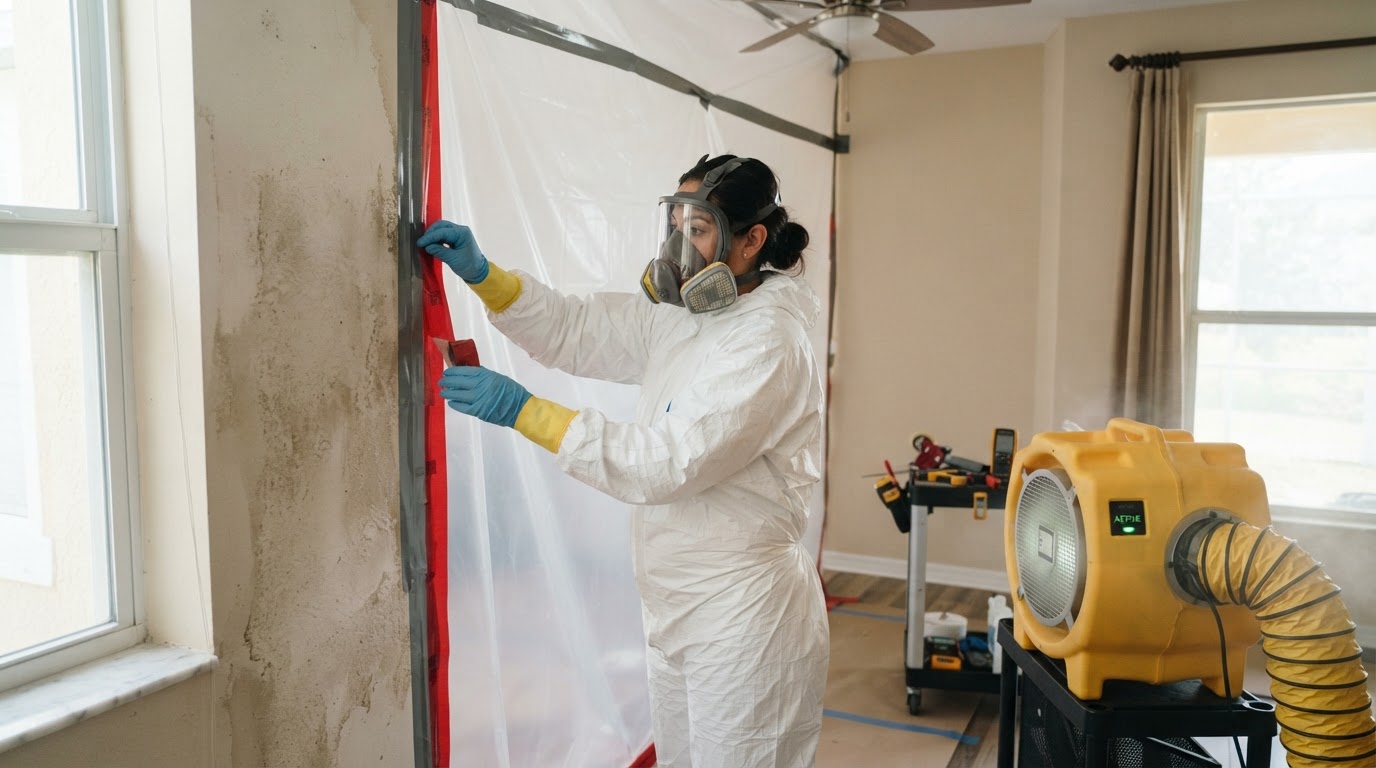
A legitimate remediation follows a sequence that prioritizes finding and stopping the moisture source before any removal work begins, because cleaning contamination while water is still entering is temporary work. An appropriately qualified mold assessor may first evaluate the extent of the concern and document conditions; depending on the project and applicable Florida requirements, assessment and remediation may need to be performed by distinct qualified professionals. The remediation provider then establishes containment of the work area, protects unaffected spaces, and addresses the contaminated materials according to their type and condition.
Porous materials that have supported growth — drywall, insulation, raw wood, and similar materials — are typically removed under controlled conditions, while suitable non-porous surfaces are cleaned. The surrounding areas are cleaned, the structure is dried, and the moisture source is corrected so the corrected condition can be sustained. Post-remediation assessment or verification may be appropriate depending on the scope. Every step is documented so the property owner has a clear record of what was found and what was done.
Moisture Assessment
Identify the water source driving the growth — leak, condensation, humidity, or residual saturation — and document the affected area.
Remediation Scope
Determine the appropriate scope based on extent, materials, and whether contamination is visible or concealed.
Containment
Isolate the work area with appropriate barriers and negative pressure to prevent cross-contamination of unaffected spaces.
Material Removal
Remove contaminated porous materials under controlled conditions; clean suitable non-porous surfaces.
Moisture Correction
Repair the moisture source and dry the structure to verified targets so the corrected condition can be sustained.
Verification
Conduct post-remediation assessment or verification when appropriate, and document the completed scope.
Mold Remediation for Port Charlotte Homes & Businesses
Southwest Florida's warm, humid climate shortens the window between a moisture event and visible microbial growth considerably. A wall cavity that stays damp in an arid climate might dry slowly on its own; the same cavity in Port Charlotte can hold moisture against drywall and framing for weeks, especially when a seasonal home is closed up with limited airflow and the air conditioning is off or set high. Hurricane-related water intrusion, AC condensate overflow, and roof leaks that go unnoticed behind drywall are the most common local paths into a mold remediation scope.
Seasonal residences deserve particular attention. An owner who returns in the fall to a musty odor and discoloration behind cabinetry is often seeing the result of a moisture event that began months earlier. The remediation scope in those delayed-discovery cases is typically larger than for a promptly-reported loss, which is why early moisture identification matters so much for property owners throughout Charlotte County.
Related Water Restoration Services
These related services often appear alongside mold remediation in Port Charlotte properties.
Mold Remediation FAQs for Charlotte County Property Owners
Clear answers to the questions property owners most often ask about mold remediation in Port Charlotte. Review them, then share your property details so the appropriate next steps can be discussed.
Request Mold Remediation Help
Tell us about the property damage and the location. Submit your inquiry so the appropriate next steps can be discussed.