
Flood Damage Cleanup & Restoration Port Charlotte
Flood damage cleanup addresses water that has entered a Port Charlotte property from outside — heavy rainfall, surface runoff, overwhelmed drainage, or low-lying intrusion. Because floodwater carries soil, organics, and exterior contaminants, the cleanup differs from a clean plumbing loss. Explore contamination-aware floodwater extraction, porous material evaluation, structural drying, and reconstruction for properties throughout Charlotte County.
Request Restoration Help
Tell us about the property damage and the location. Submit your inquiry so the appropriate next steps can be discussed.
Flood Damage Cleanup for Port Charlotte Properties
Flood damage cleanup addresses water that has entered a building from outside — heavy rainfall, surface water runoff, storm drainage that has overwhelmed the property, or water crossing a low-lying threshold. Unlike a clean plumbing leak indoors, floodwater carries whatever it has traveled through: soil, organics, lawn chemicals, and contaminants from the exterior environment. That changes how the cleanup has to be approached.
Not every property in Port Charlotte faces equal flood exposure. Low-lying parcels, homes near drainage features, and ground-level interiors are more vulnerable than elevated or well-drained sites. It is important to distinguish between floodwater intrusion, a plumbing water loss, a sewage backup, and coastal storm surge — each has a different contamination profile and a different cleanup protocol.
Rainwater intrusion through a compromised roof, window, or door is one category; water that has risen across the ground and entered the living space is another. Flood cleanup therefore begins with classifying what the water has contacted and where it came from, because that determines which materials can be salvaged and which must be removed and disposed of appropriately.
Why Floodwater Cleanup Requires Special Attention
Floodwater introduces risks that a standard water loss does not. These are the conditions that shape a flood cleanup scope:
How Flood Damage Cleanup & Structural Drying Works
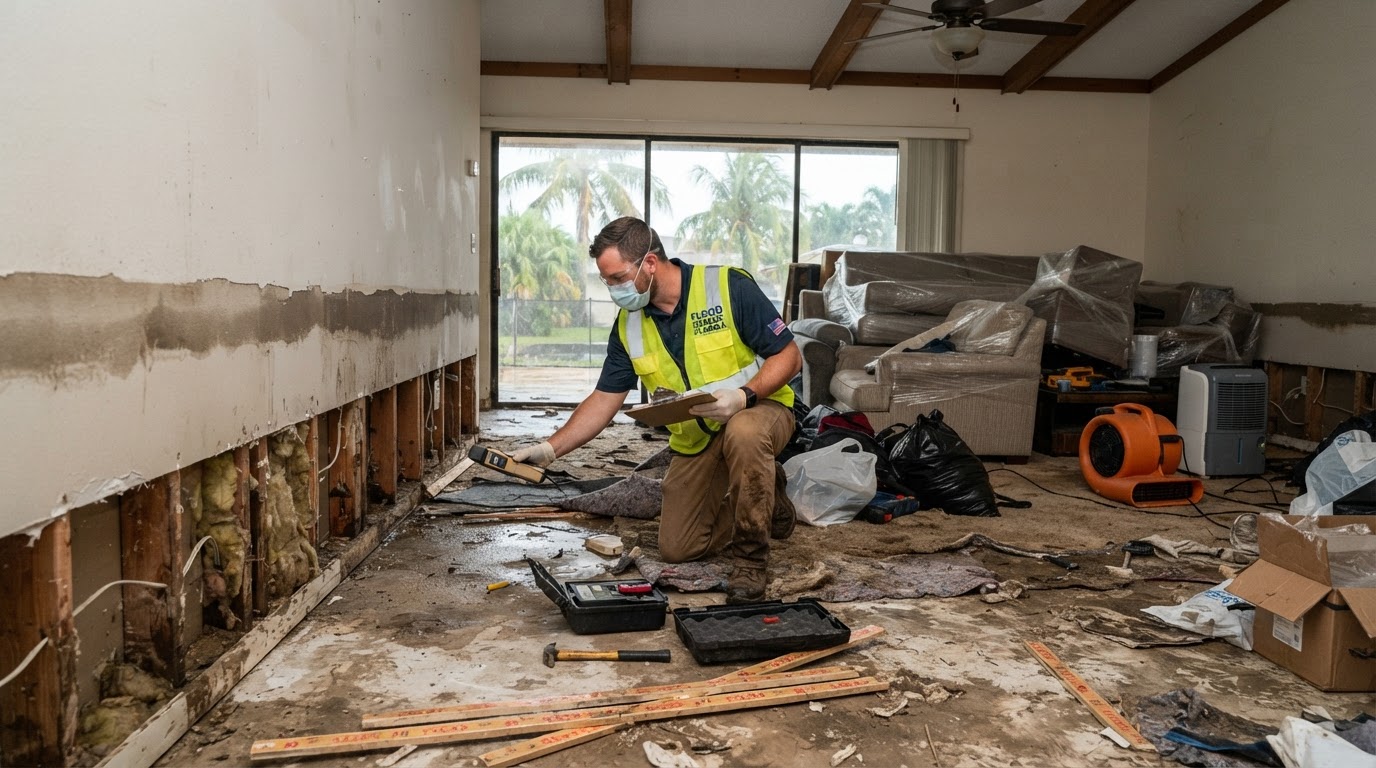
Flood cleanup follows a contamination-aware sequence. The site is assessed for safety — electrical, structural, and biological — before entry. The floodwater is classified so the handling, salvageability, and disposal decisions are based on what the water actually carried. Standing water is extracted, and debris and sediment are removed and documented. Porous materials that have absorbed contaminated water are evaluated for removal rather than attempted salvage, because porous materials generally cannot be reliably cleaned after Category 2 or 3 exposure.
After removal, the structure is cleaned and sanitized where appropriate, then moved into structural drying with dehumidification and airflow. Drying is monitored to verified targets, because flood-affected assemblies hold moisture longer than they appear to. Once dry, the reconstruction scope is planned — drywall, insulation, flooring, and trim — to return the property to pre-loss condition. Not every material can be saved, and a credible flood cleanup says so plainly rather than promising to salvage everything.
Safety Evaluation
Confirm electrical, structural, and biological safety before any entry into the flooded area.
Floodwater Classification
Determine the contamination category to guide salvage, handling, and disposal decisions.
Water Extraction
Remove standing floodwater and pump out low areas where water has pooled.
Debris & Sediment Removal
Document and remove silt, mud, and debris carried in by the floodwater.
Contamination Controls
Apply appropriate cleaning and sanitation to affected non-porous surfaces.
Structural Drying & Rebuild
Dry the assembly to verified targets, then plan and complete reconstruction.
Flood Restoration Near Charlotte Harbor & Southwest Florida
Heavy Gulf Coast rainfall, tropical systems, and stormwater drainage capacity all influence how Port Charlotte properties experience flooding. Low-lying areas and properties near drainage features or canals can see surface water enter through doors, weep vents, or compromised seals. The cleanup conversation here is about distinguishing a floodwater loss — which may involve separate flood insurance considerations — from an interior plumbing loss, and applying the right protocol to each.
Specific FEMA flood-zone designations apply to individual parcels, and those vary property by property. A property's flood-zone status cannot be assumed from its city alone; it must be confirmed against verified, parcel-specific information. What is broadly true is that any ground-level flooding on a slab home in this climate demands prompt extraction and drying, because humid Florida air extends the window in which wet materials stay vulnerable to microbial growth.
Related Water Restoration Services
These related services often appear alongside flood damage cleanup in Port Charlotte properties.
Flood Damage Cleanup FAQs for Charlotte County
Clear answers to the questions property owners most often ask about flood damage cleanup in Port Charlotte. Review them, then share your property details so the appropriate next steps can be discussed.
Request Flood Cleanup Help
Tell us about the property damage and the location. Submit your inquiry so the appropriate next steps can be discussed.