Kitchen Fire Damage Cleanup Port Charlotte
Kitchen fire cleanup addresses the specific damage cooking, grease, and appliance fires leave behind — an oily, sticky soot that smears when wiped with ordinary methods, heat-damaged cabinets, and smoke that travels through the home's open floor plan. In Port Charlotte, FL, explore grease-specific residue removal, appliance evaluation, and restoration for residential kitchens throughout Charlotte County.
Request Restoration Help
Tell us about the property damage and the location. Submit your inquiry so the appropriate next steps can be discussed.
Kitchen Fire Restoration Services in Port Charlotte
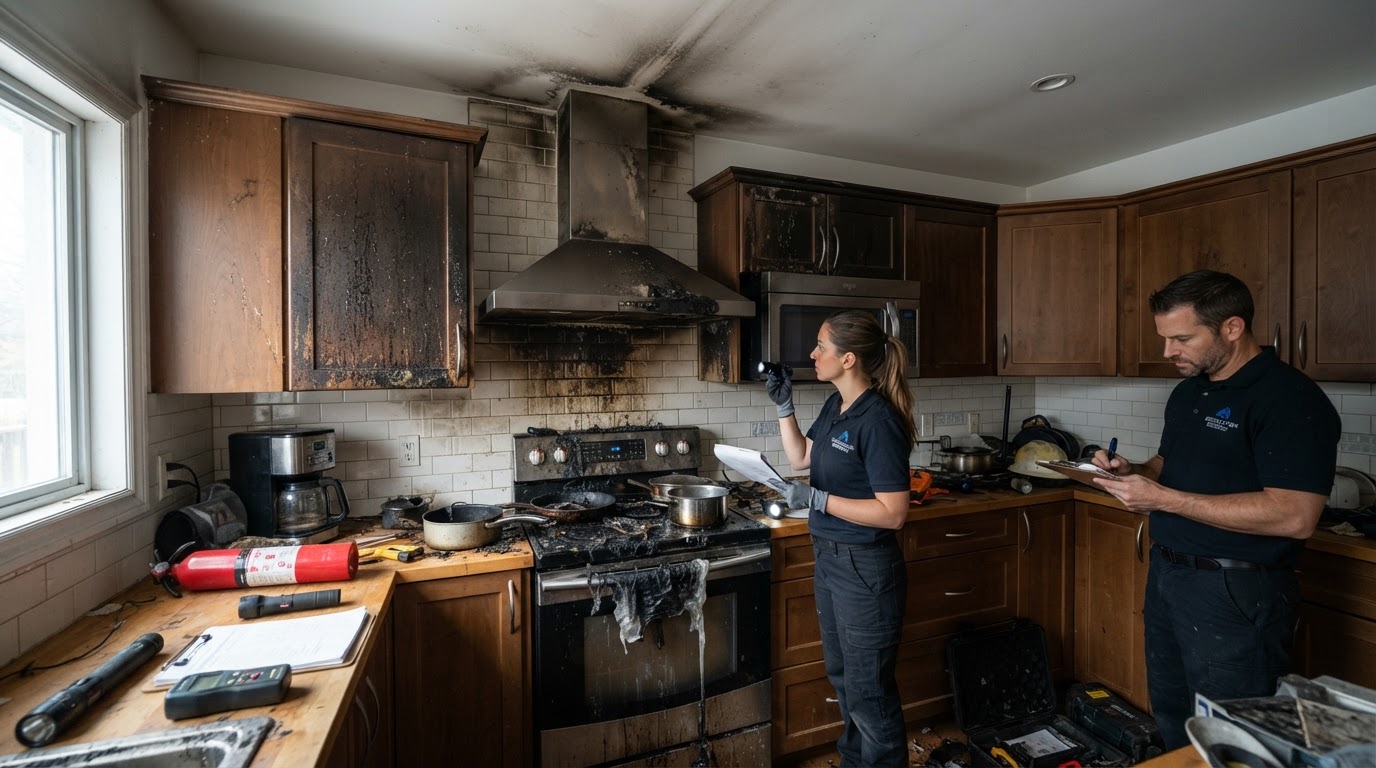
Kitchen fire cleanup addresses the specific damage that cooking, grease, and appliance fires leave behind — and that damage is different from a general fire in important ways. Grease and cooking oil fires produce an oily, sticky soot that coats cabinets, the range hood, ceilings, and nearby walls. This greasy residue smears and embeds when wiped with ordinary cleaning methods, so it requires specialized removal techniques matched to its characteristics. A kitchen fire is not cleaned the same way as a dry, fast-burning fire.
The damage also extends beyond the kitchen. Smoke from a cooking fire travels through the home's open floor plan into living areas, bedrooms, and the HVAC system, leaving residue and odor far from the stove. Heat from the fire can warp cabinet doors and damage finishes, and fire suppression efforts — whether a fire extinguisher, a suppression system, or water — add their own cleanup requirements. The full scope includes the kitchen, the adjoining rooms, and the air distribution paths.
Appliance and electrical safety is a particular concern after a kitchen fire. The range, cooktop, oven, microwave, and any appliance near the fire must be evaluated by appropriately qualified professionals before reuse. Operating fire-affected appliances without evaluation can be unsafe, and electrical components exposed to heat or suppression water may be compromised. The restoration plan coordinates cleanup with the appliance and electrical evaluation rather than treating them as separate, disconnected tasks.
Signs of Smoke, Heat & Soot Damage After a Kitchen Fire
Kitchen fire damage combines greasy soot, heat effects, and smoke migration. These indicators help identify the full scope:
How Kitchen Fire Damage Cleanup Works
Kitchen fire cleanup begins once the fire scene is cleared and safe for entry. The damage assessment identifies the extent of the greasy soot, the heat damage to cabinets and finishes, the smoke migration into adjoining rooms, and any suppression water or extinguisher residue. Grease-specific cleaning methods are applied to the oily residue — methods that differ from ordinary soot cleanup because greasy soot smears when treated like dry soot. Cabinets, countertops, and the range hood are evaluated for salvageability versus replacement.
Appliance evaluation is coordinated with qualified professionals. The range, cooktop, oven, and any appliance affected by heat or suppression must be assessed before reuse, because operating compromised electrical or gas appliances can be unsafe. The restoration plan does not assume appliances can simply be cleaned and reused — it relies on the qualified evaluation to determine what is safe.
Smoke odor management addresses the porous materials that absorbed the cooking smoke — cabinet interiors, drywall, ceiling materials, and the exhaust ductwork. Affected drywall and ceilings are evaluated for restoration or replacement. Contents cleaning addresses cookware, dishes, and items near the fire. Finally, a repair or replacement plan is developed for cabinets, finishes, and any materials that cannot be restored.
1. Fire Scene Safety & Clearance
Confirm the kitchen is safe to enter and that any gas or electrical supply to affected appliances has been properly controlled.
2. Damage Assessment
Identify the full scope of greasy soot, heat damage, smoke migration, and suppression residue across the kitchen and adjoining rooms.
3. Grease & Soot Residue Cleaning
Apply grease-specific removal methods to oily residue on cabinets, the range hood, ceilings, and walls — methods that differ from dry soot cleanup.
4. Cabinet & Countertop Assessment
Evaluate cabinets and countertops for heat damage, warping, and salvageability, determining what can be restored versus replaced.
5. Appliance Evaluation
Coordinate qualified professional evaluation of the range, cooktop, oven, and affected appliances before any reuse.
6. Smoke Odor Management
Address porous materials that absorbed cooking smoke odor, including cabinet interiors, drywall, and exhaust ductwork.
7. Drywall & Ceiling Restoration
Evaluate and plan restoration or replacement of smoke-stained ceilings and affected drywall in the kitchen and adjoining areas.
8. Repairs & Replacement Planning
Develop a plan for cabinet, finish, and material repairs or replacement to return the kitchen toward its pre-loss condition.
Kitchen Fire Damage Restoration Near Port Charlotte Homes
Kitchen fires are among the most common residential fire events in Port Charlotte and Charlotte County, and they frequently begin with cooking oil, grease, or an unattended range. The open floor plans common in Florida homes mean smoke from a kitchen fire spreads quickly into living areas, dining rooms, and the HVAC system, so the cleanup scope is rarely limited to the kitchen itself. Condominium units and multifamily buildings add the consideration of smoke traveling into neighboring units through shared ventilation.
Rental and investment properties present their own considerations. A kitchen fire in a rental property may involve tenant belongings, landlord contents, and the coordination of cleanup with occupancy timelines. Seasonal homes that sit unoccupied can mean a kitchen fire's smoke sits for days before discovery, deepening the residue bonding and odor penetration. In each case, the restoration plan is built around the property's specific conditions.
Suppression efforts also vary. A fire extinguisher leaves a chemical residue that requires its own cleanup. A built-in suppression system or water from firefighting adds water damage mitigation to the scope. The kitchen fire cleanup plan accounts for whatever suppression method was used and coordinates that work with the soot, odor, and structural restoration.
Related Water Restoration Services
These related services often appear alongside kitchen fire cleanup in Port Charlotte properties.
Kitchen Fire Cleanup FAQs
Clear answers to the questions property owners most often ask about kitchen fire cleanup in Port Charlotte. Review them, then share your property details so the appropriate next steps can be discussed.
Request Kitchen Fire Cleanup Help
Tell us about the property damage and the location. Submit your inquiry so the appropriate next steps can be discussed.