
Slab Leak Water Damage Restoration Port Charlotte
Slab leak water damage restoration addresses the water a failed under-slab plumbing line releases into a Port Charlotte foundation — and the moisture that migrates upward through the concrete into flooring, subfloor, and wall base above. Explore the coordinated sequence of licensed plumbing diagnosis, source repair, moisture assessment, material-specific restoration, and monitored structural drying for Charlotte County slab-on-grade homes.
Request Restoration Help
Tell us about the property damage and the location. Submit your inquiry so the appropriate next steps can be discussed.
Slab Leak Water Damage in Port Charlotte Homes
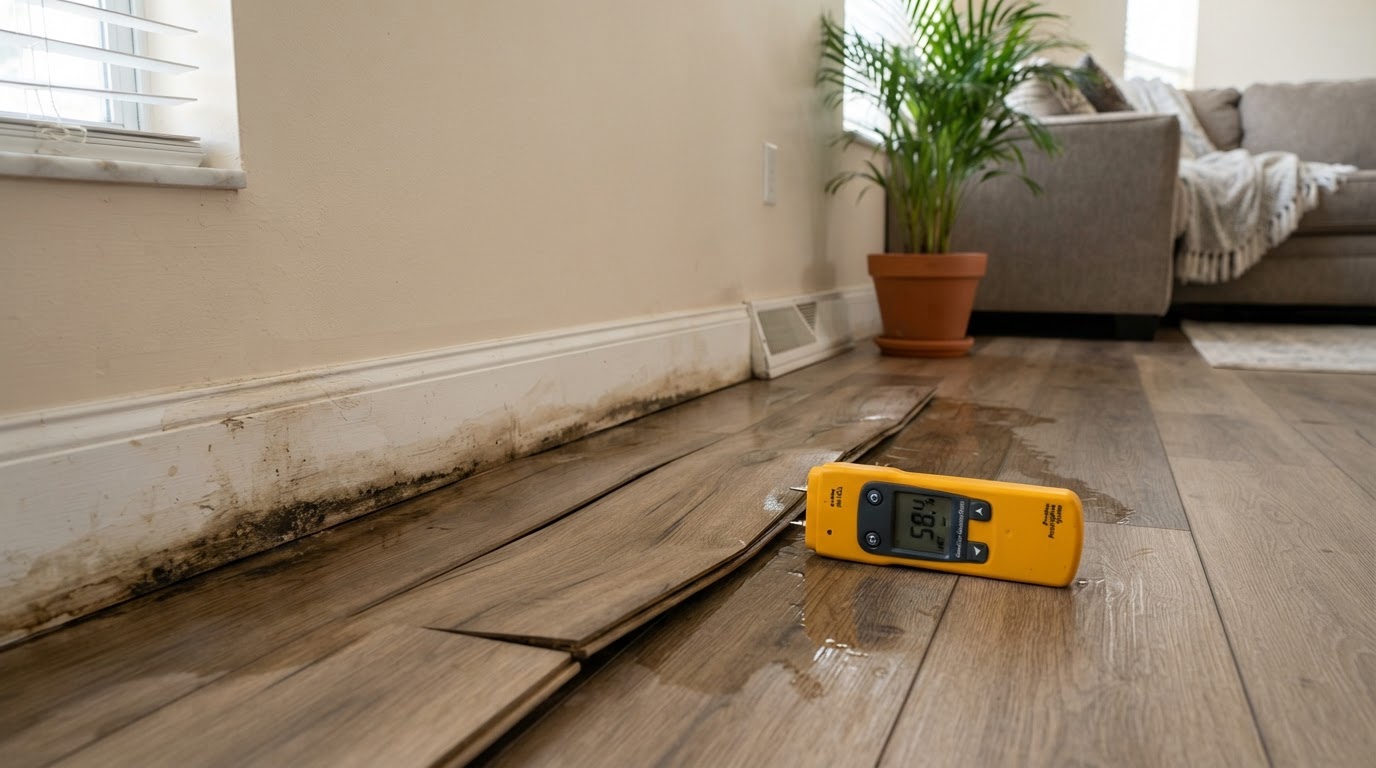
A slab leak is a failure in a plumbing line that runs beneath or within a concrete slab foundation. When such a line fails, water escapes into the slab and the fill beneath it, then migrates upward through the concrete and into the flooring and wall base above. Because the source is hidden below the floor, the first sign is usually not water — it is a warm or damp spot on the floor, warped flooring, a musty odor, or an unexplained increase in water usage.
Slab-on-grade construction is common across Port Charlotte and Charlotte County, which makes under-slab plumbing a relevant failure path here. The leak can be on the supply side — pressurized, which tends to surface as a warm floor area or elevated water bills — or on the drain side, which can be slower and more contaminated. Each carries different damage and safety implications, and each requires a different repair approach.
Three distinct scopes are involved in a slab leak loss, and confusing them causes problems: plumbing leak detection and repair is the licensed plumber's scope, identifying and accessing the failed line beneath the slab; structural drying and restoration is the mitigation scope, addressing the water damage to the flooring, subfloor, drywall, and cabinetry above; and the repair and finish restoration rebuilds what was removed. A restoration provider handles the middle scope and coordinates with the licensed plumber on the first.
Signs of a Possible Slab Leak & Flooring Water Damage
Under-slab leaks reveal themselves indirectly. These signs warrant a licensed plumbing evaluation and a moisture assessment, but do not by themselves confirm a slab leak:
Slab Leak Water Damage Cleanup & Structural Drying
After a suspected leak is reported, the sequence begins with a moisture assessment of the affected flooring and wall base, and — where required — a licensed plumbing diagnosis to confirm and locate an under-slab leak. Source repair is coordinated with the licensed plumber; restoration mitigation proceeds once the source is confirmed and controlled. This page does not provide instructions for cutting concrete, opening the foundation, or repairing plumbing lines, all of which are licensed plumbing work.
With the source controlled, the water damage above the slab is addressed: affected flooring is evaluated for drying versus removal, the subfloor and wall base are moisture-mapped, and structural drying is set up and monitored to verified targets. Material-specific decisions drive whether tile, vinyl, laminate, or carpet can be dried in place or must be removed. The full scope is documented for the owner and, where applicable, the insurer, and the repair and finish restoration is scheduled once the assembly is confirmed dry.
Moisture Assessment
Evaluate the affected flooring, subfloor, and wall base for the extent of moisture migration above the slab.
Licensed Plumbing Diagnosis
Confirm and locate the under-slab leak; source repair is a licensed plumber's scope.
Source Repair Coordination
Coordinate restoration mitigation with the plumber's repair of the failed line.
Material-Specific Restoration
Determine which flooring and wall materials can be dried in place versus removed and replaced.
Monitored Drying
Set up and monitor structural drying until assemblies reach verified dry-standard readings.
Repair & Finish Restoration
Document the loss and complete the repair and finish work to return the property to pre-loss condition.
Slab Leak Restoration for Homes Near Port Charlotte
Slab-on-grade foundations, tile and vinyl flooring over moisture-sensitive underlayments, and older embedded plumbing systems are common in Port Charlotte-area homes, which makes under-slab leak damage a relevant local scenario. Tile can mask a slow slab leak because the moisture moves through grout lines and the underlayment rather than appearing as standing water. Vinyl and laminate show it more quickly through warping and discoloration. The subfloor and flooring interface is where most of the visible damage concentrates, while the slab itself releases moisture slowly from its pores.
Seasonal and occupied properties both see slab leaks, but the discovery pattern differs. In an occupied home, the owner notices the warm floor or the rising water bill and acts. In a seasonal home, a slow drain-side leak can wet the slab and flooring for weeks before the owner returns, by which point microbial growth may be established in the floor assembly. This is why a single visible symptom does not confirm a slab leak — accurate detection requires licensed evaluation — and why the restoration scope is driven by measured moisture, not by the first sign that appeared.
Related Water Restoration Services
These related services often appear alongside slab leak water damage in Port Charlotte properties.
Slab Leak Water Damage FAQs
Clear answers to the questions property owners most often ask about slab leak water damage in Port Charlotte. Review them, then share your property details so the appropriate next steps can be discussed.
Request Slab Leak Damage Help
Tell us about the property damage and the location. Submit your inquiry so the appropriate next steps can be discussed.