
Dishwasher Leak Water Damage Cleanup in Port Charlotte, FL
A dishwasher leak releases water at floor level, where it travels beneath the appliance, under the cabinetry, and along the baseboards before it ever spreads visibly across the kitchen floor. In Port Charlotte, FL, explore how dishwasher leaks damage kitchen subfloors, cabinets, and drywall, and how the hidden moisture is assessed and dried.
Request Restoration Help
Tell us about the property damage and the location. Submit your inquiry so the appropriate next steps can be discussed.
Dishwasher Leaks & Hidden Kitchen Water Damage
A dishwasher leak releases water at floor level, where it travels beneath the appliance, under the cabinetry, and along the baseboards before it ever spreads visibly across the kitchen floor. Because the dishwasher sits against a wall and under cabinets, the leak is often concealed until the cabinet base swells, the flooring warps, or a musty odor appears. By the time the visible damage is obvious, the subfloor beneath the cabinet and the drywall behind the appliance have often absorbed substantial moisture.
The damage pattern depends on where the leak originates. A supply line failure releases pressurized water quickly and can flood the kitchen and track into adjacent rooms. A door seal or pump leak is a slower, lower-volume release that runs beneath the unit and into the toe-kick and subfloor. A drain hose leak sends water along the cabinet base and into the flooring below. Each path leaves moisture in a different set of materials, and each needs a different drying scope — which is why the assessment maps the moisture beneath and beyond the appliance, not just the visible puddle.
The cleanup conversation is about the water the dishwasher released and the materials it wetted — not about appliance repair. Stopping the dishwasher and isolating its water supply is the first action; the appliance itself is repaired by a qualified technician, while the restoration provider mitigates the resulting water damage to the flooring, cabinetry, and drywall. The two scopes are sequential, and the restoration is coordinated with the appliance repair rather than replacing it.
Signs of Hidden Kitchen Water Damage
Because dishwasher leaks often start beneath or behind the unit, the visible signs appear in the surrounding finishes first. These are the indicators that warrant a subfloor and cabinet moisture assessment:
Dishwasher Leak Cleanup & Structural Drying
Restoration begins with safe isolation of the dishwasher — shutting its water supply and power so the leak stops — followed by coordination with a qualified technician for the appliance repair, which is a separate scope from the water damage mitigation. A moisture inspection then maps how far the water has traveled beneath and beyond the appliance: into the subfloor, behind the baseboards, along the cabinetry, and into adjacent rooms. Standing water is removed, and the affected materials are evaluated.
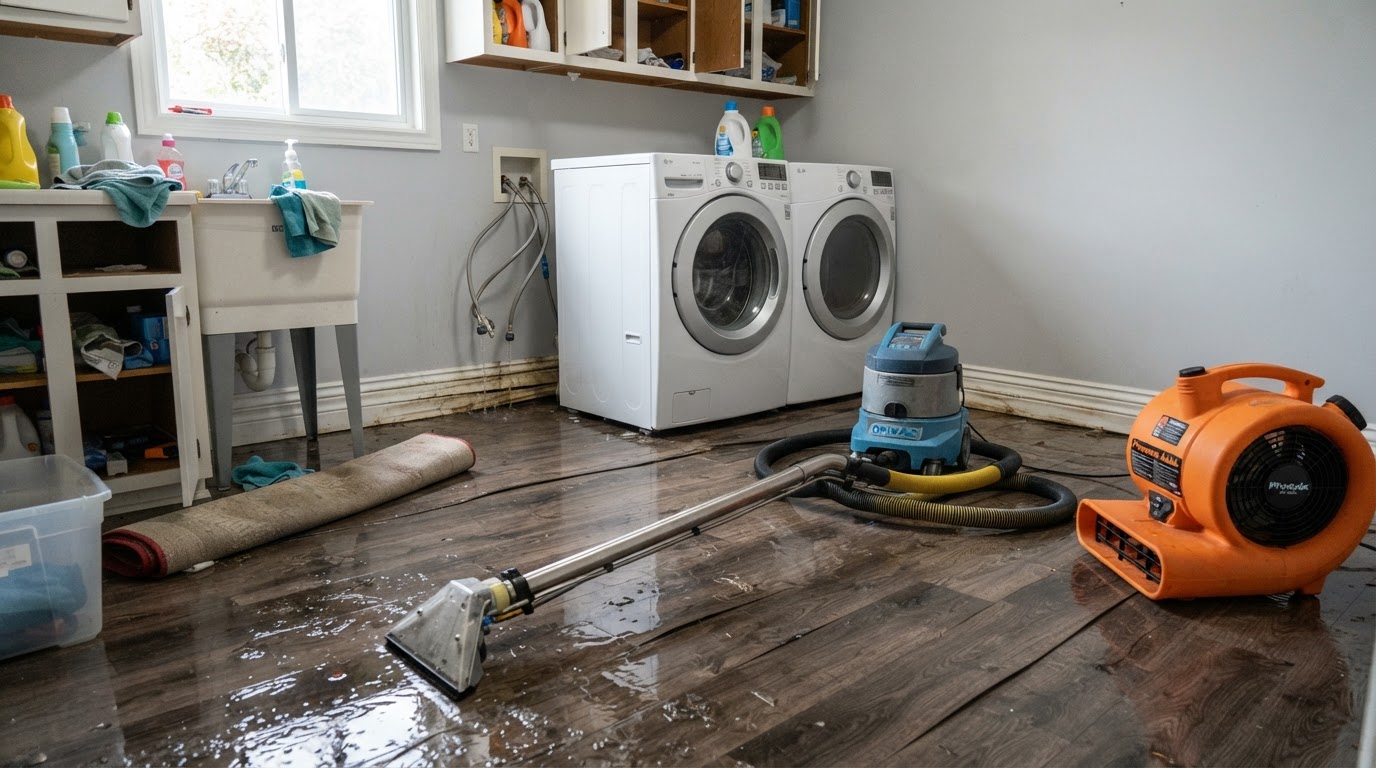
Cabinets and toe-kicks that have absorbed water are inspected for subfloor access — the toe-kick may be opened to reach and dry the subfloor beneath the cabinetry. Flooring that has absorbed water and warped or swelled is evaluated for removal to dry the subfloor below. Air movers and dehumidification are set up and monitored to verified moisture targets, and the scope is documented to support the cabinet, flooring, and drywall repair that follows. Not every material can be saved, and a credible cleanup says so plainly rather than promising to salvage everything.
1. Source Isolation
Shut the dishwasher water supply and power to stop the leak, then coordinate a qualified technician for repair.
2. Water Removal
Extract standing water and remove accessible moisture from the flooring and surrounding finishes.
3. Cabinet & Flooring Inspection
Inspect toe-kicks, cabinets, and flooring for subfloor access and the extent of moisture migration.
4. Subfloor Evaluation
Assess the subfloor for moisture and structural integrity, opening access where needed to dry it.
5. Structural Drying
Set up and monitor air movers and dehumidification on the subfloor, flooring, and cabinetry to verified targets.
6. Restoration Planning
Document the scope and plan cabinet, flooring, and drywall repair to return the kitchen to pre-loss condition.
Kitchen Water Damage Restoration Near Port Charlotte
Residential flooring in Port Charlotte-area homes runs from tile and luxury vinyl plank to laminate and engineered wood, and each responds differently to a dishwasher leak. Tile over a stable subfloor often survives a clean-water spill; laminate and engineered wood that has absorbed water and cupped generally requires replacement. Cabinetry construction varies too — and the subfloor beneath a cabinet is where much of the concealed damage concentrates, because the water runs under the appliance before it spreads across the visible floor.
Seasonal occupancy changes the discovery window. A slow dishwasher leak in a snowbird residence can run for weeks beneath the cabinet before the owner returns, by which point the subfloor and the drywall behind the appliance are saturated. In an occupied home, the same leak is usually caught in days. The drying scope in both cases is driven by the measured moisture, not by how the leak first appeared.
Related Water Restoration Services
These related services often appear alongside dishwasher leak water damage cleanup in Port Charlotte properties.
Dishwasher Leak Water Damage Cleanup FAQs
Clear answers to the questions property owners most often ask about dishwasher leak water damage cleanup in Port Charlotte. Review them, then share your property details so the appropriate next steps can be discussed.
Request Dishwasher Leak Cleanup Help
Tell us about the property damage and the location. Submit your inquiry so the appropriate next steps can be discussed.