
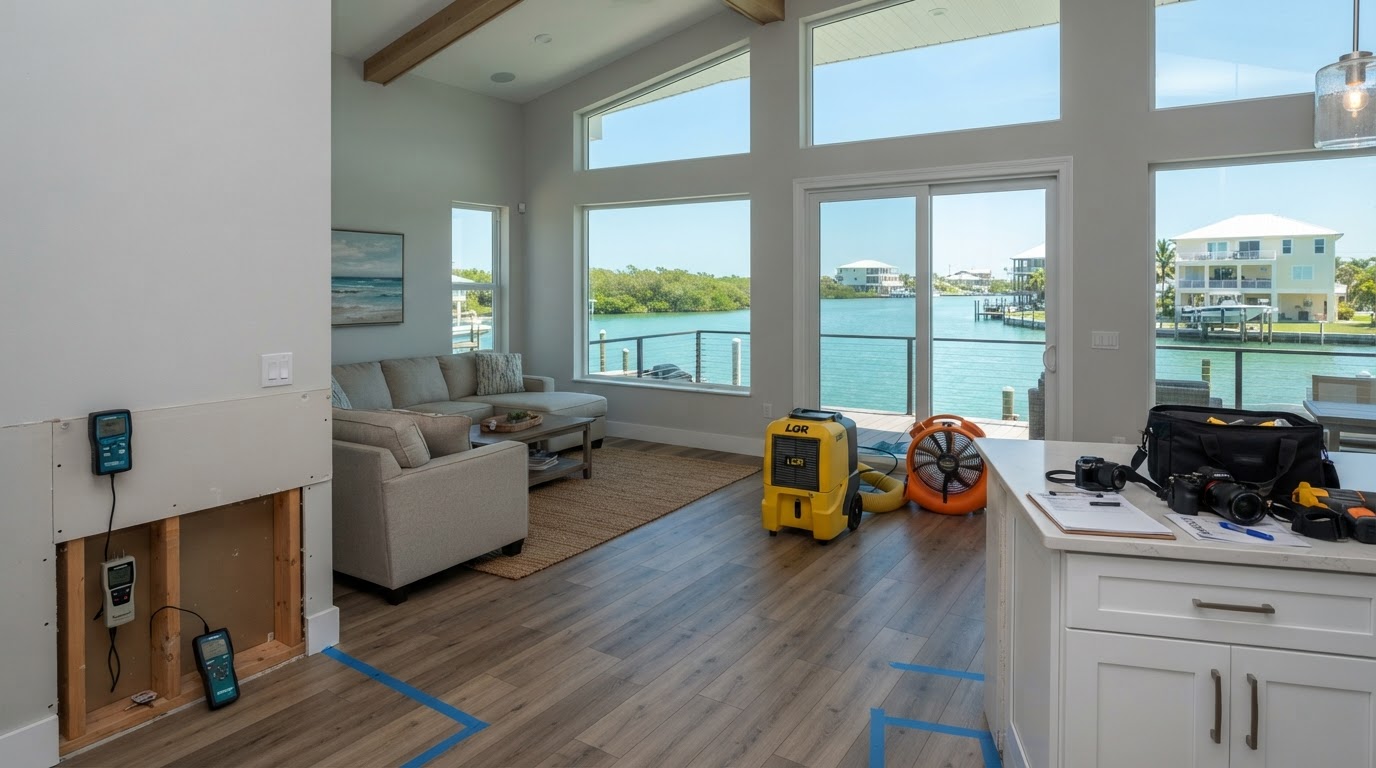
Canal-Front Home Flood Restoration Port Charlotte
Canal-front home flood restoration addresses water intrusion from storm surge, canal overflow, and coastal flooding affecting waterfront Port Charlotte, FL properties. Explore floodwater extraction, contaminated material removal, structural drying, corrosion considerations, and recovery throughout Charlotte County and the Charlotte Harbor area.
Request Restoration Help
Tell us about the property damage and the location. Submit your inquiry so the appropriate next steps can be discussed.
Canal-Front Water Damage Restoration in Port Charlotte
Waterfront and canal-adjacent homes in Port Charlotte and Charlotte County can face distinctive water intrusion concerns depending on the property's elevation, the characteristics of the adjacent waterway, drainage, and storm exposure. A canal-front home may experience flooding from storm surge, canal water level changes during a storm, wind-driven water, heavy rainfall that overwhelms drainage, or tidal influence — and the water that enters can be fresh, brackish, or saltwater depending on the canal's connectivity. When floodwater enters a ground-level living area, it affects flooring, drywall, insulation, cabinetry, electrical equipment, and stored contents in ways that require flood-specific restoration rather than ordinary water damage cleanup.
The restoration challenge with canal-front flooding is that the water is often contaminated, the exposure can be extensive across ground-level spaces, and the building materials that absorb it may not be salvageable. Flood lines indicate the depth of inundation, but the moisture extends above and below the visible line as materials wick water — drywall above the flood line, insulation inside the wall cavity, subflooring beneath the flooring, and the framing behind the finishes. The assessment maps the full extent of the moisture, not only the visible water line, and the contamination considerations shape which materials can be dried versus which require removal.
This page is distinct from the broader Flood Damage Cleanup page. It focuses on the specific conditions of waterfront and canal-adjacent properties — the elevation, the waterway characteristics, the storm and tidal exposure, the ground-level living areas, and the contamination and corrosion considerations that accompany canal-front flooding. Canals differ in tidal connectivity, water conditions, and exposure; not all canal-front homes are subject to saltwater flooding, and proximity to a canal alone does not prove a property's flood zone or expected flood depth.
Canal-Front Property Flood Damage & Hidden Moisture
After canal-front flooding, the visible signs and the hidden moisture warrant thorough evaluation — floodwater near electrical equipment creates safety concerns:
Waterfront Flood Restoration Process
Restoration after canal-front flooding begins with a safety and access assessment, because floodwater can affect electrical equipment, structural materials, and the stability of the affected areas. The source and floodwater are evaluated — storm surge, canal overflow, rainfall, or drainage failure — and the contamination assessment determines how the affected materials are handled. The visible damage is documented before materials are removed, including flood lines, affected rooms, and damaged contents, because that documentation supports both the restoration and any insurance discussion.
Water extraction removes the standing floodwater, and the contamination assessment shapes the material decisions. Porous materials that have absorbed contaminated floodwater — drywall, insulation, certain flooring, cabinetry — may require removal rather than ordinary drying, because the contamination can remain even after the surface appears dry. Appropriate material removal addresses the unsalvageable materials, and structural drying addresses the moisture in materials that can be salvaged, with monitoring over multiple visits until the affected assembly reaches an appropriate dry standard.
Corrosion and equipment considerations are evaluated where floodwater has reached electrical equipment, HVAC components, or metal connections — and specialist evaluation by qualified professionals determines what can be safely restored versus replaced. Contents assessment addresses the belongings and stored items affected by the floodwater. Repair and reconstruction planning follows the drying, coordinating the replacement of removed materials and the restoration of the affected living areas. Floodwater may require different handling from clean plumbing water, and the restoration does not promise that all affected materials can be restored — the decisions depend on the contamination, the materials, and the exposure.
1. Safety & Access Assessment
Assess safety and access, including electrical and structural concerns.
2. Floodwater Evaluation
Evaluate the source and floodwater type — storm surge, canal overflow, rainfall, or drainage.
3. Document Visible Damage
Document flood lines, affected rooms, and damaged contents before removal.
4. Water Extraction
Remove standing floodwater from the affected interior.
5. Contamination Assessment
Assess contamination to shape material handling decisions.
6. Material Salvageability
Evaluate affected materials for salvageability versus removal.
7. Material Removal
Remove unsalvageable contaminated materials where required.
8. Structural Drying
Dry salvageable materials with monitoring over multiple visits.
9. Moisture Monitoring
Monitor moisture until the affected assembly reaches an appropriate dry standard.
10. Corrosion & Equipment
Evaluate corrosion and affected equipment with qualified specialists.
11. Contents Assessment
Assess belongings and stored contents affected by the floodwater.
12. Repair & Reconstruction
Plan repair and reconstruction to replace removed materials and restore living areas.
Canal-Front Flood Restoration Near Charlotte Harbor
Port Charlotte and the Charlotte Harbor area include canal neighborhoods, waterfront residences, and boating-access properties where ground-level living areas can be exposed to flooding during storm events. Canal-front homes may differ in elevation, seawall condition, and the tidal connectivity of the adjacent waterway, and those differences shape the flood exposure. Some canals are connected to tidal water and can carry saltwater or brackish water during a surge; others are essentially freshwater drainage canals. The restoration approach depends on the water type and the contamination, which is why the floodwater is evaluated rather than assumed.
Seasonal canal homes add the dimension of delayed discovery. A canal-front property left unoccupied through storm season may flood during a storm and sit with the damage for days or weeks before the owner returns, allowing moisture to spread further and contamination to advance. Hurricane-related flooding and storm-related water intrusion are the most common canal-front scenarios, and the restoration coordinates with the storm recovery and any temporary protection the property may require. Punta Gorda Isles, in nearby Punta Gorda, is a separate waterfront community and is not part of Port Charlotte — individual flood exposure depends on the specific property's elevation and waterway characteristics.
Individual flood exposure depends on the property's specific elevation, waterway characteristics, drainage, and storm exposure — not merely on proximity to a canal. Authoritative flood-risk information, not assumption, should guide a property owner's understanding of their exposure. Where canal-front flooding has affected a home, the restoration addresses the floodwater, the contamination, the affected materials, and the equipment, and the documentation supports both the recovery and any insurance discussion. The Saltwater Flood Damage & Corrosion page addresses the specific corrosion and electrical considerations that apply when the floodwater is salt or brackish.
Related Water Restoration Services
These related services often appear alongside canal-front home flood restoration in Port Charlotte properties.
Canal-Front Home Flood Restoration FAQs
Clear answers to the questions property owners most often ask about canal-front home flood restoration in Port Charlotte. Review them, then share your property details so the appropriate next steps can be discussed.
Request Canal-Front Home Flood Restoration Help
Tell us about the property damage and the location. Submit your inquiry so the appropriate next steps can be discussed.