Professional Mold Removal & Cleanup Port Charlotte
Mold removal is the hands-on work of treating or removing mold-contaminated building materials within an appropriate remediation plan. Not every material can be saved — porous drywall, insulation, and cabinetry that supported growth are removed under controlled conditions. Explore professional removal, cleaning, moisture correction, and restoration for affected surfaces throughout Port Charlotte.
Request Restoration Help
Tell us about the property damage and the location. Submit your inquiry so the appropriate next steps can be discussed.
Mold Removal Services in Port Charlotte Homes
Mold removal is the hands-on work of physically removing or treating mold-contaminated building materials and surfaces within an appropriate remediation plan. Where mold remediation is the comprehensive project that includes moisture assessment and containment, mold removal focuses on what happens to the affected materials themselves — which sections of drywall come out, whether cabinetry can be saved, whether flooring is salvageable, and how contaminated surfaces are cleaned or sealed.
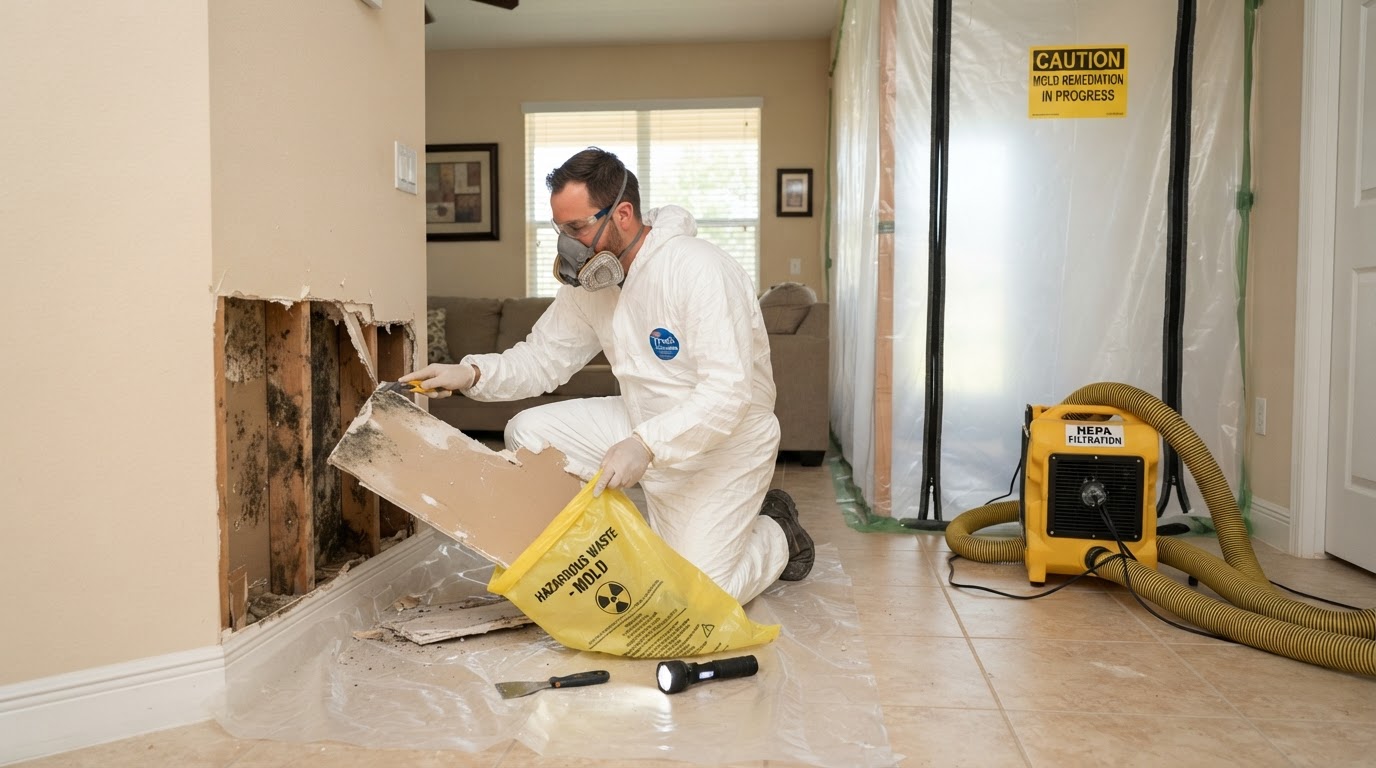
The most important rule of mold removal is that not every material can be saved. Porous materials that have supported growth — drywall, insulation, raw wood, carpet padding — generally cannot be reliably restored once contaminated and are removed under controlled conditions. Suitable non-porous or semi-porous surfaces in sound condition can often be cleaned. A credible removal plan says plainly which materials will be removed and why, rather than promising to save everything.
It is also important to distinguish removing the mold contamination from solving the original moisture problem. Physically taking out contaminated drywall without fixing the leak or the humidity that caused the growth will produce a brief, temporary result. Removal is one phase within the larger remediation scope, and the moisture correction that follows it is what makes the outcome durable.
When Visible Mold May Require Professional Removal
These conditions suggest that affected materials warrant professional evaluation rather than surface cleaning:
How Professional Mold Removal & Cleanup Works
Removal begins with assessing the affected areas and confirming the moisture source so the loss is not continuing while materials are being handled. Containment is set up where appropriate to keep disturbed material from spreading to unaffected spaces, and workers use appropriate protective equipment. Porous materials that have supported growth are removed under controlled conditions, while suitable non-porous surfaces are cleaned. Waste is handled and disposed of appropriately.
After the contaminated materials are out, the structure is dried to verified targets and the moisture source is corrected. Only then is restoration — drywall, insulation, flooring, and trim replacement — planned and completed. Applying bleach, paint, or fragrance over contaminated material is not a substitute for this process, because surface treatments do not address growth embedded in porous materials or the moisture that feeds it.
Affected-Area Assessment
Evaluate which materials are contaminated, which are salvageable, and the extent of the affected area.
Moisture Source ID
Confirm and stop the leak, condensation, or humidity driving the growth before removal proceeds.
Containment & PPE
Isolate the work area and use appropriate worker protection to prevent cross-contamination.
Controlled Removal
Remove contaminated porous materials under controlled conditions; clean salvageable non-porous surfaces.
Drying & Moisture Correction
Dry the structure to verified targets and repair the moisture source so the condition is sustained.
Restoration Planning
Plan and complete replacement of drywall, insulation, flooring, and trim removed during the project.
Mold Removal Near Port Charlotte & Charlotte County
Humid interior conditions in Southwest Florida mean that any moisture trapped behind cabinetry, inside wall cavities, or under flooring can support growth far longer than it would in a drier climate. Cabinet leaks under kitchen and bathroom sinks, condensation around AC supply registers, and moisture that wicks up drywall after a slow leak are common local starting points for a mold removal scope. Seasonal homes that sit closed through the summer amplify the problem, because there is no one present to notice a musty odor or a damp patch before it spreads.
Properties with previous water damage that was not fully dried are another frequent source. A flood or leak that was cleaned on the surface but never moisture-mapped and dried to verified targets can leave damp assemblies behind new drywall and flooring, and the growth surfaces months later. Professional removal in those cases means opening the concealed assembly, removing the contaminated materials, and drying properly this time.
Related Water Restoration Services
These related services often appear alongside mold removal in Port Charlotte properties.
Mold Removal & Cleanup FAQs for Port Charlotte Properties
Clear answers to the questions property owners most often ask about mold removal in Port Charlotte. Review them, then share your property details so the appropriate next steps can be discussed.
Request Professional Mold Removal Help
Tell us about the property damage and the location. Submit your inquiry so the appropriate next steps can be discussed.