Vacation Rental Water Damage Restoration Port Charlotte
Vacation rental and short-term rental water damage restoration in Port Charlotte, FL. Explore plumbing leaks, guest-related damage, drying between bookings, documentation, and coordinated property recovery for Airbnb, VRBO, and remotely owned rental homes throughout Charlotte County.
Request Restoration Help
Tell us about the property damage and the location. Submit your inquiry so the appropriate next steps can be discussed.
Short-Term Rental Water Damage Cleanup in Port Charlotte
Short-term rental properties across Port Charlotte and Charlotte County — vacation homes, waterfront rentals, canal-front properties, and seasonal condominiums booked through platforms like Airbnb and VRBO — face water damage risks that differ from an owner-occupied residence. A washing machine failure, a dishwasher leak, a refrigerator water line, an overflowing bathtub, a toilet supply leak, a water heater failure, or an AC condensate overflow can occur during a guest stay or between bookings, and the changing occupancy can delay the discovery or reporting of a leak. By the time damage is found, the moisture may have spread across flooring, into cabinets, and behind walls.
Not all rental water damage is caused by guests. A property system failure — an aging supply line, a failing water heater, a clogged condensate drain — can cause just as much damage as an accidental guest-related event, and storm-related flooding or roof intrusion is an external cause unrelated to occupancy. Distinguishing an accidental guest-related event, a property system failure, and external storm damage matters for the documentation and any insurance or platform discussion, and the restoration provider documents the factual conditions without assuming a cause.
This page focuses on rental property damage and restoration rather than generic residential cleanup. It does not claim affiliation with Airbnb, VRBO, or any booking platform, and it does not promise that rental platforms automatically cover restoration losses. The coordination challenges — guest safety, authorized property access, communication with property managers, water source control, contents, cleaning schedules, reservation disruption, and contractor access — are specific to a property that changes occupants frequently and may be managed or owned remotely.
Water Damage Risks for Vacation Rental Properties
Water damage in a rental property may be discovered by a guest, a cleaner, or a property manager between bookings. Common indicators include:
Vacation Rental Water Restoration Process
Restoration begins with confirming safe, authorized access — the owner or property manager must grant entry, and if a guest is present, guest safety is the first concern. Identifying and controlling the water source is the priority, because a rental property with an active leak cannot be dried effectively. Where plumbing or HVAC repair is needed, that work is coordinated with qualified trades, separate from the restoration itself. The visible damage is documented before any materials are removed, because that documentation supports both the restoration and any insurance or platform discussion about the loss.
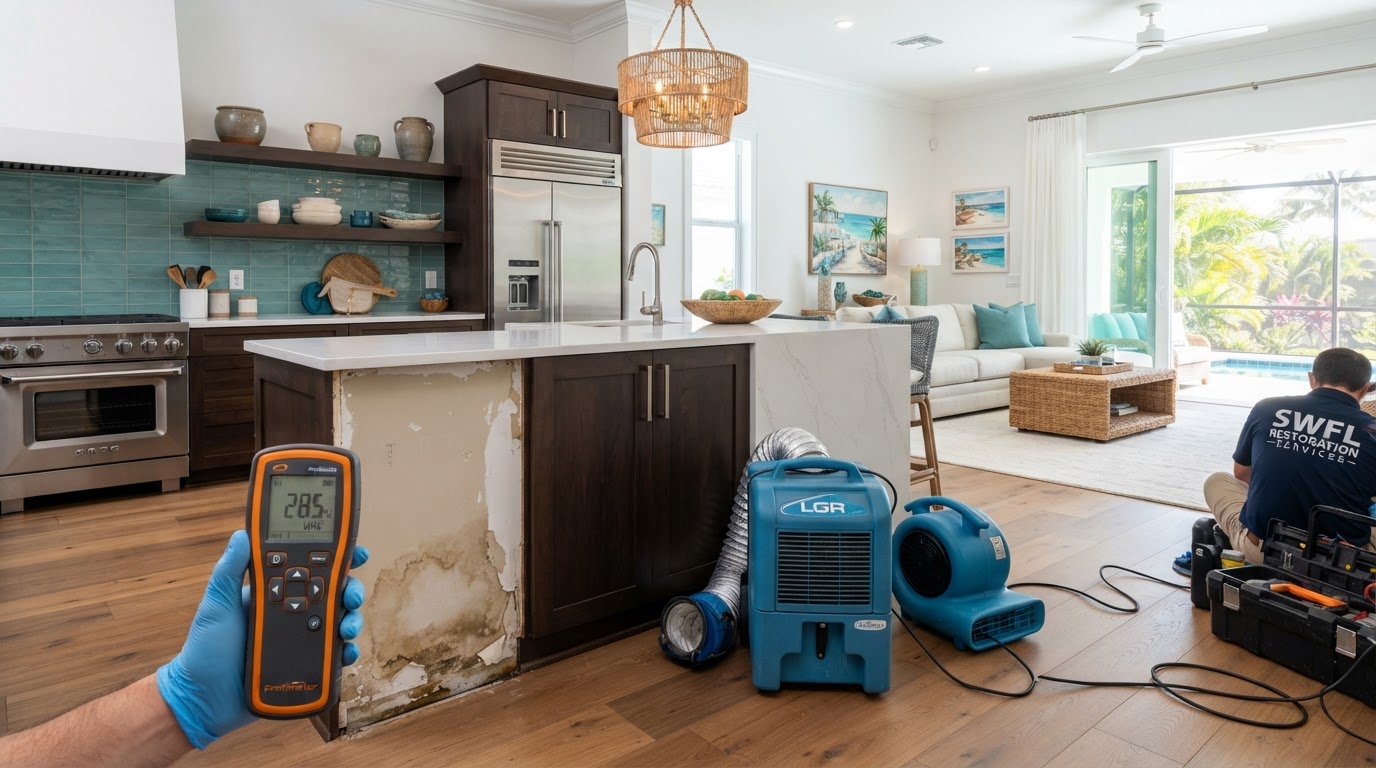
Affected rooms and contents are evaluated, and water extraction removes standing water where required. Appropriate structural drying addresses the moisture in salvageable materials, with monitoring over multiple visits until the affected assembly reaches an appropriate dry standard. Repairs or replacement are evaluated for materials that cannot be saved, and the work is coordinated with the owner or manager — who may be remote — through photographs, written reports, and clear communication about scope and timeline. Completed work is documented.
A return to occupancy is appropriate only after required repairs and safety checks are complete. This page does not guarantee zero lost bookings, immediate property reopening, or that a rental platform will cover restoration losses. Platform protection arrangements, rental property insurance, and homeowners insurance are separate considerations, and the owner should review the actual terms of each rather than assume coverage. The restoration provider's contribution is the factual documentation and the building restoration, not a promise about bookings or platform reimbursement.
1. Confirm Authorized Access
Confirm safe, authorized access with the owner or property manager.
2. Control Water Source
Identify and control the water source before drying begins.
3. Document Visible Damage
Document visible damage with photographs before any removal.
4. Coordinate Repairs
Coordinate necessary plumbing or HVAC repairs with qualified trades.
5. Evaluate Rooms & Contents
Evaluate affected rooms, contents, and rental furnishings.
6. Water Extraction
Perform water extraction where standing water is present.
7. Structural Drying
Establish appropriate structural drying for salvageable materials.
8. Monitor Moisture
Monitor moisture conditions over multiple drying visits.
9. Evaluate Repairs
Evaluate repairs or replacement for unsalvageable materials.
10. Coordinate with Owner
Coordinate scope and timeline with the owner or manager, including remotely.
11. Document Work
Document completed work for restoration and insurance records.
12. Confirm Safe Re-Occupancy
Confirm return to occupancy is appropriate after repairs and safety checks.
Vacation Rental Water Restoration Near Port Charlotte
Southwest Florida's short-term rental market includes waterfront rentals, canal-front properties, seasonal condominiums, and vacation homes whose owners may be remote and whose occupancy turns over frequently. Storm-season water damage is a particular concern — a property booked through a hurricane or heavy thunderstorm may experience roof intrusion, window or door leakage, or canal-front flooding that a guest does not recognize or report promptly. Guest turnover means a leak that begins late in one stay may not be discovered until the cleaner or the next guest arrives, extending the exposure time.
Remote property ownership is common in this market, and the restoration often coordinates through a property manager who provides access and relays documentation to an owner elsewhere. Keeping clear factual records when damage is discovered — when it was found, the suspected source, photographs of affected areas, and the guest's report if any — helps the owner understand the scope and supports any insurance or platform discussion. The restoration provider documents the facts; the owner handles the insurance and platform questions with the actual terms of each arrangement.
Insurance is mentioned only in general terms here. Rental property insurance, homeowners insurance, and platform-related protection arrangements are distinct, and their terms differ — a homeowners policy may not cover a property used as a short-term rental, and a platform's protection may have limits and exclusions. This page does not make specific coverage promises or claim affiliation with any booking platform. The Contents Cleaning & Pack-Out page addresses the handling of affected rental furnishings and personal property, and the Seasonal Home Leak Damage & Mold page addresses damage discovered after an extended vacancy.
Related Water Restoration Services
These related services often appear alongside vacation rental water damage restoration in Port Charlotte properties.
Vacation Rental Water Damage Restoration FAQs
Clear answers to the questions property owners most often ask about vacation rental water damage restoration in Port Charlotte. Review them, then share your property details so the appropriate next steps can be discussed.
Request Vacation Rental Water Damage Help
Tell us about the property damage and the location. Submit your inquiry so the appropriate next steps can be discussed.