
Attic Water Damage & Moisture Cleanup in Port Charlotte, FL
An attic is where roof leaks, AC condensate failures, and ventilation problems often show up first, because water travels down through the roof assembly into the insulation and the ceiling below. In Port Charlotte, FL, explore how attic moisture is assessed, how wet insulation is evaluated, and how the attic and ceiling are dried.
Request Restoration Help
Tell us about the property damage and the location. Submit your inquiry so the appropriate next steps can be discussed.
Attic Water Damage & Moisture Intrusion
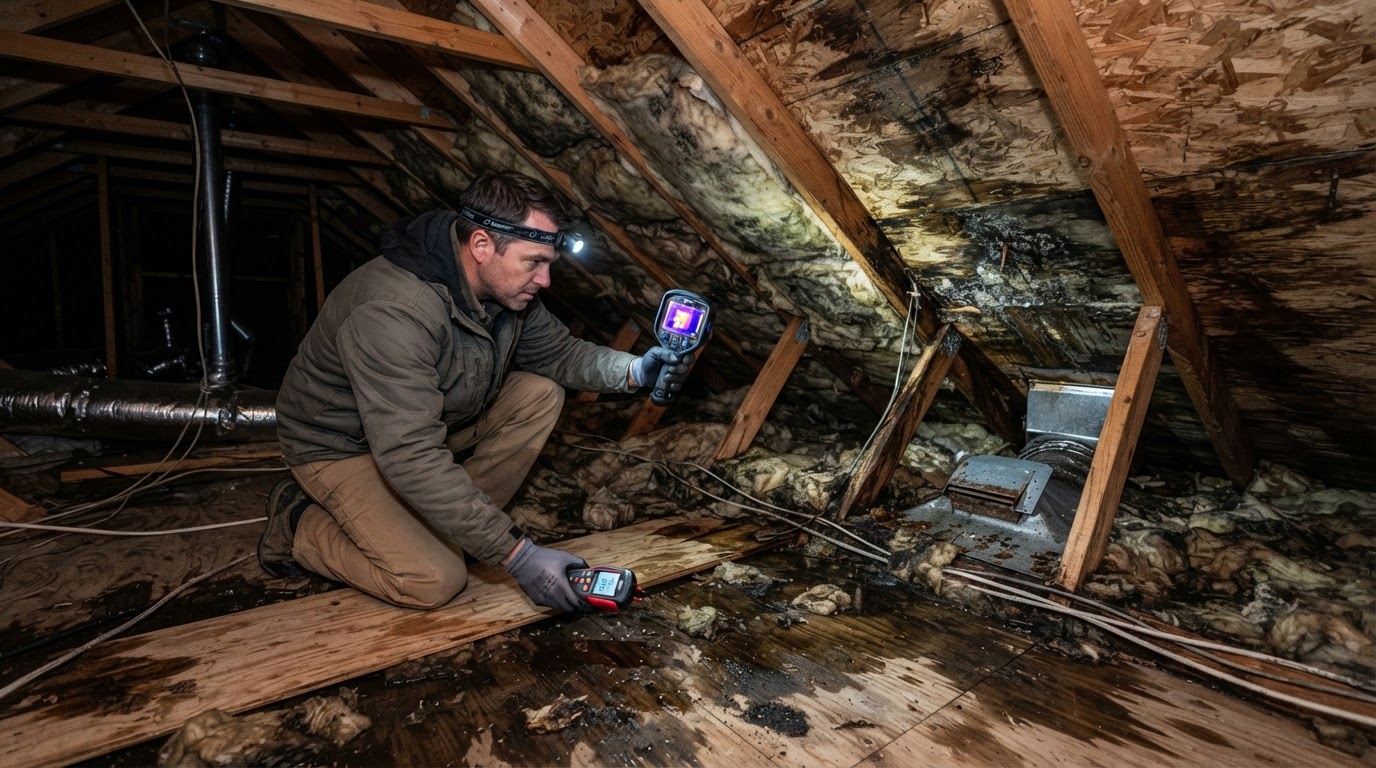
An attic is where roof leaks, AC condensate failures, and ventilation problems often show up first, because the water travels down through the roof assembly and into the attic insulation, the ceiling joists, and the drywall of the ceiling below before it is visible inside the living space. A roof leak from wind-driven rain or a damaged shingle wets the roof sheathing and the insulation beneath it. An AC condensate drain failure in an attic air handler saturates the surrounding insulation and the ceiling drywall below. A plumbing leak in an attic can run along the ceiling joists and into the wall cavities. Each source leaves moisture in a different part of the attic assembly.
The damage is often concealed. Wet insulation in an attic does not dry effectively, because the attic is enclosed and air movement is limited, and insulation that has absorbed water compresses and loses its thermal performance. The ceiling drywall beneath the attic wicks moisture from above, and the stain that appears on the ceiling below is often a late sign of a leak that has been active in the attic for longer. The roof sheathing and the framing can absorb moisture, and in a humid climate the attic can hold that moisture for an extended period — which raises the risk of microbial growth in the insulation and on the sheathing.
The restoration begins with identifying and correcting the source — the roof leak, the AC drain failure, or the plumbing leak — because drying an attic without stopping the water does not address the problem. The insulation is evaluated for removal, the sheathing and framing are assessed for moisture, and the ceiling drywall below is inspected for wicking. The assessment maps the moisture in the attic assembly, not just the visible stain on the ceiling below.
Signs of Attic Water Damage
Attic water damage often appears on the ceiling below before it is visible in the attic itself. These are the signs that warrant an attic and ceiling moisture assessment:
Attic Moisture Assessment & Drying
Restoration begins with identifying the source of the moisture — a roof leak, an AC condensate drain failure, a plumbing leak in the attic, or a ventilation problem — and coordinating the appropriate source repair, whether that is a roofer, an HVAC technician, or a plumber. The source must be corrected so the water stops, because drying an attic that is still receiving moisture does not address the problem. A moisture inspection then maps how far the water has traveled: into the insulation, the roof sheathing, the ceiling joists, and the drywall of the ceiling below.
Wet insulation is evaluated for removal, because insulation that has absorbed water compresses, loses its thermal performance, and does not dry effectively in the enclosed attic space — and insulation that has been wet long enough may also be a site for microbial growth. The roof sheathing and framing are assessed for moisture and for signs of growth, and the ceiling drywall below is inspected for wicking and structural integrity. Where the sheathing or drywall has lost integrity, or where suspected mold conditions are present, the applicable assessment and remediation considerations apply.
Air movement and dehumidification are set up to dry the attic framing and the ceiling assembly, monitored to verified moisture targets, and the scope is documented to support the insulation replacement, drywall repair, and ceiling refinishing that follows. The restoration is not represented as able to dry insulation that has lost its performance, or to save materials that have been compromised — the decision is made case by case during the assessment.
1. Source Identification
Identify the roof leak, AC drain failure, or plumbing leak and coordinate the appropriate repair.
2. Moisture Mapping
Map the moisture in the insulation, roof sheathing, ceiling joists, and drywall below.
3. Insulation Evaluation
Assess wet insulation for removal versus drying, based on compression and contamination.
4. Sheathing & Framing Assessment
Evaluate the roof sheathing and framing for moisture, structural integrity, and suspected growth.
5. Ceiling Drywall Inspection
Inspect the ceiling drywall below for wicking, sagging, and structural integrity.
6. Structural Drying
Dry the attic framing and ceiling assembly with monitored airflow and dehumidification to verified targets.
7. Mold Assessment Where Indicated
Where suspected mold conditions are present, apply the applicable assessment and remediation considerations.
8. Documentation & Repair Planning
Document the scope and plan insulation replacement, drywall repair, and ceiling refinishing.
Attic Water Damage Restoration Near Port Charlotte
In Port Charlotte and Charlotte County, attic water damage is often storm-related or AC-related. Wind-driven rain from hurricanes and heavy storms can drive water through roof penetrations and damaged shingles into the attic, and the high humidity means the attic holds that moisture for an extended period. AC air handlers in attics are a common source of condensate drain failures, because the system runs for most of the year and the condensate volume is substantial — a clogged drain can saturate the surrounding insulation and the ceiling below before it is noticed.
Seasonal homes add a layer of complexity. A roof leak or AC drain failure in an unoccupied property can run for weeks before discovery, by which point the insulation has compressed, the sheathing has absorbed moisture, and the ceiling drywall below has often stained or sagged. In those cases, the assessment accounts for the extended exposure and the possibility of suspected mold conditions on the sheathing and in the insulation. The source is corrected, the wet insulation is removed, and the assembly is dried before any replacement insulation or drywall is installed.
Related Water Restoration Services
These related services often appear alongside attic water damage & moisture cleanup in Port Charlotte properties.
Attic Water Damage & Moisture Cleanup FAQs
Clear answers to the questions property owners most often ask about attic water damage & moisture cleanup in Port Charlotte. Review them, then share your property details so the appropriate next steps can be discussed.
Request Attic Water Damage Help
Tell us about the property damage and the location. Submit your inquiry so the appropriate next steps can be discussed.