Ceiling & Drywall Water Damage Repair Port Charlotte
Ceiling and drywall water damage repair addresses the moisture that collects inside the ceiling cavity or runs down the inside of a wall from a roof leak, upstairs plumbing failure, or HVAC overflow. Explore the restoration process — source and safety assessment, moisture measurement, cavity inspection, controlled drywall removal, structural drying, and repair planning — for Port Charlotte and Charlotte County homes.
Request Restoration Help
Tell us about the property damage and the location. Submit your inquiry so the appropriate next steps can be discussed.
Ceiling & Drywall Water Damage in Port Charlotte Homes
Ceiling and drywall water damage is what happens when water from above — a roof leak, an upstairs plumbing failure, an HVAC condensate overflow, or an appliance supply-line break — collects inside the ceiling cavity or runs down the inside of a wall. The drywall absorbs that moisture, the paint blisters, the seams swell, and the gypsum board loses stiffness until it sags. Because the water is entering the assembly from the back side, the visible stain or bubbling is usually a late signal that moisture has been building behind the surface.
The cause of the ceiling damage drives the whole scope. A roof leak and an upstairs bathroom supply line can produce nearly identical ceiling stains, but they need different source-repair work — a roofer for one, a plumber for the other — before any drywall restoration can hold. Storm-driven rain, an attic air handler's condensate overflow, and a refrigerant-line ice accumulation all enter the ceiling through different paths. Identifying which path the water took is the first step, because the source repair has to stop the water before the drying and repair can be completed.
Ceiling and wall drywall does not automatically require replacement just because it got wet. Drywall exposed to clean water for a short period can often be dried in place if drying begins promptly and the gypsum retains its structural integrity. Drywall that has sagged, softened, or been saturated by contaminated water generally requires removal and replacement. The restoration decision depends on the water category, how long the material stayed wet, and whether structural integrity and microbial condition remain acceptable.
Signs of Water-Damaged Drywall & Ceiling Materials
Drywall and ceiling materials show water damage through the finish before the damage is visible in the board itself. These are the signs that warrant a moisture assessment:
How Ceiling & Drywall Water Damage Restoration Works
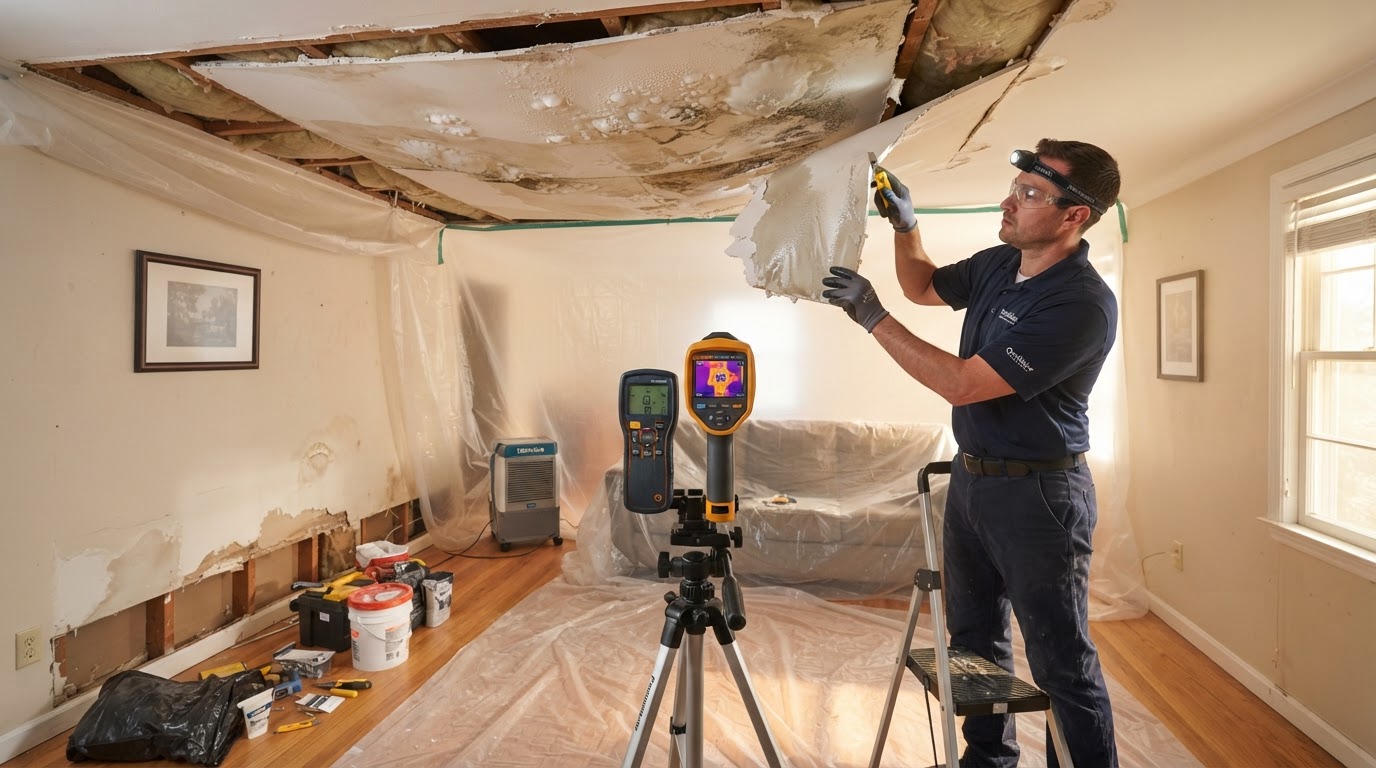
Restoration begins with locating and stopping the water source, which may require a roofer, plumber, or HVAC professional depending on the cause, and a safety assessment of the ceiling — a sagging, saturated drywall panel can be a collapse hazard and may need to be relieved or removed before it is safe to work beneath it. A moisture measurement with meters and a thermal camera maps how far the water has traveled across the ceiling and down the wall framing, because the visible stain is rarely the full extent.
Accessible ceiling and wall cavities are inspected for wet insulation, which is evaluated for removal when saturated. Drywall that has lost structural integrity or been contaminated is removed in a controlled cut above the waterline, while drywall that can be dried in place is left in the assembly. Air movers and dehumidification are set up and monitored to dry the framing and the remaining drywall to verified targets. Insulation is replaced, drywall is repaired and finished, and the surface is refinished once the assembly is confirmed dry.
Source & Safety
Locate and stop the water source and assess the ceiling for collapse hazard before work beneath it.
Moisture Measurement
Map the moisture across the ceiling and wall framing with meters and thermal imaging.
Cavity Inspection
Inspect accessible ceiling and wall cavities for wet insulation and framing condition.
Controlled Removal
Remove drywall and insulation that has lost integrity or been contaminated, above the waterline.
Structural Drying
Dry the framing and remaining drywall with airflow and dehumidification to verified targets.
Repair & Refinish
Replace insulation, repair drywall, and refinish the ceiling and wall surfaces to pre-loss condition.
Water-Damaged Ceiling Repairs Near Port Charlotte
Southwest Florida ceiling assemblies carry a few recurring moisture risks. Attic-mounted air handlers produce condensate that can overflow the pan and run down through the attic insulation and into the ceiling drywall below. Hurricane-season wind-driven rain enters through roof penetrations and travels the roof deck before it appears as a ceiling stain. Upstairs bathroom supply lines in two-story homes leak down into the first-floor ceiling. Each path leaves moisture in a different part of the ceiling cavity, and each needs its own source repair before the drywall work can hold.
Because the attic is enclosed and warm, moisture that enters the ceiling cavity dries slowly, which extends the window in which microbial growth can establish in the insulation or on the drywall backing. Seasonal residences see the same dynamic on a longer timeline — a ceiling leak discovered after months away can mean the drywall has been damp for the entire absence. A moisture assessment that maps the ceiling cavity is what catches this before the repair scope grows.
Related Water Restoration Services
These related services often appear alongside ceiling & drywall water damage repair in Port Charlotte properties.
Ceiling & Drywall Water Damage Repair FAQs
Clear answers to the questions property owners most often ask about ceiling & drywall water damage repair in Port Charlotte. Review them, then share your property details so the appropriate next steps can be discussed.
Request Ceiling & Drywall Restoration Help
Tell us about the property damage and the location. Submit your inquiry so the appropriate next steps can be discussed.