
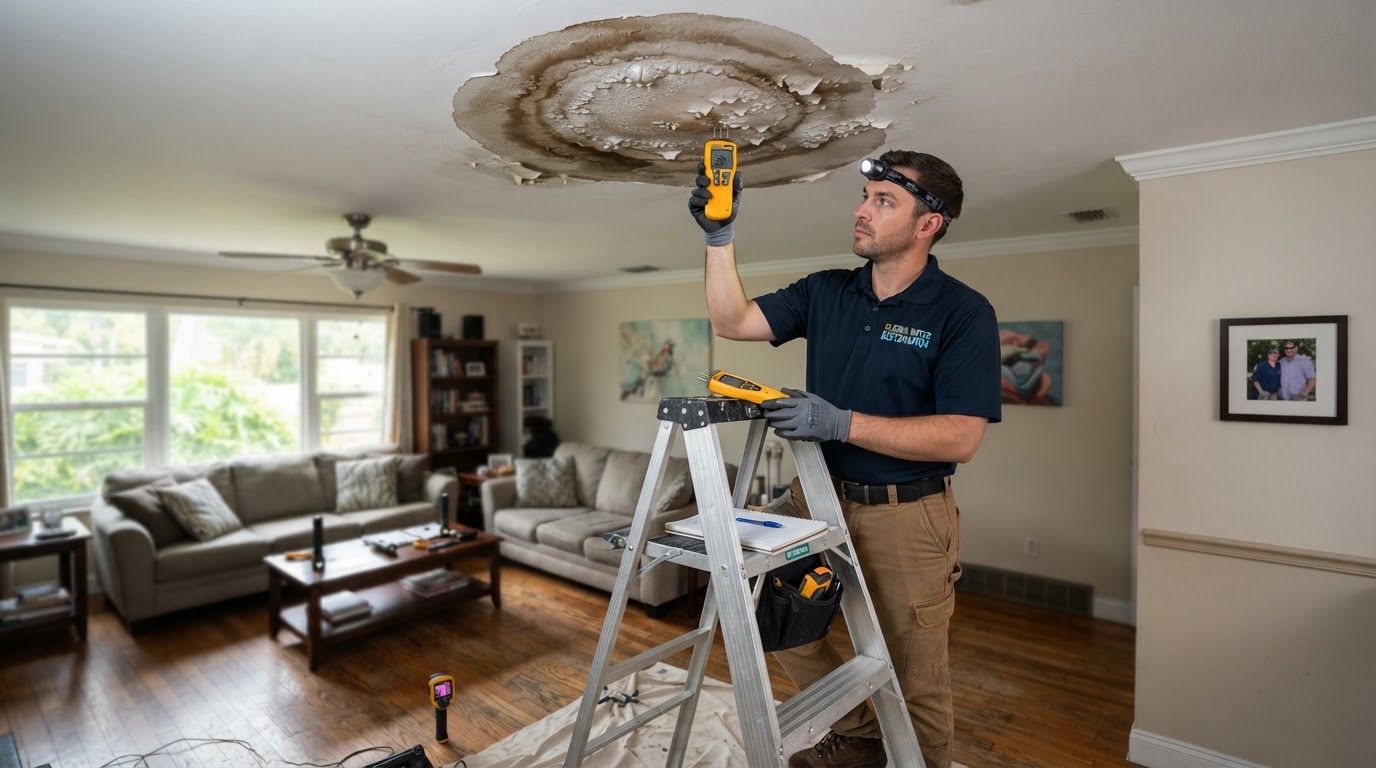
Roof Leak Water Damage Restoration Port Charlotte
Roof leak water damage restoration addresses the moisture that enters through the roof assembly and spreads into the attic insulation, ceiling drywall, and wall framing below. Explore the complete restoration process — source coordination, moisture inspection, insulation and drywall evaluation, structural drying, and ceiling repair planning — for Port Charlotte and Charlotte County homes.
Request Restoration Help
Tell us about the property damage and the location. Submit your inquiry so the appropriate next steps can be discussed.
Roof Leak Water Damage Cleanup in Port Charlotte
Roof leak water damage begins with water entering through the roof assembly and ends with moisture spreading through the attic insulation, the ceiling drywall, and the wall framing below it. A leak that starts at a failed flashing or a displaced shingle can travel along roof decking and rafters before it ever appears as a ceiling stain — which means the visible discoloration is usually a fraction of the moisture that has already entered the assembly. In Port Charlotte, where hurricane-season rain and wind-driven storms stress roof systems for months at a time, roof intrusion is one of the more common paths into residential water damage.
It is important to separate the two scopes that a roof leak creates. Roofing repair — finding and fixing the failed shingle, flashing, vent boot, or seal — is a roofing contractor's scope and is what stops the water from entering. Water damage restoration is the mitigation scope that follows: assessing how far the moisture has traveled, removing wet insulation, extracting any standing water, drying the ceiling and wall assemblies, and repairing or replacing the drywall and finishes that were damaged. The two are sequential, not the same, and a restoration provider coordinates with the qualified roofing professional rather than replacing the roofing work.
Because roof water travels through concealed attic space before it surfaces, the visible drip or stain is rarely the full extent of the loss. A moisture assessment with meters and thermal imaging is what maps the actual path of the water through the insulation and framing, and that map is what drives the drying and repair scope.
Signs of Roof Leak Water Damage Inside Your Home
Roof intrusion usually reveals itself from inside before it is visible from the roof surface. These signs warrant both a roofing evaluation and a moisture assessment:
How Roof Leak Water Damage Restoration Works
Restoration begins with an evaluation of the interior damage and coordination to stop the water source — the qualified roofing professional repairs the roof so no additional water enters while mitigation proceeds. Once the source is controlled, a moisture inspection maps the path water has taken through the attic insulation, roof decking, ceiling drywall, and wall framing. Wet insulation that has lost its loft is evaluated for removal, because saturated fiberglass batts hold moisture against the ceiling drywall and slow drying.
Where standing water has pooled on the ceiling below a saturated assembly, it is extracted and controlled material removal may follow — a section of ceiling drywall or wet insulation may be opened to release trapped moisture and inspect the framing. Air movers and dehumidification are then set up and monitored to dry the remaining assembly, with particular attention to the framing members that absorbed water. The scope is documented, and drywall and ceiling restoration is planned once the assembly reaches verified dry-standard moisture content.
Damage Evaluation
Assess the interior ceiling, wall, and attic for the full path of moisture migration from the roof.
Source Coordination
Coordinate with a qualified roofer to stop the roof leak so no further water enters the assembly.
Moisture Inspection
Map the moisture with meters and thermal imaging across insulation, decking, drywall, and framing.
Insulation & Material Removal
Remove saturated insulation and, where needed, open ceiling drywall to release trapped moisture.
Structural Drying
Operate air movers and dehumidification on the framing and remaining drywall, monitored to verified targets.
Ceiling Restoration
Plan and complete drywall, insulation, and finish repairs once the assembly is confirmed dry.
Roof Leak Restoration Near Port Charlotte & Charlotte County
Southwest Florida roof systems face months of hurricane-season rain, wind-driven intrusion, and tropical-storm conditions that stress shingles, flashing, and roof penetrations. A shingle displaced by wind or a dried-out vent boot can allow rainwater to travel along the roof deck for feet before it finds a path down into the attic. In seasonal residences that sit unoccupied through the summer, a roof leak can saturate attic insulation and ceiling drywall for weeks before the owner arrives and sees the stain — by which point the drying scope is already substantial.
Identifying concealed moisture is what makes a roof-leak restoration different from simply patching the roof. The roofing repair stops the water; the restoration scope addresses the moisture that already entered the attic, insulation, and ceiling assembly. Both are needed to return the property to a dry, sound condition.
Related Water Restoration Services
These related services often appear alongside roof leak water damage in Port Charlotte properties.
Roof Leak Water Damage FAQs for Port Charlotte Homeowners
Clear answers to the questions property owners most often ask about roof leak water damage in Port Charlotte. Review them, then share your property details so the appropriate next steps can be discussed.
Request Roof Leak Damage Help
Tell us about the property damage and the location. Submit your inquiry so the appropriate next steps can be discussed.