
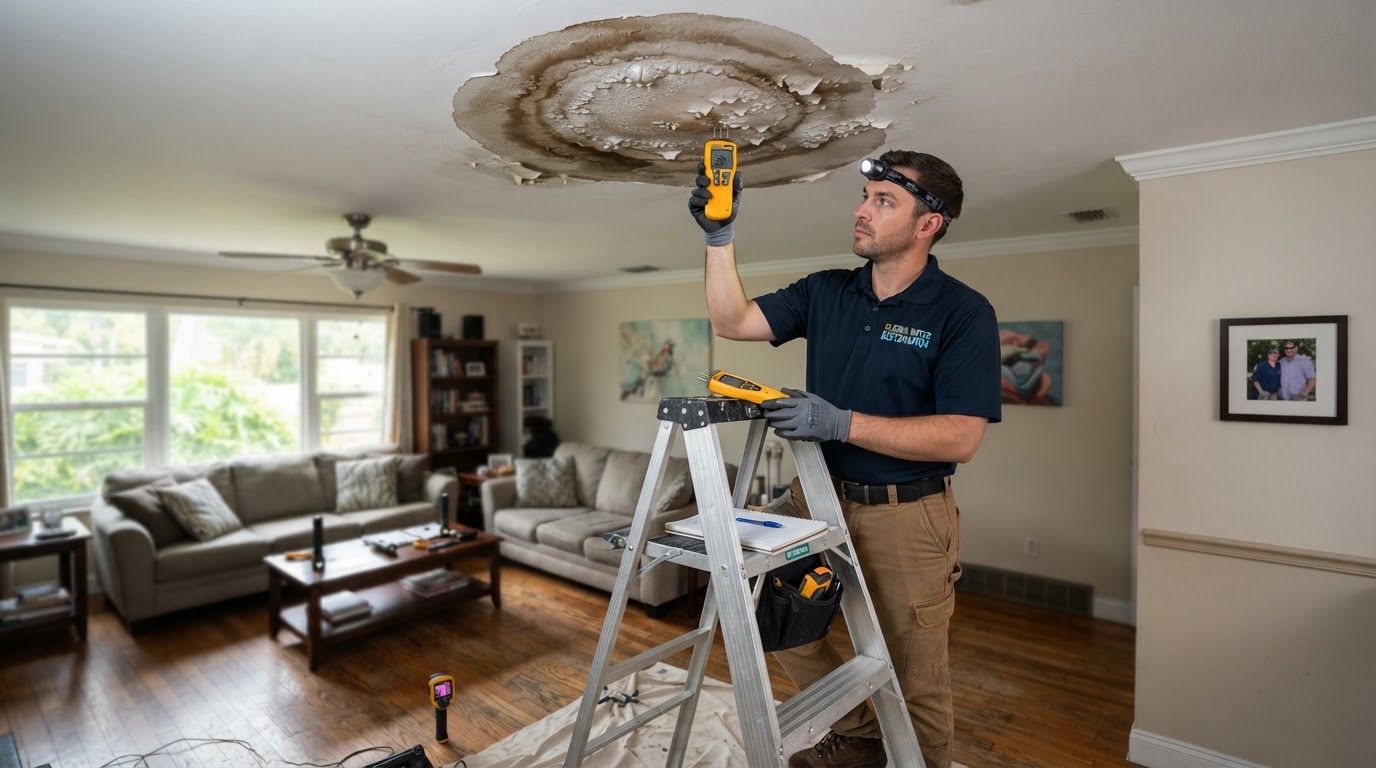
Wet Insulation Removal & Replacement in Port Charlotte, FL
Insulation is one of the first building materials to absorb water in a loss, and it is one of the most consequential to leave wet — it holds moisture against the drywall and framing and slows the drying of the entire structure. In Port Charlotte, FL, explore when saturated insulation must be removed, why it matters, and how walls and attics are dried before new insulation is installed.
Request Restoration Help
Tell us about the property damage and the location. Submit your inquiry so the appropriate next steps can be discussed.
Why Wet Insulation Matters
Insulation is one of the first building materials to absorb water in a loss, and it is one of the most consequential to leave wet. Fiberglass batt and blown-in insulation act like a sponge — they hold the water against the drywall, the framing, and the ceiling assembly, slowing the drying of the entire structure and creating the warm, damp, enclosed conditions that favor microbial growth. Wet insulation loses its thermal performance, compresses, and can hold moisture for weeks inside a closed wall or attic cavity long after the surface looks dry.
Whether insulation can be dried in place or must be removed depends on how wet it got, how long it stayed wet, and the category of water. Insulation lightly dampened from a brief, clean-water leak can sometimes be dried with airflow. Insulation that is saturated, compressed, or has lost its loft generally cannot be reliably dried and is removed and replaced, because it will not recover its insulating value and it continues to hold moisture against the assembly. Insulation exposed to contaminated water — Category 2 or 3 — is removed as part of the contamination control, regardless of how wet it appears.
Removing wet insulation is what allows the framing and drywall behind it to dry. A closed wall or attic cavity with saturated insulation cannot be effectively dried with airflow alone, because the air cannot reach the wet materials. Opening the cavity, removing the wet insulation, and drying the exposed assembly is what returns the structure to a verifiable dry standard — and the new insulation is installed only after the framing and drywall are confirmed dry, so the new material does not absorb residual moisture.
When Wet Insulation Requires Removal
Insulation that has absorbed water shows up through the surrounding assembly and the surface above or below it. These are the conditions that warrant removal rather than drying in place:
Wet Insulation Removal, Drying & Replacement
The process begins with a moisture assessment that maps the wet insulation in the wall cavity, attic, or ceiling assembly — using meters and thermal imaging to locate the saturated material behind the surface. Where the assessment confirms insulation that cannot be dried in place, the cavity is opened: a section of drywall or the attic access is opened to reach the wet batts or blown-in material, and the saturated insulation is removed and disposed of appropriately. The framing, drywall backing, and ceiling assembly behind it are then exposed for drying.
Air movers and dehumidification are directed at the exposed assembly and monitored to verified moisture targets, with repeated meter readings until the framing and remaining drywall reach an appropriate dry standard. Where the water was contaminated, the cavity is appropriately cleaned and disinfected before drying proceeds. Once the assembly is confirmed dry, new insulation is installed — matched to the original material and R-value where practical — and the drywall or ceiling finish is repaired and refinished. The scope is documented, including what was removed, what was dried, and what was replaced, for the owner's record.
1. Moisture Assessment
Map the wet insulation in the wall, attic, or ceiling cavity with meters and thermal imaging.
2. Cavity Access
Open a section of drywall or attic access to reach the saturated insulation behind the surface.
3. Insulation Removal
Remove and dispose of saturated, compressed, or contaminated insulation appropriately.
4. Assembly Drying
Dry the exposed framing, drywall, and ceiling assembly with monitored airflow and dehumidification.
5. Verification
Verify the assembly reaches an appropriate dry standard with repeated meter readings before replacement.
6. Insulation Replacement
Install new insulation matched to the original material and R-value, then repair and finish the drywall.
Wet Insulation Restoration Near Port Charlotte
In Port Charlotte and Charlotte County, attic insulation is a frequent site of water damage because attic-mounted air handlers, roof leaks, and hurricane-season wind-driven rain all deliver water into the attic assembly above the ceiling drywall. Wall insulation is commonly saturated by plumbing leaks inside the wall, shower pan failures behind the surround, or supply-line drips beneath a sink. In each case, the insulation holds the moisture against the framing and the drywall, which extends the drying timeline and raises the risk of microbial growth in Florida's humid air.
Seasonal residences see the delayed-discovery pattern: a roof leak or condensate failure that saturates attic insulation for weeks before the owner returns, by which point the insulation has compressed and the ceiling drywall below has absorbed moisture. The assessment accounts for the extended exposure, and the wet insulation is removed so the framing and ceiling can be dried before new insulation and drywall are installed. The documentation reflects the source, the materials removed, and the drying verified — which supports both the restoration scope and any insurance process.
Related Water Restoration Services
These related services often appear alongside wet insulation removal & replacement in Port Charlotte properties.
Wet Insulation Removal & Replacement FAQs
Clear answers to the questions property owners most often ask about wet insulation removal & replacement in Port Charlotte. Review them, then share your property details so the appropriate next steps can be discussed.
Request Wet Insulation Removal Help
Tell us about the property damage and the location. Submit your inquiry so the appropriate next steps can be discussed.