
AC Condensate & Air Handler Leak Damage Port Charlotte
A clogged AC condensate drain line, an overflowing pan, or a failed pump can send water into ceilings, closets, and the drywall and flooring around an air handler. In Port Charlotte, FL, explore how condensate drainage failures damage nearby building materials, how the moisture is assessed, and how structural drying is separated from the qualified HVAC repair that must correct the source.
Request Restoration Help
Tell us about the property damage and the location. Submit your inquiry so the appropriate next steps can be discussed.
AC Condensate Water Damage in Port Charlotte Homes
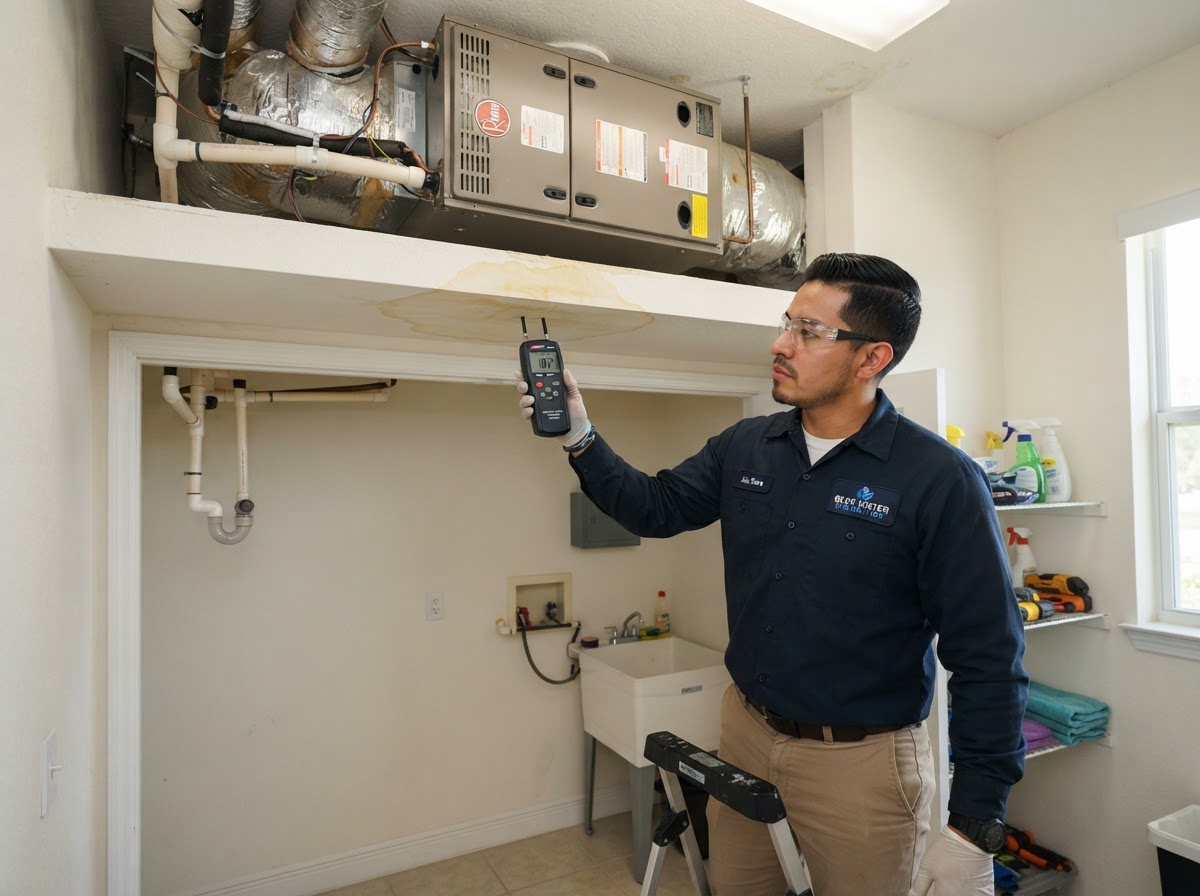
An air conditioning system removes moisture from indoor air as part of normal operation, and that condensate is supposed to drain safely out of the home. When the condensate drain line clogs, the drain pan overflows, a pump fails, or the drain piping disconnects, the water can accumulate around the air handler and travel into the surrounding building materials — through ceilings, into closet drywall, beneath nearby flooring, and into insulation. In Port Charlotte and Charlotte County, where air conditioning runs for much of the year, a condensate drainage failure can produce interior water damage that is discovered as a ceiling stain, a damp closet, or warped flooring near the air handler.
Normal condensate production is not a leak — the system is supposed to generate condensate and drain it away. The problem is when the drainage fails and the water reaches places it should not. An attic-mounted air handler can leak through the ceiling below; a closet air handler can saturate the drywall and subfloor around the unit; a failed condensate pump can allow water to overflow the pan and run across nearby surfaces. The damage depends on where the water went, how long it was active, and what materials it reached — and the assessment maps the moisture in the surrounding assembly, not just the visible stain.
This page is more specific than the broader AC & Water Heater Leak Cleanup page. It focuses on condensate drainage and air handler leakage — the clogged drain line, the overflowing pan, the failed pump — and the damage those failures cause to the drywall, ceilings, insulation, and flooring around the equipment. HVAC system maintenance and repair are separate from the structural water damage cleanup; the restoration is not represented as licensed HVAC work. The source is corrected by a qualified HVAC professional, and the restoration addresses the building materials the condensate has affected.
Signs of AC Condensate Overflow & Air Handler Water Damage
A condensate drainage failure often shows up first at the ceiling, closet, or flooring near the air handler. These are the signs that warrant evaluation — water near electrical equipment can create safety concerns, so caution is appropriate:
Restoring Property Damage After an AC Leak
Restoration after an AC condensate or air handler leak begins with identifying the source of the leakage and arranging appropriate HVAC diagnosis and repair — the drain line, the pump, the pan, or the connection that has failed must be corrected so the water stops. Before drying, any electrical or water hazard near the equipment is evaluated, because water around an air handler can reach wiring, outlets, or the equipment itself. The affected rooms and assemblies are then assessed: the ceiling beneath an attic unit, the closet drywall, the subfloor, the insulation, and any adjacent flooring the condensate has reached.
Standing water is removed where present, and wet insulation is evaluated — insulation that has absorbed condensate may not dry effectively in place and may require removal. Structural drying addresses the ceiling, wall, and floor assemblies with monitoring over multiple visits, and the drywall and flooring are assessed for salvageability. Where a ceiling has softened or a subfloor has swelled, the material is evaluated for repair versus replacement. The restoration is coordinated with the HVAC repair that corrects the source, and the documentation reflects what was wet, what was dried, and what was repaired or replaced.
HVAC system maintenance and repair are distinct from the structural water damage cleanup. The restoration is not represented as licensed HVAC work; a qualified HVAC professional corrects the condensate drainage or air handler issue, and the restoration addresses the building materials the water has affected. Not every AC leak results in mold — the moisture is assessed and, where suspected mold conditions are present, the applicable assessment and remediation considerations apply. The goal is to dry the affected assembly and restore the damaged materials after the source is corrected, with the full scope documented for the owner's record.
1. Identify the Leak Source
Identify the condensate drainage or air handler failure that is allowing water to escape.
2. Arrange HVAC Diagnosis
Coordinate qualified HVAC diagnosis and repair of the drain line, pump, pan, or connection.
3. Evaluate Hazards
Evaluate electrical and water hazards near the equipment before drying proceeds.
4. Assess Affected Rooms
Assess the ceiling, closet, subfloor, insulation, and flooring the condensate has reached.
5. Remove Standing Water
Remove standing water around the air handler and from affected surfaces.
6. Evaluate Wet Insulation
Evaluate wet insulation for drying feasibility versus removal.
7. Structural Drying
Dry the ceiling, wall, and floor assemblies with monitoring over multiple visits.
8. Monitor Moisture
Monitor moisture conditions until the assembly reaches an appropriate dry standard.
9. Assess Drywall & Flooring
Assess drywall and flooring for salvageability versus repair or replacement.
10. Coordinate Repairs
Coordinate the finish repairs with the HVAC correction that stops the source.
11. Document Damage & Work
Document the condensate damage, the drying, and the repairs for the owner's record.
Air Handler Leak Restoration Near Port Charlotte
In Port Charlotte and Charlotte County, air conditioning use is heavy for much of the year, and the condensate a system produces is substantial — which means a drainage failure can move a meaningful amount of water into the surrounding assembly before it is noticed. Humid indoor conditions can slow the drying of drywall, insulation, and subfloor near the air handler, and attic air handler installations can leak through the ceiling below before the problem is visible at the unit. Closet air handlers, return-air platforms, and equipment in utility rooms can all saturate the drywall and flooring immediately around the equipment.
Seasonal homes add a layer of complexity. A condensate failure in an unoccupied property can run for an extended period before discovery, allowing moisture to saturate the ceiling, insulation, and subfloor — and the leak is found only on return. In those cases, the assessment accounts for the extended exposure and the possibility of suspected mold conditions, evaluated under the applicable assessment and remediation considerations. The source correction and the assessment of hidden building moisture are both important: correcting the condensate drainage without drying the surrounding assembly leaves the water damage unaddressed.
Where the moisture has reached drywall, ceilings, insulation, or flooring around the air handler, those materials are evaluated for salvageability and the related restoration is coordinated with the HVAC repair. The documentation reflects the condensate source, the water damage, the materials removed or dried, and the repairs planned. Not every AC leak produces mold, and the restoration is not represented as licensed HVAC work — the HVAC professional owns the source correction, and the restoration owns the cleanup, drying, and material restoration.
Related Water Restoration Services
These related services often appear alongside ac condensate & air handler leak damage in Port Charlotte properties.
AC Condensate & Air Handler Leak Damage FAQs
Clear answers to the questions property owners most often ask about ac condensate & air handler leak damage in Port Charlotte. Review them, then share your property details so the appropriate next steps can be discussed.
Request AC Condensate Water Damage Help
Tell us about the property damage and the location. Submit your inquiry so the appropriate next steps can be discussed.