
Seasonal Home Leak Damage & Mold Port Charlotte
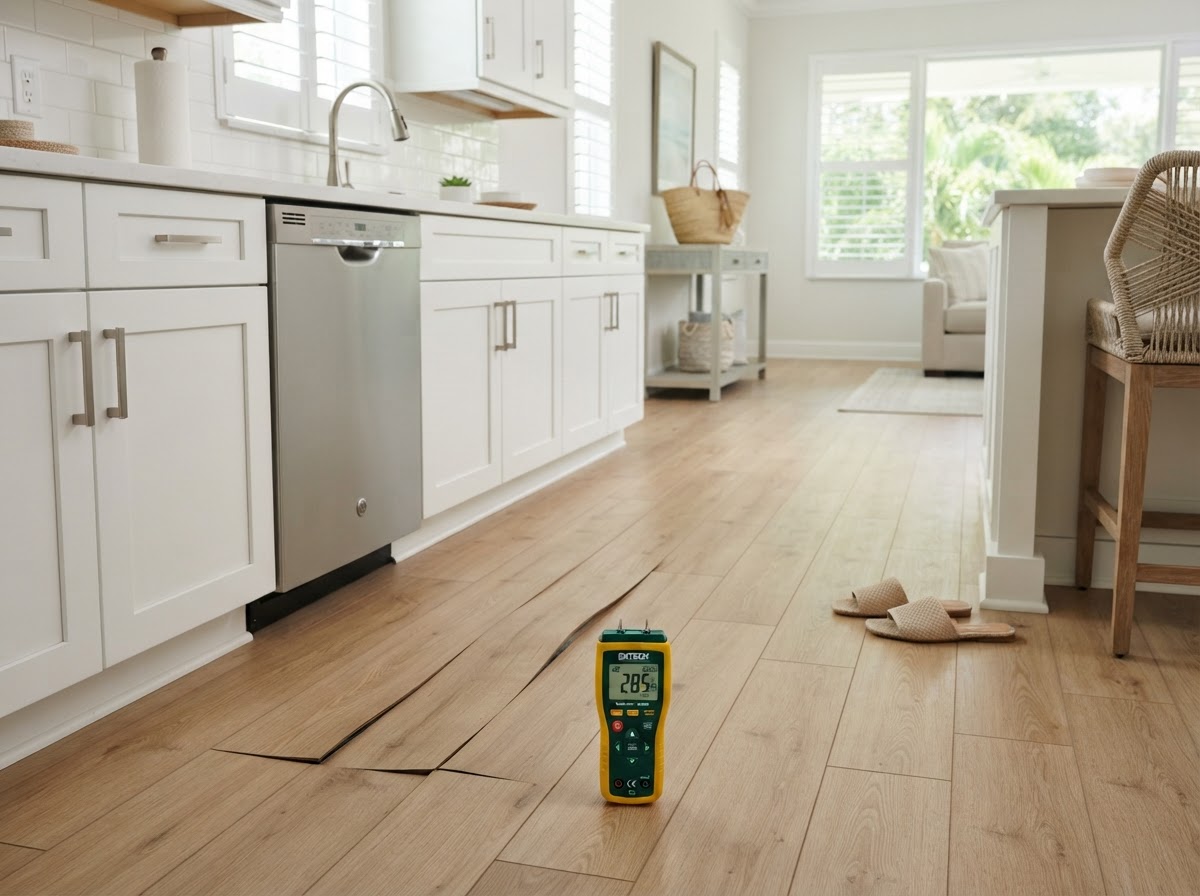
Seasonal residents who leave their Southwest Florida home unoccupied can return to water damage and suspected mold that began long before arrival. In Port Charlotte, FL, explore how hidden plumbing leaks, unattended water damage, and concealed moisture are assessed and restored — with coordination that accounts for an owner who may be remote and a loss that unfolded without oversight.
Request Restoration Help
Tell us about the property damage and the location. Submit your inquiry so the appropriate next steps can be discussed.
Snowbird & Seasonal Home Water Damage in Port Charlotte
Seasonal residents and snowbirds who leave their Southwest Florida home unoccupied for weeks or months can return to water damage and suspected mold that began long before arrival. A plumbing leak, a water heater failure, a toilet supply line, an appliance connection, or an AC condensate overflow can run unseen during an extended absence, and by the time the owner returns, the moisture has saturated flooring, cabinetry, drywall, or insulation — and may have fostered microbial growth. The delayed discovery is the defining feature of a seasonal-home loss, and it shapes how the damage is assessed and restored.
When the damage is discovered weeks or longer after it began, it can be harder to determine when the leak started, how long the water was active, and what the full extent of the exposure has been. A home's temperature, ventilation, air conditioning settings, and ambient moisture all affect how water accumulates and how materials respond — but there is no single thermostat setting that guarantees prevention and no blanket rule that a particular setting causes mold. The assessment evaluates the actual conditions: the moisture in the affected assemblies, the materials involved, and the presence of any suspected microbial growth, evaluated under the applicable considerations rather than assumed from appearance.
This page focuses on the delayed-discovery loss — the hidden plumbing leak, the unattended water damage, the moisture that has been present for an extended period — and the restoration that follows. It is not a home-watch or property-monitoring service page; a separate Seasonal Home Moisture Monitoring & Leak Checks page addresses the preventive side. Here, the concern is what to do when the damage is already present: authorize access, identify and stop the source, document the loss, assess the materials, and coordinate the drying and any qualified mold remediation that the conditions require.
Signs of Hidden Water Damage & Mold in Seasonal Homes
The first signs of a delayed-discovery loss often appear on arrival. These are the conditions that warrant evaluation — mold appearance and odor do not establish mold species or health risk, which requires qualified assessment:
Restoration After a Leak Is Discovered
Restoration after a delayed-discovery loss begins with an initial safety assessment and confirmation of authorized property access — the owner may be remote, so access is coordinated through the owner, a property manager, or an authorized representative. The moisture source is identified and controlled: a plumbing leak, a water heater failure, an AC overflow, or a roof leak, with the appropriate qualified trade — plumber, HVAC, or roofer — correcting the source. The observed damage is documented with photographs and notes, and the affected materials are evaluated for the full extent of the exposure.
Standing water is removed where present, and where contamination applies — after a sewage-related leak or an extended Category 3 exposure — the contamination is assessed before drying proceeds, because contaminated porous materials may require removal rather than in-place drying. Appropriate structural drying is established for the affected assemblies, with monitoring over multiple visits until the materials reach an appropriate dry standard. Where suspected mold conditions are present, qualified mold assessment or remediation is coordinated under the applicable Florida professional requirements — the restoration is not represented as licensed mold assessment without confirmed qualifications, and significant contamination may require specialized professionals.
Because the loss unfolded without oversight, the restoration often involves distinguishing older damage from any newer conditions, evaluating multiple affected rooms, and accounting for concealed moisture that has traveled through the assembly. Not every material can be dried or restored — some porous materials that have been wet for an extended period require removal. The restoration and reconstruction requirements are reviewed after the assessment, and the documentation supports the owner's record of the loss, including the timeline where it can be established and the full scope of the work performed. Coverage and reporting obligations depend on the actual policy and the loss circumstances.
1. Initial Safety Assessment
Assess safety on discovery — electrical, structural, and contamination — before any access or work.
2. Authorized Access
Confirm authorized property access through the owner, property manager, or representative.
3. Control the Moisture Source
Identify and control the source — plumbing, HVAC, roof — coordinating the qualified trade.
4. Coordinate Plumbing or HVAC Repair
Coordinate the plumbing or HVAC repair that corrects the source of the leak.
5. Document Observed Damage
Document the observed damage with photographs, notes, and the timeline where it can be established.
6. Evaluate Affected Materials
Evaluate the affected materials for the full extent of the exposure.
7. Remove Standing Water
Remove standing water where present and assess contamination where applicable.
8. Assess Contamination
Assess contamination before drying where a Category 3 or extended exposure applies.
9. Establish Drying
Establish appropriate structural drying with monitoring over multiple visits.
10. Evaluate Suspected Mold
Evaluate suspected mold conditions under the applicable assessment considerations.
11. Coordinate Mold Remediation
Coordinate qualified mold assessment or remediation where the conditions require it.
12. Review Restoration
Review the restoration and reconstruction requirements after the assessment.
Seasonal Home Water Restoration Near Port Charlotte & Charlotte County
In Port Charlotte and Charlotte County, seasonal and snowbird residences are common — properties occupied during the winter months and left unoccupied through the summer, including canal-front homes, winter-use condominiums, and properties managed remotely while the owner is away. An unoccupied property can develop a plumbing, water heater, or AC condensate leak that runs for weeks before discovery, and the Florida heat and humidity can accelerate what happens to wet materials during that period. The restoration accounts for the extended exposure and the possibility that the loss has affected multiple rooms and concealed assemblies by the time it is found.
Practical, nontechnical guidance helps owners and their representatives respond well. Maintain updated emergency contacts and arrange authorized property access so a restoration provider can reach the property. Consider appropriate leak detection and water shutoff options where practical, and have plumbing and HVAC systems maintained by qualified providers before an extended absence. Use suitable moisture monitoring where practical, and document property conditions and maintenance so there is a baseline if a loss is discovered. Where a leak is suspected, investigate promptly — the longer the water runs, the broader the damage. This page does not advertise ongoing home monitoring as a verified service; a separate page addresses the preventive monitoring side.
Insurance coverage and reporting obligations depend on the actual policy provisions and the loss circumstances, and a vacancy or unoccupancy period can affect how a loss is characterized. The restoration provider does not provide blanket coverage guarantees or legal conclusions about vacancy exclusions; those determinations belong to the owner's insurer or a qualified professional. The documentation — the observed damage, the timeline where established, the moisture findings, the materials removed or dried, and the repairs planned — supports the owner's communication with their insurer and their record of the loss, and the restoration is coordinated with the qualified trades that correct the source.
Related Water Restoration Services
These related services often appear alongside seasonal home leak damage & mold in Port Charlotte properties.
Seasonal Home Leak Damage & Mold FAQs
Clear answers to the questions property owners most often ask about seasonal home leak damage & mold in Port Charlotte. Review them, then share your property details so the appropriate next steps can be discussed.
Request Seasonal Home Water Damage & Mold Help
Tell us about the property damage and the location. Submit your inquiry so the appropriate next steps can be discussed.