
Flood vs. Water Damage Insurance Coverage Port Charlotte
Flood versus water damage insurance coverage explains how flood, plumbing leak, roof, and storm losses may differ under Florida insurance policies for Port Charlotte homeowners. Explore the flood-versus-water distinction, common claim scenarios, restoration documentation, and when to seek licensed professional guidance throughout Charlotte County.
Request Restoration Help
Tell us about the property damage and the location. Submit your inquiry so the appropriate next steps can be discussed.
Flood Insurance vs. Water Damage Coverage in Port Charlotte
For Florida homeowners, the distinction between flood damage and other forms of water damage is one of the most important — and most misunderstood — insurance questions after a property loss. The same visible result, a wet floor and damaged drywall, can come from very different causes: a burst plumbing supply line, an overflowing washing machine, a roof leak during a storm, or storm surge that pushes floodwater into a ground-level home. Those different causes can be treated very differently under insurance policies, and understanding the distinction helps a property owner communicate the loss accurately and organize the documentation the insurer will need.
In general terms, flood damage involves rising surface water — storm surge, overflowing bodies of water, heavy rainfall that accumulates and enters a home from outside — and is commonly addressed under a separate flood insurance policy rather than a standard homeowners policy. Water damage, in the insurance sense, often involves internal plumbing failures, appliance overflows, water heater leaks, and certain sudden accidental water releases, and may be addressed under a homeowners policy subject to its terms, exclusions, and deductibles. The exact definitions depend on the relevant policy and the applicable flood insurance program, and no coverage outcome is guaranteed.
This page is an educational restoration and documentation resource. It does not portray the website as an insurer, a licensed public adjuster, or a legal practice, and it does not promise to negotiate claims, interpret individual policies, establish liability, or guarantee coverage. The information here helps a property owner understand the general distinctions and organize useful documentation; the actual coverage questions are controlled by the policy terms and the facts of the loss, and case-specific interpretation should come from the insurer or a qualified licensed professional.
Water Damage Insurance Questions After Florida Storms
These common scenarios illustrate why similar-looking damage can involve different causes and different coverage provisions:
Documentation After Water or Flood Damage
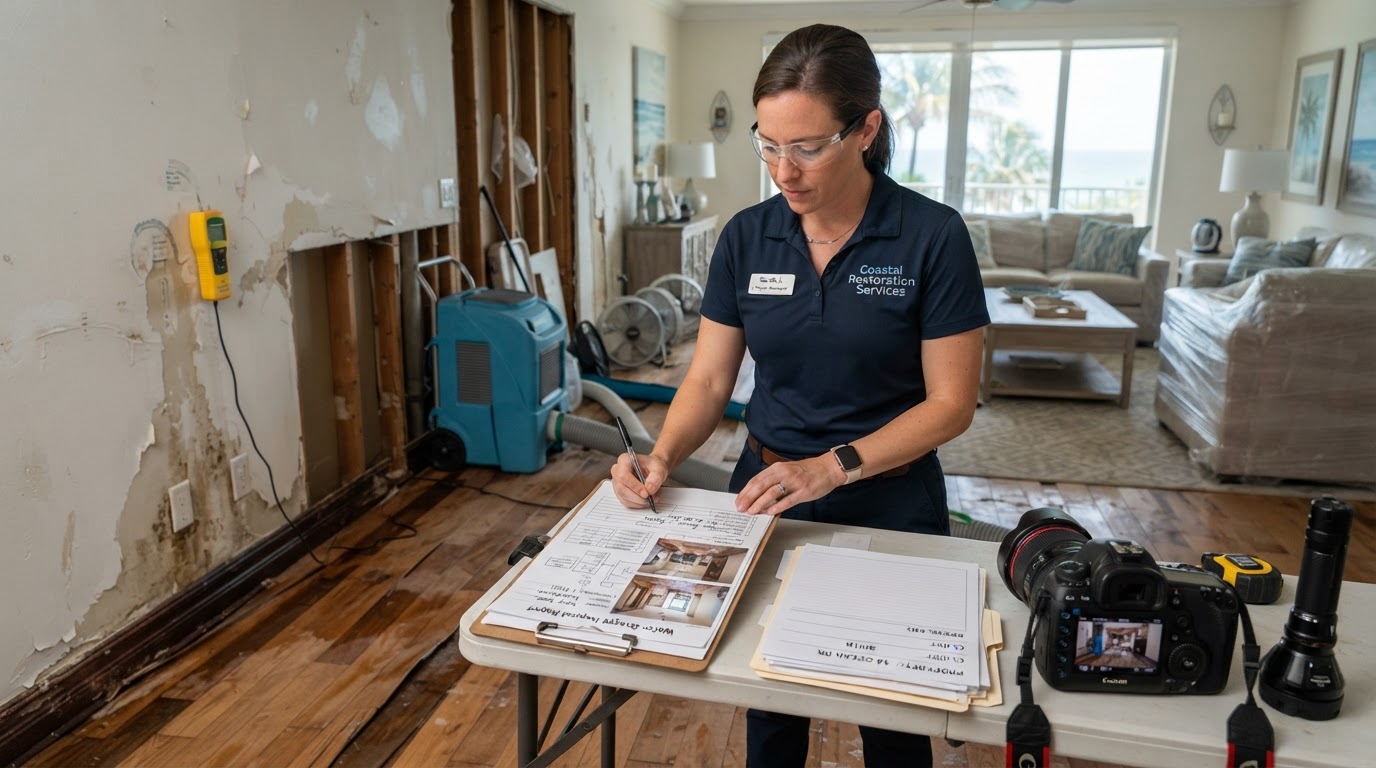
Accurate documentation helps a property owner maintain an organized loss file and communicate the loss to the insurer. The process begins with photographing the damage when safe — the affected rooms, the water lines, the damaged materials, and the affected equipment — and recording the discovery dates and any information about the known or suspected water source. The damaged areas are documented, and relevant communications with the insurer are preserved. Mitigation invoices, restoration findings, and repair estimates are kept, because they establish the scope and the cost of the work performed.
Restoration professionals may provide factual documentation of the work performed within their authorized scope — the moisture readings, the materials removed, the drying performed, and the repairs planned. This is factual documentation of the restoration, not a coverage determination. The restoration provider does not decide whether damage is covered, and the documentation supports the owner's communication with the insurer rather than replacing it. Where coverage is disputed or the policy interpretation is unclear, licensed professional advice — from a public adjuster, an attorney, or the insurer — is appropriate, and the restoration provider refers those questions rather than answering them.
Honesty and accuracy throughout the documentation matter. The page does not advise withholding information, altering loss dates, or misrepresenting the cause of damage — accurate records protect the owner and support a straightforward claim process. The documentation reflects what happened, what was damaged, what was done, and what it cost, organized so the insurer can evaluate the loss against the policy terms. The Insurance Claim Assistance page addresses the broader restoration documentation support available, and this page focuses on the specific flood-versus-water distinction that shapes many Florida property loss questions.
1. Photograph Damage
Photograph the affected rooms, water lines, damaged materials, and equipment when safe.
2. Record Discovery Dates
Record when the damage was discovered and any information about the water source.
3. Identify the Source
Identify the known or suspected water source — plumbing, appliance, roof, or flood.
4. Document Damaged Areas
Document the damaged areas and the extent of the affected materials.
5. Preserve Communications
Preserve relevant communications with the insurer and any professionals.
6. Keep Mitigation Invoices
Keep mitigation invoices and records of emergency work performed.
7. Record Restoration Findings
Record restoration findings, moisture readings, and materials removed or dried.
8. Save Repair Estimates
Save repair estimates and reconstruction scope documentation.
9. Maintain Correspondence
Maintain organized correspondence with the insurer throughout the process.
10. Seek Licensed Advice
Seek licensed professional advice when coverage is disputed or unclear.
Flood & Water Damage Considerations Near Charlotte Harbor
In the Port Charlotte and Charlotte Harbor area, the flood-versus-water distinction is especially relevant because many properties face both plumbing-related water damage risk and coastal flood exposure. Storm surge, canal-front flooding, and heavy rainfall can produce flood damage that may be addressed under a separate flood insurance policy, while a burst pipe, a roof leak from wind damage, or an appliance overflow may be addressed under a homeowners policy. Hurricane-related losses can involve both wind and flood components, and the two may be treated under different policies, deductibles, and coverage provisions.
Property location and flood risk do not independently establish insurance coverage. A property in a flood-prone area is not automatically covered for flood damage unless a flood policy is in place, and a property outside a high-risk area is not automatically excluded from flood coverage questions. Reference to authoritative resources — such as FEMA or the National Flood Insurance Program — should be through accurate, verified information, and the page does not invent legal rules or coverage thresholds. Separate windstorm considerations, deductibles, and exclusions may apply to hurricane-related losses, and the policy terms control the actual questions.
The page does not imply that all flood damage is covered by homeowners insurance, that all hurricane damage is excluded, that all plumbing leaks are automatically covered, that all sewer backups are covered, or that every storm loss is handled under one policy. It does not imply that a restoration contractor may negotiate claims without the appropriate license, or that the website guarantees coverage or reimbursement. Policy terms and the facts of the loss control the actual coverage questions, and case-specific interpretation should come from the insurer or a qualified licensed professional. The restoration provider documents the work performed; the insurer and the licensed professionals address the coverage questions.
Related Water Restoration Services
These related services often appear alongside flood vs. water damage insurance coverage in Port Charlotte properties.
Flood vs. Water Damage Insurance Coverage FAQs
Clear answers to the questions property owners most often ask about flood vs. water damage insurance coverage in Port Charlotte. Review them, then share your property details so the appropriate next steps can be discussed.
Request Restoration Documentation Help
Tell us about the property damage and the location. Submit your inquiry so the appropriate next steps can be discussed.