
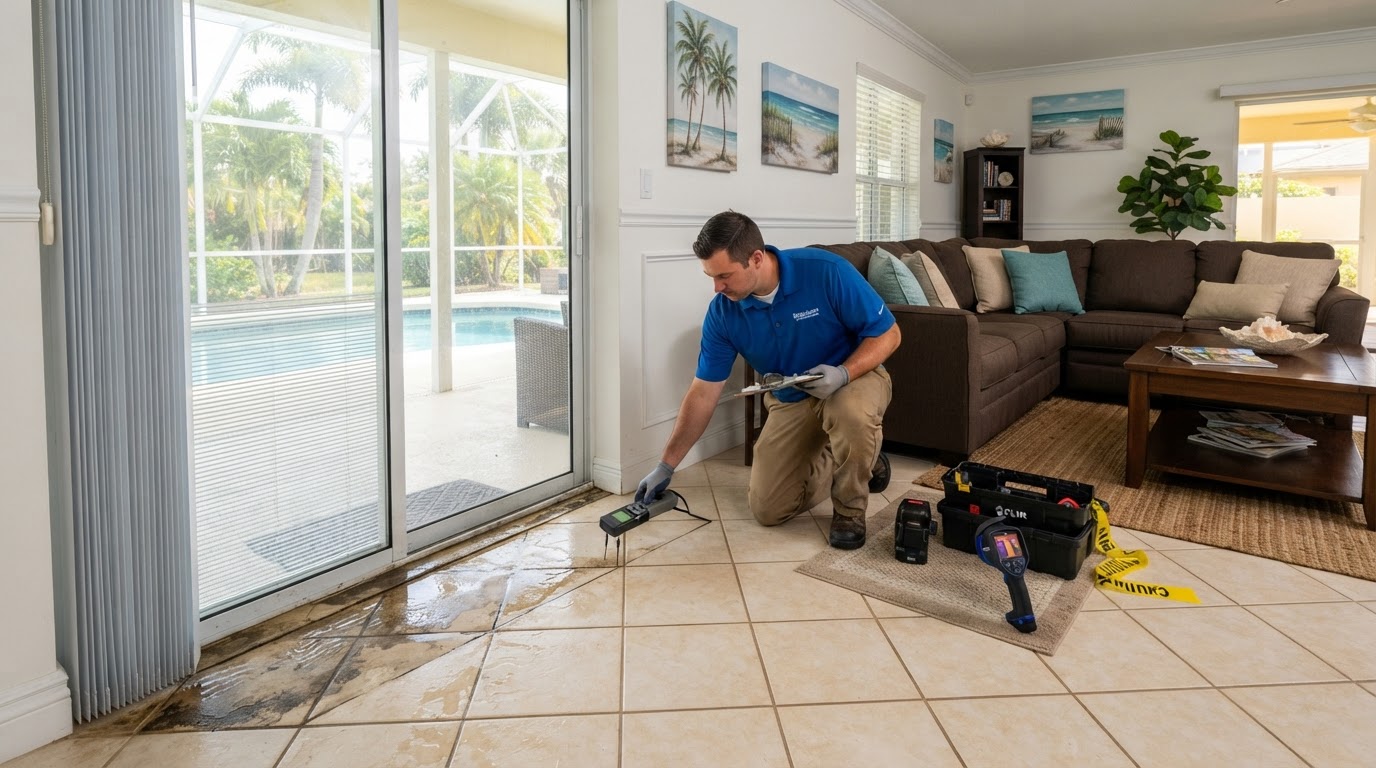
Sliding Door & Window Water Intrusion Port Charlotte
Sliding glass door and window water intrusion in Port Charlotte, FL. Learn about wind-driven rain, leaking frames, blocked door track drainage, wet flooring, hidden moisture, and the restoration process for building-envelope leaks throughout Southwest Florida.
Request Restoration Help
Tell us about the property damage and the location. Submit your inquiry so the appropriate next steps can be discussed.
Sliding Glass Door & Window Leaks in Port Charlotte
Water that enters a building through a sliding glass door or a window is a building-envelope problem with interior restoration consequences. Wind-driven rain, deteriorated sealant, damaged weatherstripping, door track drainage problems, blocked drainage openings, frame-to-wall transition defects, flashing problems, installation issues, cracked or damaged components, and storm-related damage can all allow water to penetrate an opening that is meant to keep water out. The result is wet flooring near the door or window, damp sills, discolored drywall, softened baseboards, and moisture that travels into the wall assembly and beneath the flooring.
It is important to distinguish condensation on glass from actual water penetration through a building opening. Condensation forms on a cold surface when humid air meets it, and while it can dampen nearby materials, it is not the same as water being driven through a failed seal or a cracked frame during a storm. Not every leak is caused by failed caulking, either — a leak may originate in the flashing, the drainage path, the frame-to-wall transition, or a damaged component, and simply re-caulking the visible joint may not resolve the actual entry point. Finding the real source matters before completing repairs.
This page focuses on building-envelope water intrusion and the resulting interior restoration, not on selling replacement windows or doors. It addresses the common causes of sliding door and window leaks, how water travels beyond the visible entry point, the warning signs, the assessment and restoration process, and the coastal property considerations relevant to Port Charlotte. It does not claim that a restoration contractor automatically performs licensed window, glazing, or structural installation work — those repairs are coordinated with qualified trades.
Signs of Window & Sliding Door Water Damage
Window and sliding door leaks often reveal themselves during or after rain, but the hidden moisture can extend well beyond the visible water. Common indicators include:
Professional Water Intrusion Assessment & Restoration
Assessment begins with identifying the suspected water entry point and evaluating the weather and leak history — when the leaks occur, during what kind of rain, and from which direction. Accessible door or window conditions are inspected, but because the entry source is often hidden in the flashing, the drainage path, or the frame-to-wall transition, appropriate building-envelope diagnosis may be needed to locate the actual source rather than the visible symptom. Interior moisture is assessed to map how far the water has traveled into flooring, drywall, insulation, and framing.
Active water intrusion is addressed first — stopping the entry, extracting standing water if necessary, and evaluating affected flooring and drywall for restoration versus removal. Structural drying addresses the moisture in salvageable materials, with monitoring over multiple visits until the affected assembly reaches an appropriate dry standard. Window or door repairs — sealant replacement, weatherstripping, drainage correction, flashing repair, or component replacement — are coordinated with qualified trades, because a restoration contractor does not automatically perform licensed glazing or structural installation work. Damaged interior materials are then restored.
Some leaks involve minor components — a blocked drainage weep hole, a worn weatherstrip — while others require more extensive repair or replacement of the opening assembly. The correct approach depends on the opening assembly, the installation condition, the storm damage, the drainage details, and the professional findings. Caulking alone will not permanently resolve every leak, and promising that it will sets up a recurring problem. The restoration addresses the interior damage; the building-envelope repair addresses the entry source, and both are needed for a durable result.
1. Identify Entry Point
Identify the suspected water entry point at the door or window.
2. Evaluate Leak History
Evaluate weather conditions and the leak history for patterns.
3. Inspect Conditions
Inspect accessible door or window conditions and drainage paths.
4. Envelope Diagnosis
Coordinate appropriate building-envelope diagnosis to locate the source.
5. Assess Interior Moisture
Assess interior moisture in flooring, drywall, and framing.
6. Address Active Intrusion
Address active water intrusion and stop the entry where possible.
7. Extract Standing Water
Extract standing water if necessary from affected interior areas.
8. Evaluate Flooring & Drywall
Evaluate affected flooring and drywall for restoration or removal.
9. Structural Drying
Establish structural drying for salvageable materials.
10. Monitor Moisture
Monitor moisture conditions until the assembly reaches a dry standard.
11. Coordinate Door/Window Repairs
Coordinate window or door repairs with qualified trades.
12. Restore Interior Materials
Restore damaged interior materials after the source is corrected.
Sliding Glass Door Water Damage Near Charlotte Harbor
Southwest Florida homes rely heavily on sliding glass doors and large windows to connect interior living spaces to patios, lanais, pools, and waterfront views. Coastal residences, waterfront homes, and canal-front properties around Port Charlotte and Charlotte Harbor have extensive glazing exposed to wind-driven rain, hurricanes, and thunderstorms, and ground-level door openings are particularly vulnerable to water entry during storm events. Tile and vinyl flooring common in these homes can hide moisture that travels beneath the surface covering into the subfloor and threshold assembly.
Not all coastal homes have defective sliding doors or windows — many perform well for decades when properly installed and maintained. The concern is that repeated water intrusion, even when the visible leak appears minor, can damage nearby building materials over time: baseboards soften, drywall wicks moisture, subflooring swells, and mold-like growth can develop in the wall cavity or beneath the flooring. A small recurring leak is not a small recurring problem when the moisture accumulates in materials that do not dry readily.
Seasonal properties add the dimension of delayed discovery — a sliding door that leaks during a storm may go unnoticed until the owner returns and finds stained flooring or a musty odor. The restoration assesses the full extent of the moisture, not only the visible water, and coordinates the building-envelope repair with qualified trades so the entry source is corrected before the interior is restored. The Canal-Front Home Flood Restoration page addresses the broader waterfront flooding context, and the Wind & Storm Damage Repair and Hurricane Damage Restoration pages address storm-related building damage.
Related Water Restoration Services
These related services often appear alongside sliding door & window water intrusion in Port Charlotte properties.
Sliding Door & Window Water Intrusion FAQs
Clear answers to the questions property owners most often ask about sliding door & window water intrusion in Port Charlotte. Review them, then share your property details so the appropriate next steps can be discussed.
Request Sliding Door & Window Water Damage Help
Tell us about the property damage and the location. Submit your inquiry so the appropriate next steps can be discussed.