
Seasonal Home Moisture Monitoring & Leak Checks Port Charlotte
Seasonal home moisture monitoring and leak checks help Port Charlotte, FL property owners detect plumbing leaks, humidity problems, and water intrusion while a home is unoccupied. Explore leak detection options, humidity monitoring, vacant property planning, and water damage prevention throughout Charlotte County.
Request Restoration Help
Tell us about the property damage and the location. Submit your inquiry so the appropriate next steps can be discussed.
Seasonal Home Leak Monitoring in Port Charlotte
Seasonal homeowners in Port Charlotte and Charlotte County may leave their properties unoccupied for weeks or months at a time, and during that absence moisture conditions and plumbing problems can develop without anyone present to notice. A plumbing supply line that fails, a water heater that leaks, a toilet supply connection that separates, a refrigerator water line that bursts, or a washing machine supply hose that ruptures can release water for days before discovery. An air conditioning condensate drain that clogs can overflow into the ceiling or closet around the air handler. A roof leak or window intrusion from a passing storm can saturate drywall and insulation that no one inspects until the owner returns.
The absence of occupants is what makes these problems different from a leak in an occupied home. In a lived-in house, a dripping ceiling or a damp floor is noticed within hours; in a vacant property, the same leak can run for days or weeks, allowing water to spread through flooring, into wall cavities, beneath cabinets, and across multiple rooms before anyone arrives. By the time the damage is discovered, the moisture may have affected far more of the building than the visible evidence suggests, and the timeline of when the damage began can be difficult to establish from appearance alone.
This page focuses on prevention, early detection, and monitoring approaches — the steps a seasonal homeowner can take to reduce the chance that a leak goes unnoticed for an extended period. It is distinct from the Seasonal Home Leak Damage & Mold page, which addresses water damage and suspected mold already discovered after an absence. The monitoring technologies and arrangements described here are presented as available prevention options, not automatically as services performed by this website. Where a monitoring or home-watch arrangement is not confirmed as an active offering, the page provides educational information and a relevant inquiry pathway rather than promising a service.
Signs of Moisture Problems in Unoccupied Florida Homes
Whether discovered by a returning owner, a property manager, or a leak sensor alert, these are the indicators that warrant prompt evaluation:
Creating a Seasonal Home Moisture Response Plan
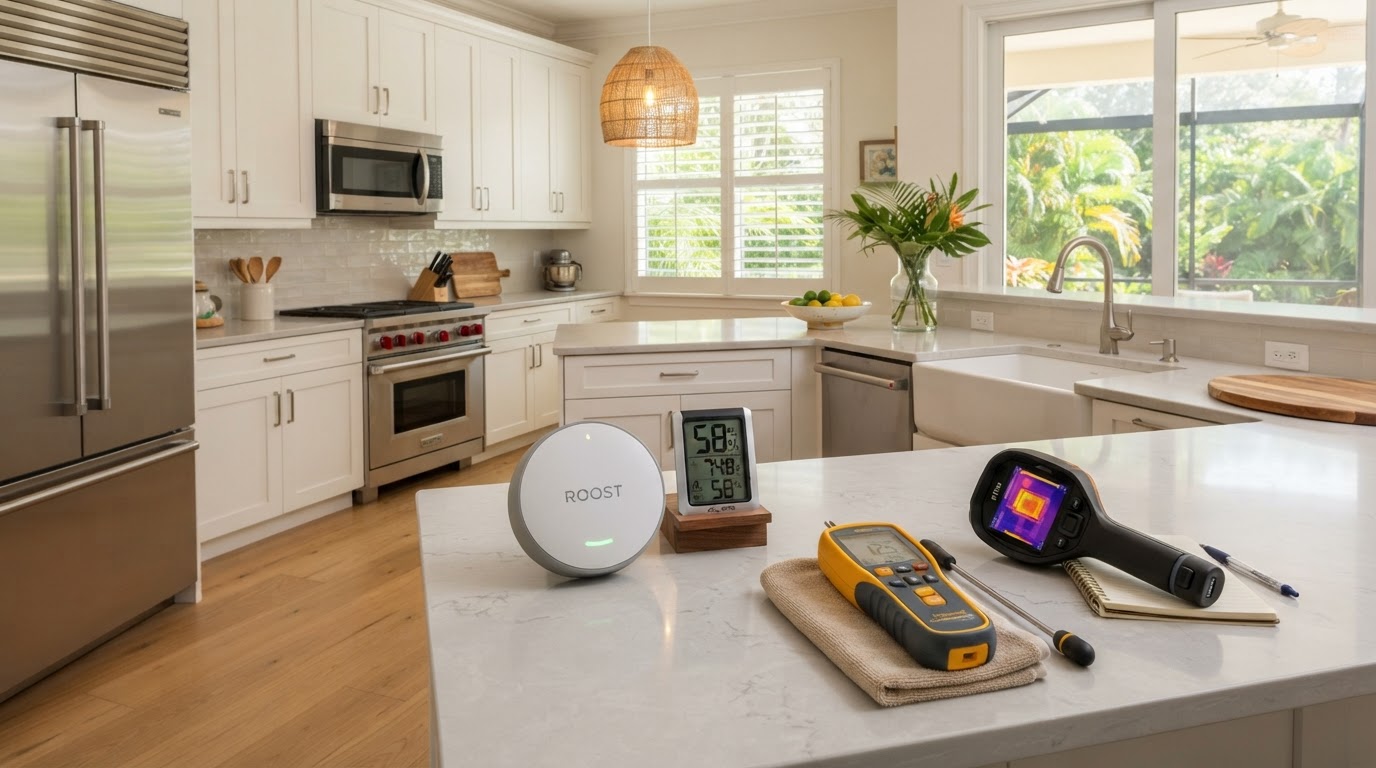
A practical moisture response plan begins with identifying the critical plumbing and HVAC components most likely to leak during an absence — the water heater, the washing machine supply lines, the refrigerator water connection, the toilet supply lines, and the air handler condensate drain. From there, suitable water detection options can be evaluated: smart leak sensors placed near water heaters and under sinks, main-line water monitoring devices that detect continuous flow, automatic water shutoff equipment that closes the main supply when a leak is detected, indoor humidity monitors, and connected thermostats that report indoor conditions remotely. Each device requires proper installation, reliable connectivity, routine maintenance, and someone who can physically respond to an alert — a sensor that reports a leak to an owner a thousand miles away is only useful if a local contact can access the property.
Authorized emergency contacts and professional maintenance are the human side of the plan. A trusted local contact, a property manager, or a qualified home-watch arrangement can provide the physical access and response that remote monitoring cannot. Plumbing and HVAC systems benefit from qualified maintenance before a long absence — a maintained condensate drain is less likely to clog, and supply lines in good condition are less likely to fail. Safe water shutoff procedures, whether manual before departure or automatic through a shutoff device, reduce the volume of water that can escape if a line does fail. Relevant humidity conditions can be monitored remotely through a connected thermostat, though no single thermostat setting guarantees mold prevention — humidity management depends on home construction, system operation, weather, and indoor moisture sources.
After a storm event, a property check is appropriate when safe access can be arranged, because wind-driven rain, roof damage, and water intrusion may not trigger an interior leak sensor. Documenting property conditions before departure and after return creates a baseline that helps distinguish pre-existing conditions from new damage. When water damage is discovered during a property check, qualified restoration assistance should be sought promptly — the Seasonal Home Leak Damage & Mold page addresses the restoration process for damage already discovered. No monitoring system guarantees the prevention of water damage, but a layered approach of detection, maintenance, and response planning meaningfully reduces the chance that a leak runs unattended for weeks.
1. Identify Critical Components
Identify the plumbing and HVAC components most likely to leak during an absence.
2. Evaluate Detection Options
Evaluate suitable water leak sensors, main-line monitors, and automatic shutoff devices.
3. Establish Emergency Contacts
Establish authorized local contacts who can physically respond to an alert.
4. Arrange Professional Maintenance
Arrange qualified plumbing and HVAC maintenance before a long departure.
5. Consider Water Shutoff
Consider safe manual shutoff before departure or an automatic shutoff device.
6. Monitor Humidity
Monitor relevant indoor humidity conditions through a connected thermostat or hygrometer.
7. Plan Storm Access
Plan property access and inspection after storm events when safe.
8. Document Conditions
Document property conditions before departure and after return as a baseline.
9. Define Alert Response
Establish who responds to alerts and what action each alert triggers.
10. Seek Restoration Help
Seek qualified restoration assistance promptly when damage is discovered.
Seasonal Property Moisture Concerns Near Port Charlotte
Port Charlotte and Charlotte County are home to many snowbird residences, vacation homes, and seasonal condominiums whose owners are absent for the hot, humid summer months — often exactly when air conditioning use is heaviest and storm activity is most likely. A canal-front property left unoccupied through hurricane season may face both plumbing-leak risk and storm-related water intrusion risk during the same absence. Remote ownership means the owner depends on monitoring devices, local contacts, and qualified providers to detect and respond to problems they cannot see.
Florida's humidity is a constant factor. An air conditioning system that is shut off entirely, or set to a very high temperature, may allow indoor humidity to climb to levels that support moisture accumulation in building materials — but no single thermostat setting is a guaranteed mold prevention strategy, because humidity management depends on the home's construction, the system's operation, the weather, and any indoor moisture sources. AC condensate drainage, plumbing systems, and storm-related leaks are the three broad categories of concern, and each benefits from a different layer of prevention: maintenance for the condensate drain and plumbing, detection devices for sudden leaks, and post-storm property checks for wind and rain intrusion.
The distinction between monitoring a potential problem and restoring actual damage is important. This page addresses prevention and early detection — the steps that reduce the chance a leak runs unattended. When water damage or suspected mold is already discovered, the restoration process is addressed on the Seasonal Home Leak Damage & Mold page. The two work together: monitoring reduces the likelihood and severity of a loss, and restoration addresses the damage when prevention is not enough. For owners weighing monitoring options, an inquiry through this page can help connect the question to the appropriate next steps.
Related Water Restoration Services
These related services often appear alongside seasonal home moisture monitoring & leak checks in Port Charlotte properties.
Seasonal Home Moisture Monitoring FAQs
Clear answers to the questions property owners most often ask about seasonal home moisture monitoring & leak checks in Port Charlotte. Review them, then share your property details so the appropriate next steps can be discussed.
Request Seasonal Home Moisture Information
Tell us about the property damage and the location. Submit your inquiry so the appropriate next steps can be discussed.