
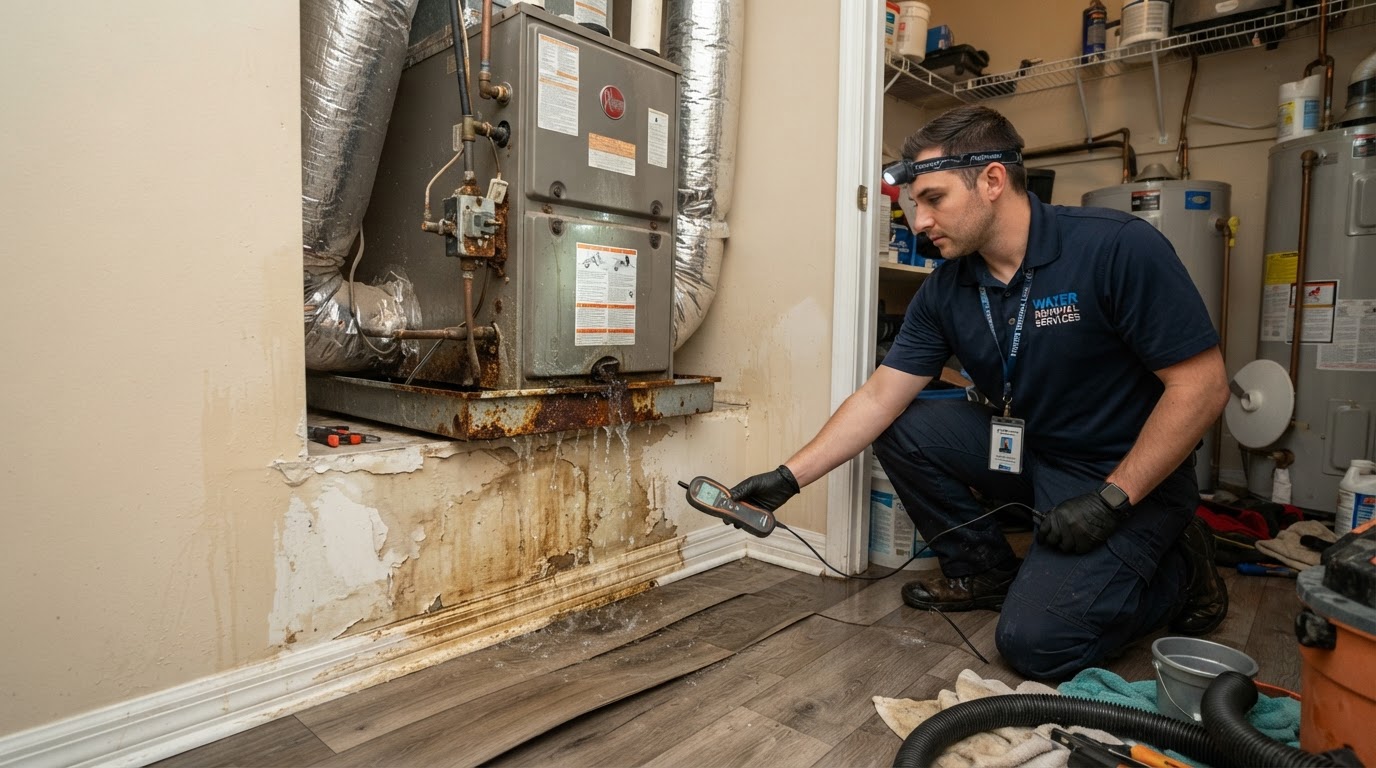
AC & Water Heater Leak Cleanup Port Charlotte
Air conditioning condensate overflows and water heater tank or connection leaks release water into utility closets, garages, and attics, where it saturates the surrounding drywall, flooring, and framing. Explore the cleanup and drying process — safe source control, repair coordination, moisture assessment, water extraction, and structural drying — for Port Charlotte and Charlotte County properties.
Request Restoration Help
Tell us about the property damage and the location. Submit your inquiry so the appropriate next steps can be discussed.
Air Conditioner & Water Heater Water Damage in Port Charlotte
Air conditioning and water heater leaks produce a particular pattern of water damage: a slow, concealed accumulation in a utility closet, garage, or attic that saturates the drywall, flooring, and framing around the equipment before it is ever noticed. A clogged condensate drain line lets the drip pan overflow, running water down the air handler cabinet and into the wall behind it. A water heater tank that has corroded through releases a sudden, larger volume into the drain pan and, if the pan's drain is blocked or the relief valve has failed, onto the floor. Each path leaves moisture in a different set of materials.
The slow accumulation from a condensate leak is easy to underestimate because the water appears minor at the equipment but has been running for days or weeks into the drywall and subfloor below. By the time the drywall darkens or the flooring warps, the assembly behind it has absorbed substantial moisture. A water heater tank failure, by contrast, can release dozens of gallons quickly, behaving more like a burst pipe — a sudden standing-water event that needs extraction first, then drying.
Distinguishing slow moisture accumulation from a sudden water release matters because it changes the assessment and the drying scope. A slow condensate leak may look small at the surface but have spread widely behind the wall; a tank failure may look dramatic on the floor but be more contained within the room. Both need a moisture assessment, but the focus is different.
Signs of AC Condensate & Water Heater Leak Damage
Because these leaks often start out of sight behind or above equipment, the signs tend to appear in the surrounding finishes first:
How AC & Water Heater Leak Cleanup Works
Cleanup starts with safely stopping the water source, which may require an HVAC technician for a condensate drain clog or a licensed plumber for a water heater tank or connection failure. Restoration mitigation is a separate scope from the equipment repair, and a restoration provider coordinates with the qualified HVAC or plumbing professional rather than performing that work. Once the source is controlled, a moisture assessment maps how far the water has traveled from the equipment into the surrounding drywall, flooring, and subfloor.
Standing water is removed with appropriate extraction equipment, and the affected materials are evaluated for drying versus removal. Drywall that has absorbed clean condensate water for a short period can often be dried in place; drywall saturated by a tank failure or contaminated condensate may require removal. Insulation in the affected wall or ceiling cavity is evaluated and replaced if saturated. Air movers and dehumidification are set up and monitored to verified targets, and the full scope is documented to support the repair and finish work that follows.
Safe Source Control
Stop the leak at the equipment, coordinating with an HVAC or plumbing professional as the source requires.
Repair Coordination
Engage the qualified HVAC or plumbing professional to repair the condensate drain, tank, or connection.
Moisture Assessment
Map the moisture from the equipment into surrounding drywall, flooring, and subfloor with meters and thermal imaging.
Water Removal
Extract standing water and remove accessible moisture from the affected finishes and assemblies.
Structural Drying
Set up and monitor air movers and dehumidification on the drywall, flooring, and subfloor to verified targets.
Material Restoration
Evaluate insulation and flooring for replacement and document the scope for repairs and finish work.
AC Leak Damage Restoration Near Port Charlotte Homes
Southwest Florida's cooling demand keeps air conditioning running for most of the year, which means condensate is produced nearly continuously and a clogged drain line or failed condensate pump can overflow the pan within hours. Attic-mounted air handlers, common in some Port Charlotte-area homes, add the dimension of a leak that starts above the ceiling — the water tracks down through the attic insulation and the ceiling drywall before it is ever visible in the living space. The longer run time and the concealed attic location both extend the window in which a slow leak can saturate materials.
Seasonal residences see the same equipment-failure pattern as delayed-discovery losses. A condensate drain that clogs while the owner is away can overflow for weeks, saturating the drywall and subfloor beneath the air handler. By the time the owner returns, the drying scope is already substantial, which is why an AC or water heater leak here is treated as a moisture assessment problem, not just a cleanup problem.
Related Water Restoration Services
These related services often appear alongside ac & water heater leak cleanup in Port Charlotte properties.
AC & Water Heater Leak Cleanup FAQs
Clear answers to the questions property owners most often ask about ac & water heater leak cleanup in Port Charlotte. Review them, then share your property details so the appropriate next steps can be discussed.
Request AC or Water Heater Leak Cleanup
Tell us about the property damage and the location. Submit your inquiry so the appropriate next steps can be discussed.