Saltwater Flood Damage & Corrosion Cleanup Port Charlotte
Saltwater flood damage and corrosion cleanup addresses the corrosive effects of storm surge and coastal flooding on Port Charlotte, FL homes. Explore salt residue, metal and electrical corrosion, contaminated material removal, structural drying, and specialized equipment evaluation throughout Charlotte County and the Charlotte Harbor area.
Request Restoration Help
Tell us about the property damage and the location. Submit your inquiry so the appropriate next steps can be discussed.
Saltwater Flood Damage Restoration Near Port Charlotte
Saltwater exposure from storm surge or coastal flooding presents restoration challenges that go beyond an ordinary clean-water plumbing leak. When saltwater enters a home, it brings dissolved salts and chlorides that penetrate porous building materials, leave residue as the water recedes, and can continue to affect metal components, electrical equipment, appliances, and structural connections long after the visible water is gone. In Port Charlotte and the Charlotte Harbor area, storm surge and coastal flooding can push saltwater and brackish water into ground-level interiors, and the restoration must account for the corrosive nature of the exposure, not only the water itself.
The difference between saltwater and a typical indoor water loss is the contamination and the chemistry. A burst supply line releases clean water that can often be dried and the materials salvaged. Saltwater carries salts into drywall, insulation, flooring, and cabinetry, and those salts remain as the water evaporates — leaving residue that can wick moisture from the air, discolor surfaces, and corrode metal components it contacts. Electrical panels, wiring connections, outlets, appliance components, HVAC equipment, metal fasteners, and structural connectors can all be affected. The restoration decisions are different because the contamination is different.
This page is distinct from the broader Hurricane Damage Restoration and Storm Surge & Hurricane Flood Cleanup pages. It focuses specifically on the corrosive and contamination consequences of saltwater exposure — the salt residue, the corrosion of metal and electrical components, the evaluation of affected equipment, and the specialized material and safety decisions that follow. Electrical inspection, repair, replacement, and any approval to re-energize equipment must be handled by appropriately qualified electrical professionals; the restoration is not represented as a standalone licensed electrical service unless provider qualifications are confirmed.
Signs of Saltwater Corrosion & Flood Damage
After saltwater intrusion, the visible and hidden signs warrant careful evaluation — water near electrical equipment creates safety concerns, so caution is essential:
Professional Saltwater Flood Restoration
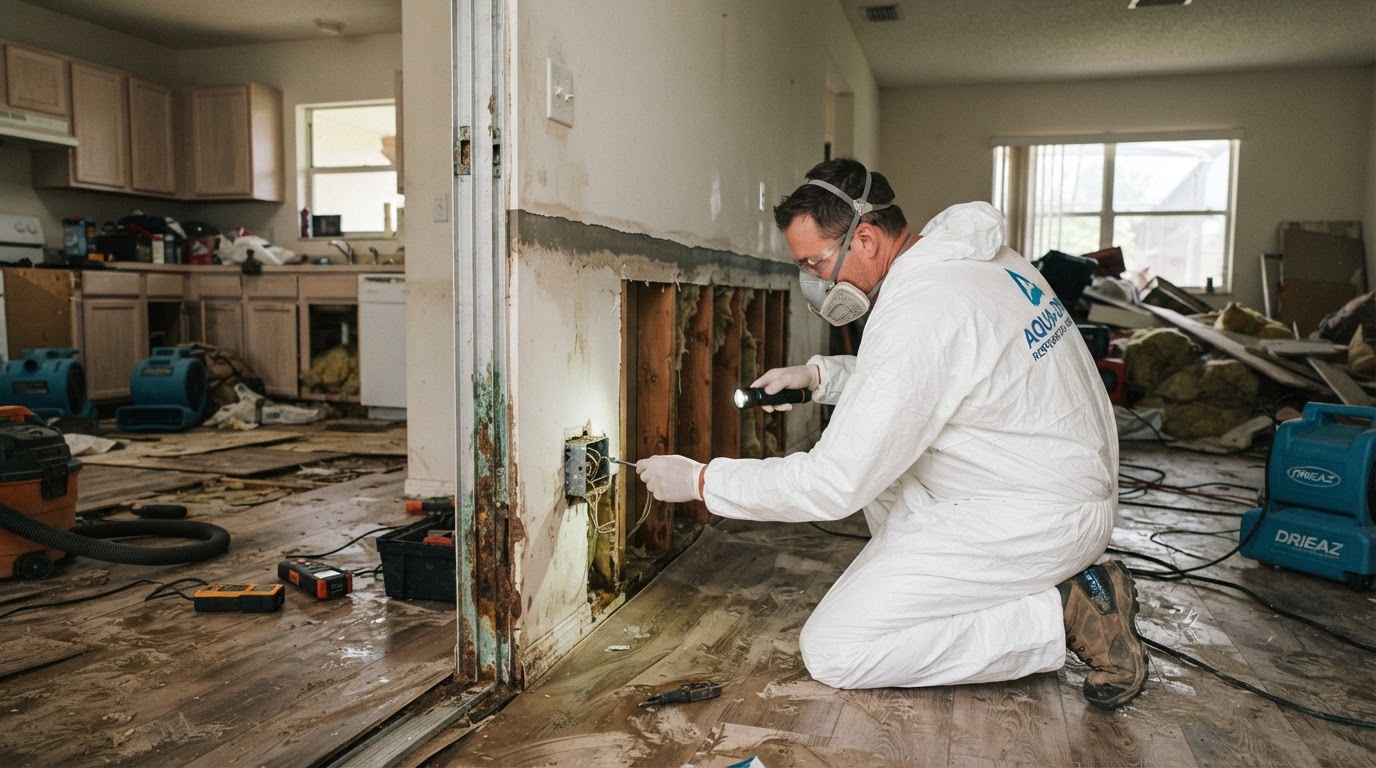
Restoration after saltwater intrusion begins with a site safety assessment and an appropriate electrical hazard evaluation, because energized or previously submerged electrical equipment must not be treated as safe without qualified professional evaluation. The floodwater exposure is identified — the depth, the duration, and whether the water was saltwater, brackish, or mixed — and the contamination assessment shapes the handling of affected materials. Water extraction removes the standing floodwater, and the salt residue and corrosion are evaluated across the affected building materials and equipment.
Building materials are assessed for salvageability. Porous materials that have absorbed saltwater — drywall, insulation, certain flooring, cabinetry — may require removal rather than ordinary drying, because the salts they retain can continue to draw moisture and support deterioration even after the surface appears dry. Appropriate cleaning methods address residue on surfaces that can be salvaged, and structural drying addresses the remaining moisture in materials that can be dried. Where electrical equipment, panels, wiring, or appliances have been exposed to saltwater, specialist electrical and equipment evaluation by qualified professionals determines what can be safely restored versus what requires replacement — and the restoration is not represented as licensed electrical work.
The documentation records the floodwater exposure, the materials removed, the materials dried, the equipment affected, and the repairs or replacement planned. Corrosion can continue after visible water is removed, so the evaluation accounts for the ongoing risk to metal components and electrical equipment over time. The actual restoration approach depends on the extent of exposure, the materials involved, and qualified professional evaluations — and no approach promises that appliances, wiring, or electrical panels exposed to saltwater can be safely restored. The goal is to remove the contamination, dry the affected materials, and coordinate the specialized evaluations and repairs the exposure requires.
1. Site Safety Assessment
Assess site safety and identify electrical hazards before any work begins.
2. Electrical Hazard Evaluation
Evaluate electrical hazards with qualified professionals before re-energizing any equipment.
3. Identify Floodwater Exposure
Identify the depth, duration, and type of floodwater — saltwater, brackish, or mixed.
4. Contamination Assessment
Assess contamination to shape the handling of affected porous materials.
5. Water Extraction
Remove standing floodwater from the affected interior.
6. Salt & Corrosion Evaluation
Evaluate salt residue and corrosion across building materials and equipment.
7. Material Assessment
Assess building materials for salvageability versus removal.
8. Remove Unsalvageable Materials
Remove unsalvageable porous materials where required by contamination.
9. Appropriate Cleaning
Clean residue on salvageable surfaces with appropriate methods.
10. Structural Drying
Dry remaining moisture in materials that can be salvaged.
11. Specialist Evaluation
Coordinate specialist electrical and equipment evaluation by qualified professionals.
12. Document & Plan Repairs
Document the exposure, removals, drying, and repair or reconstruction plan.
Saltwater Flood Restoration Near Charlotte Harbor
In the Port Charlotte and Charlotte Harbor area, coastal storm surge is the most common source of saltwater intrusion into homes. Canal-front homes, waterfront properties, and ground-level living areas near tidal or brackish waterways can all be exposed to saltwater or brackish flooding during a storm event. Commercial buildings with equipment located near flood-prone areas, and seasonal homes left unoccupied during storm season, add further exposure — a saltwater flood in an unoccupied property can run for an extended period before discovery, allowing corrosion to advance further than in an occupied home.
Not every Port Charlotte property faces the same storm surge risk. Property-specific flood exposure depends on elevation, proximity to tidal waterways, site drainage, and the characteristics of the surrounding water body. Authoritative flood-risk information — not assumption — should guide a property owner's understanding of their exposure. Humidity after flooding can slow the drying of affected materials and, combined with retained salts, can contribute to ongoing corrosion and moisture concerns if the restoration is not thorough.
Where saltwater has affected electrical equipment, appliances, HVAC components, or metal structural connections, those components require evaluation by appropriately qualified professionals — the restoration addresses the building materials and the contamination, while the electrical and equipment evaluations are handled by specialists in those trades. The documentation reflects the floodwater type, the materials removed, the equipment affected, and the repairs planned, which supports both the restoration and any insurance discussion. The Flood vs. Water Damage Insurance Coverage page addresses the coverage distinctions that often apply to storm surge and coastal flooding.
Related Water Restoration Services
These related services often appear alongside saltwater flood damage & corrosion cleanup in Port Charlotte properties.
Saltwater Flood Damage & Corrosion Cleanup FAQs
Clear answers to the questions property owners most often ask about saltwater flood damage & corrosion cleanup in Port Charlotte. Review them, then share your property details so the appropriate next steps can be discussed.
Request Saltwater Flood Damage Restoration Help
Tell us about the property damage and the location. Submit your inquiry so the appropriate next steps can be discussed.