Water & Fire Damage Restoration Charlotte Park
Charlotte Park is a residential community in the Punta Gorda area of Charlotte County, and its single-family homes present the water, fire, and mold restoration concerns typical of established Southwest Florida neighborhoods. Plumbing leaks, roof intrusion, appliance overflows, and storm-related water exposure all affect properties here, and the restoration approach depends on the cause, the materials wetted, and how long the moisture has been present. Explore the water, fire, mold, and storm restoration services relevant to Charlotte Park homes, then request a damage assessment.
Request Restoration Help
Tell us about the property damage and the location. Submit your inquiry so the appropriate next steps can be discussed.
Water & Fire Restoration Services in Charlotte Park
Charlotte Park is a community in the Punta Gorda area of Charlotte County, not a separate incorporated city. The properties here are primarily single-family homes, and the water, fire, and mold restoration concerns are the residential ones that apply to established Charlotte County neighborhoods. This page differs from the broader Punta Gorda page through its focus on residential interior restoration — plumbing leaks, roof intrusion, damaged flooring, ceiling stains, and the mold concerns that follow unresolved moisture — rather than the municipal and commercial context covered on the Punta Gorda page.
Plumbing leaks are the most common water damage source in Charlotte Park homes. Supply line failures under sinks and behind toilets, water heater leaks in garages, and slab leaks beneath concrete foundations each create different moisture patterns. A supply line failure can release water across flooring and into cabinetry and the subfloor assembly; a water heater leak can affect the garage and adjacent drywall; a slab leak may surface as warm flooring or a damp carpet edge before any visible water appears inside the home. Roof intrusion and appliance overflows add additional water damage scenarios that follow the same extraction and drying approach.
Fire and smoke incidents leave soot, char, and odor that require structural cleaning separate from any water damage from suppression. Kitchen fires, electrical fires, and lightning strikes each create different residues and damage patterns. Mold concerns follow unresolved moisture from any source — a slow leak behind a wall, a roof intrusion that was not fully dried, or standing water after a storm — and the first step in mold remediation is always correcting the moisture source. Storm-related water damage from wind-driven rain and roof leaks is a seasonal consideration that the Hurricane Damage Restoration page addresses in the broader regional context.
Water Damage Cleanup Near Charlotte Park Homes
Water extraction is the first response to any active water loss. Standing water is removed with extraction equipment, and moisture mapping establishes how far the water has traveled — into drywall, beneath flooring, inside wall cavities, and above ceilings. In a Charlotte Park residence, the evaluation checks the full migration rather than only the visible water, because moisture that has wicked into materials continues to spread and can drive microbial growth if left unaddressed.
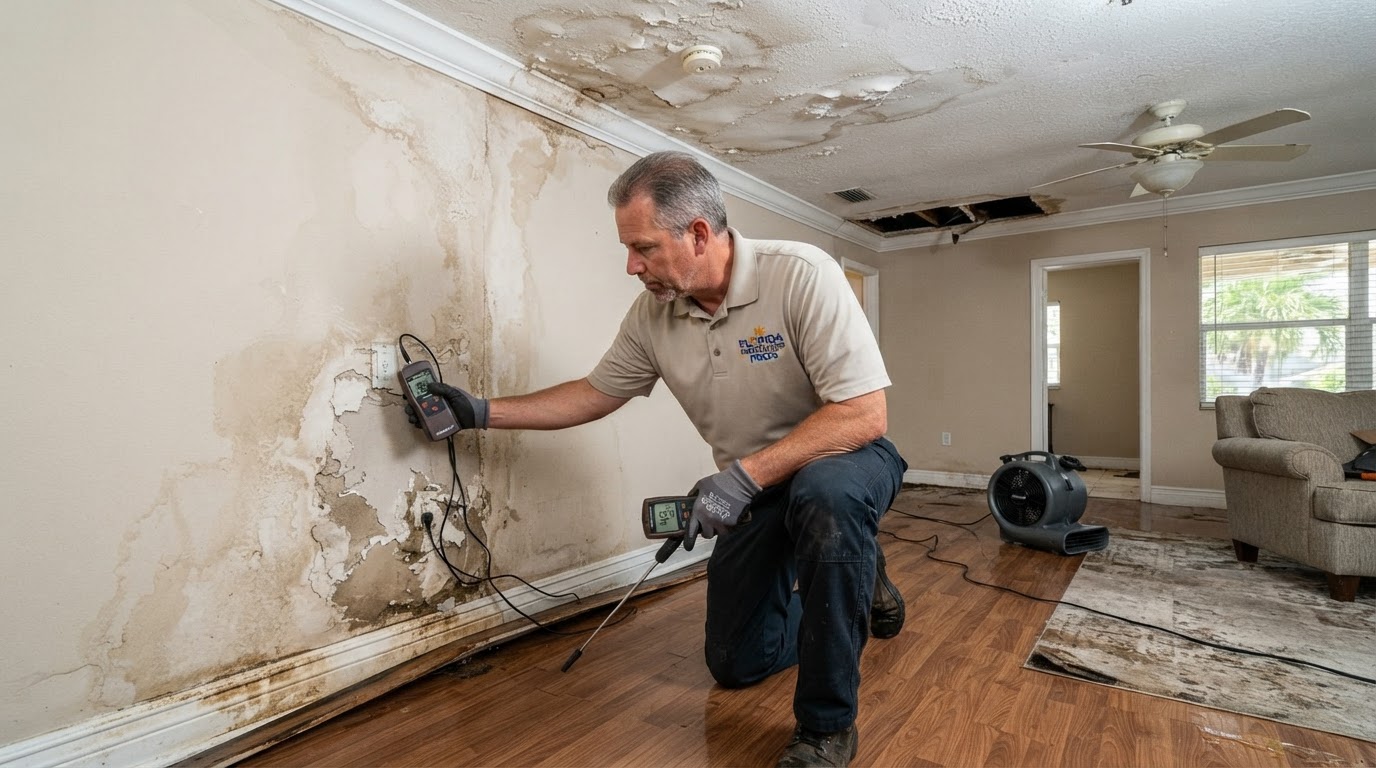
Wet drywall is evaluated for restoration versus removal based on the water category and the duration of exposure. Clean water from a supply line may allow drywall to be dried in place if the moisture has not compromised the structural integrity; contaminated water from a backup or flood may require removal of affected drywall and insulation. Moisture behind walls is a particular concern with supply line failures, where water enters the wall cavity and accumulates behind the drywall surface. Professional moisture meters and, where appropriate, thermal imaging locate that hidden moisture before the drying plan is finalized.
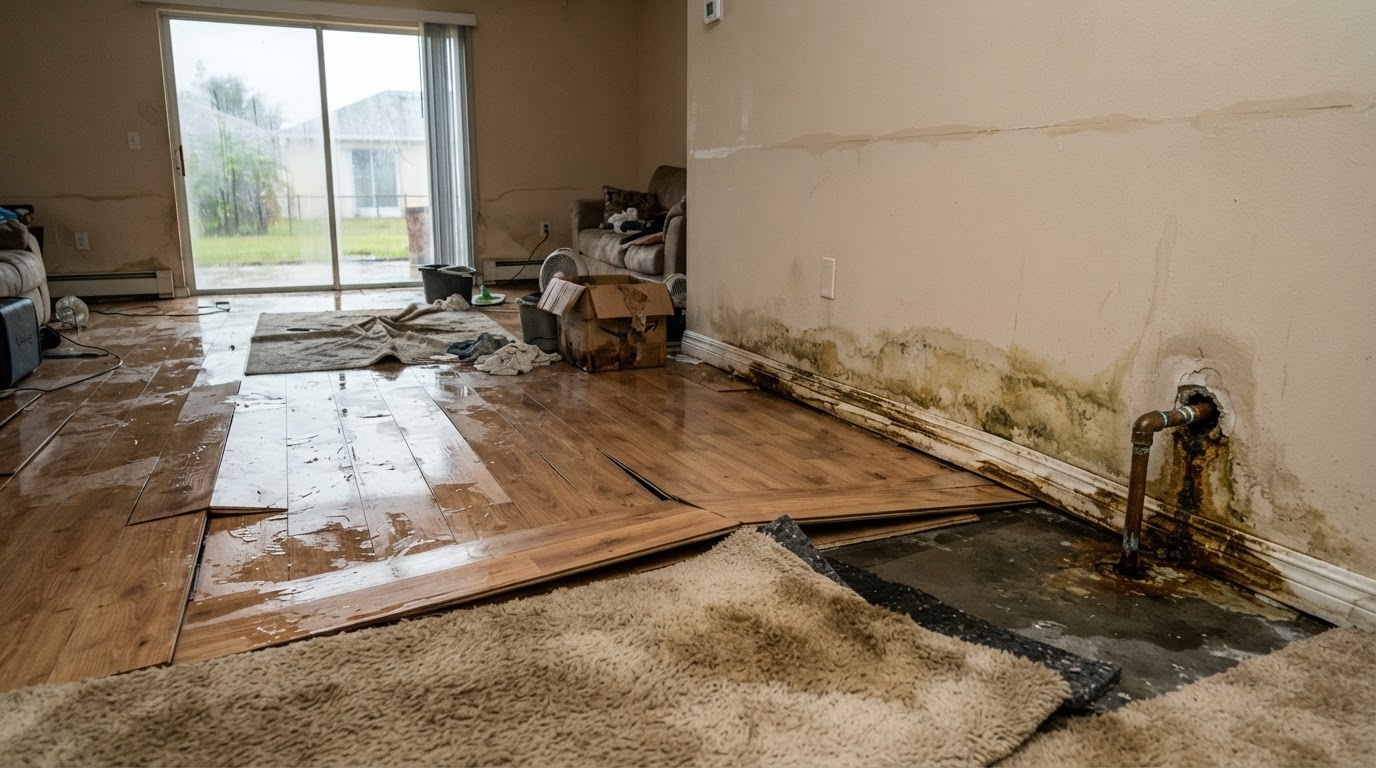
Flooring damage is assessed based on the material, the category of water, and the duration of exposure. Hard-surface flooring may be salvageable; engineered wood and laminate that have absorbed moisture may be removed if they have swollen or delaminated; carpet and padding that have absorbed clean water may be extracted and dried, while padding that has absorbed contaminated water is generally removed. The subfloor beneath the surface covering is checked for moisture, because water often travels beneath flooring into the subfloor assembly. The Flooring Water Damage Restoration page addresses that evaluation and the restoration versus replacement decisions in detail.
Plumbing supply failures are the most common source in residential properties. A burst pipe — sometimes from a cold snap that affects supply lines even in Florida — can release significant water across flooring and into wall cavities in minutes. The Burst Pipe Water Damage page addresses the immediate response and the coordination between plumbing repair and interior restoration. Leak-related restoration follows the same monitored drying process regardless of the source, and the material decisions are documented so the owner understands what was dried and what was replaced.
Fire Damage Restoration & Mold Remediation in Charlotte Park
Fire damage restoration addresses the structure and contents after a fire, combining smoke and soot cleanup with the water damage from suppression. Soot and smoke residue travel through the HVAC system to rooms beyond the source, leaving surface staining and odor that require cleaning rather than masking. The Fire Damage Restoration page addresses the full fire recovery process, including surface cleaning, odor removal, and the evaluation of contents for cleaning versus replacement.
Smoke odors can affect rooms beyond the fire area because smoke travels through the HVAC system and through openings in the building. Rooms that were not exposed to heat can still have soot on surfaces and odor in soft goods and ductwork. The Smoke & Soot Damage Cleanup page addresses that residue and odor removal in detail, and the approach addresses the full extent of smoke travel rather than only the area of origin. The water used to suppress a fire is a separate restoration problem addressed alongside the smoke, because wet materials and soot together accelerate microbial growth.
Mold remediation addresses growth from unresolved moisture. The first step is always source control — fixing the leak or the condensation problem — because remediation without addressing the moisture leads to recurrence. Where mold-like growth is discovered behind drywall, in an attic, or beneath flooring, the first question is whether a qualified mold assessment is appropriate to define the scope before remediation begins. Mold inspection and testing can establish the extent where it is uncertain, and Florida licensing requirements govern who performs mold assessment and remediation. The Mold Remediation page addresses that process in detail.
Storm Damage Repair Near Charlotte Park
Storm damage repair in the Charlotte Park area addresses wind damage, roof leaks, rainwater intrusion, and the interior water damage that follows. Wind damage to roofing, siding, and openings can allow rainwater to enter the building envelope, and the resulting interior damage appears as ceiling stains, wet insulation, and damp drywall near openings. The Wind & Storm Damage Repair page addresses the exterior and structural work, and the Hurricane Damage Restoration page addresses the full storm recovery process.
The difference between temporary protection and permanent reconstruction is an important distinction in storm recovery. Emergency board-up and roof tarping provide temporary protection to prevent further water intrusion until permanent repairs can be coordinated — they do not constitute the permanent repair. The roof repair itself is performed by a qualified roofing professional, and the Roof Leak Water Damage page addresses the coordination between roof repair and the interior drying and material restoration that follows. Rainwater intrusion through roof damage or compromised seals follows the same extraction and drying approach as a plumbing leak, plus the source repair.
Wind-driven rain can enter through seals around windows and doors even without roof damage, and the interior damage is assessed and dried through the same monitored process. Not every Charlotte Park property faces the same storm exposure, and the restoration approach is tailored to what actually happened at the property rather than applied as a uniform procedure. Damage documentation supports the repair planning and the insurance communication.
Reconstruction and build-back close out the storm recovery. Removed drywall and insulation are replaced, damaged roofing and exterior elements are repaired by qualified trades, and the property is returned to its pre-loss condition where possible. The Reconstruction & Build-Back page addresses that replacement and repair coordination.
How Charlotte Park Property Damage Restoration Works
The restoration process for a Charlotte Park property follows the same sequence as any water, fire, or storm loss. It begins with an inquiry — the owner describes the damage, when it was discovered, and what is visibly affected — and a damage assessment establishes the scope before any equipment is placed or material removed. The steps from initial assessment through cleanup, drying, and repairs follow a consistent sequence that ensures the source is controlled, the moisture is addressed, and the damage is documented.
Source identification and control come first. A plumbing leak requires shutting off the water supply and often coordinating with a plumber for the repair; a roof leak requires identifying the entry point and coordinating with a roofing professional; a fire loss may require coordination with the fire department's clearance to enter. Extraction and structural drying follow, with monitored dehumidification over multiple visits until the affected assembly reaches an appropriate dry standard. Material evaluation determines what is dried, what is removed, and what is replaced based on the material, the water category, and the duration of exposure.
Documentation runs through the entire process. Photographs, moisture readings, material decisions, and drying logs create a factual record of the work performed. That record supports the owner's understanding and any insurance communication, and it is provided within the scope of the restoration — factual documentation of work performed, not coverage interpretation or claim negotiation. Repair planning coordinates the replacement of removed materials and the return to normal occupancy, and the documentation supports the repair work and the insurance discussion.
1. Initial Assessment
Assess the damage, scope, and affected materials before work begins.
2. Source Identification
Identify and control the water, fire, or storm source.
3. Safety & Contamination
Evaluate water category, electrical hazards, and contamination.
4. Water Extraction
Remove standing water and map the full moisture migration.
5. Structural Drying
Dry salvageable materials with monitored dehumidification.
6. Material Evaluation
Determine what to dry, remove, or replace based on the loss.
7. Cleanup
Clean affected surfaces and address soot, odor, and contamination.
8. Documentation
Record photographs, readings, and decisions for the owner.
9. Repairs
Coordinate drywall, insulation, and flooring replacement.
Restoration for Charlotte Park Residential Properties
Charlotte Park is a residential community in the Punta Gorda area, and the properties here are single-family homes with the residential restoration concerns typical of established Charlotte County neighborhoods. The internal links below connect to the services most relevant to Charlotte Park water, fire, and mold restoration — plumbing leak response, roof leak coordination, flooring and drywall evaluation, and mold remediation.
As a community in the Punta Gorda area, Charlotte Park connects to the broader municipal restoration context covered on the Punta Gorda location page. The nearby community of Solana has its own page addressing its residential restoration considerations, and the Port Charlotte page addresses the broader regional hub. The restoration approach is tailored to the specific property and the actual cause of loss rather than applied as a uniform community procedure.
No partnerships with community associations, local restoration contracts, or neighborhood-specific statistics are claimed. Restoration services are provided to individual properties based on the owner's request, and the content reflects the actual residential restoration work that applies to Charlotte Park homes without inventing local projects or flood-risk rankings.
Related Restoration Services
These restoration services are frequently connected to property damage work in Charlotte Park.
Charlotte Park Residential Properties & Restoration After Leaks
Charlotte Park is a residential community in the Punta Gorda area of Charlotte County, and its restoration needs track the common residential water and fire damage scenarios that affect single-family homes across the region. Plumbing leaks, appliance overflows, water heater failures, and roof intrusion are the everyday causes of wet drywall, ceiling stains, cabinet damage, and flooring moisture here. The work is usually interior and moisture-driven, and the challenge is less the cause than the extent — water does not stay where it starts.
A leak under a sink can travel along a pipe run into the wall behind, wick into baseboards and drywall, and spread beneath flooring into adjacent rooms before the visible damage catches up. Roof intrusion can stain a ceiling and wet the insulation above while the roof opening itself is yards away. That is why an assessment maps the moisture rather than treating the obvious stain as the full scope. Water-damaged drywall, cabinet damage, and flooring that has absorbed moisture are each evaluated for drying versus removal based on the material, the water category, and how long the moisture has been present. Structural drying is monitored to an appropriate standard, and repair planning documents what was dried, what was removed, and why. Fire and smoke damage, where present, are handled as a separate scope from the water work. No unsupported claims are made about the community's housing conditions; the plan follows the actual property and loss.
Before & After Water & Fire Damage Restoration Near Charlotte Park, FL
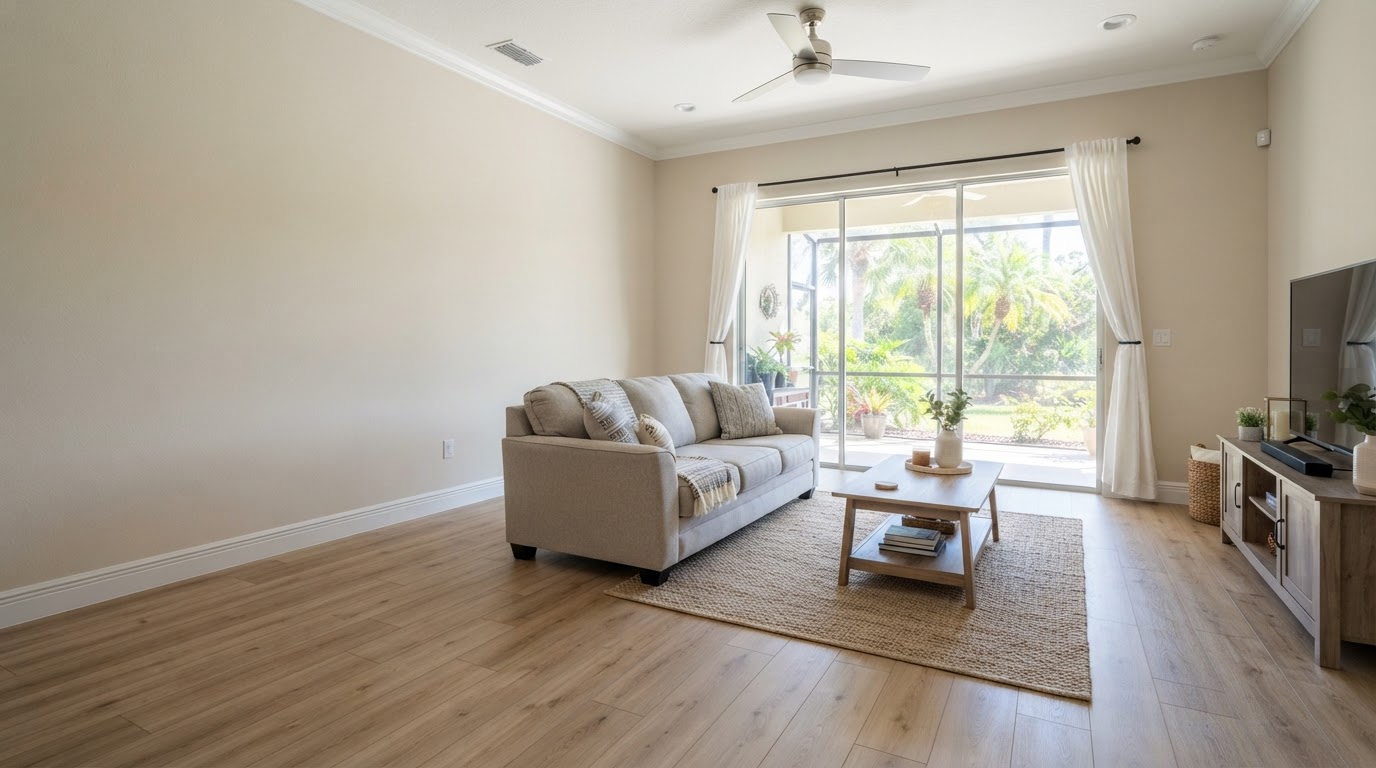
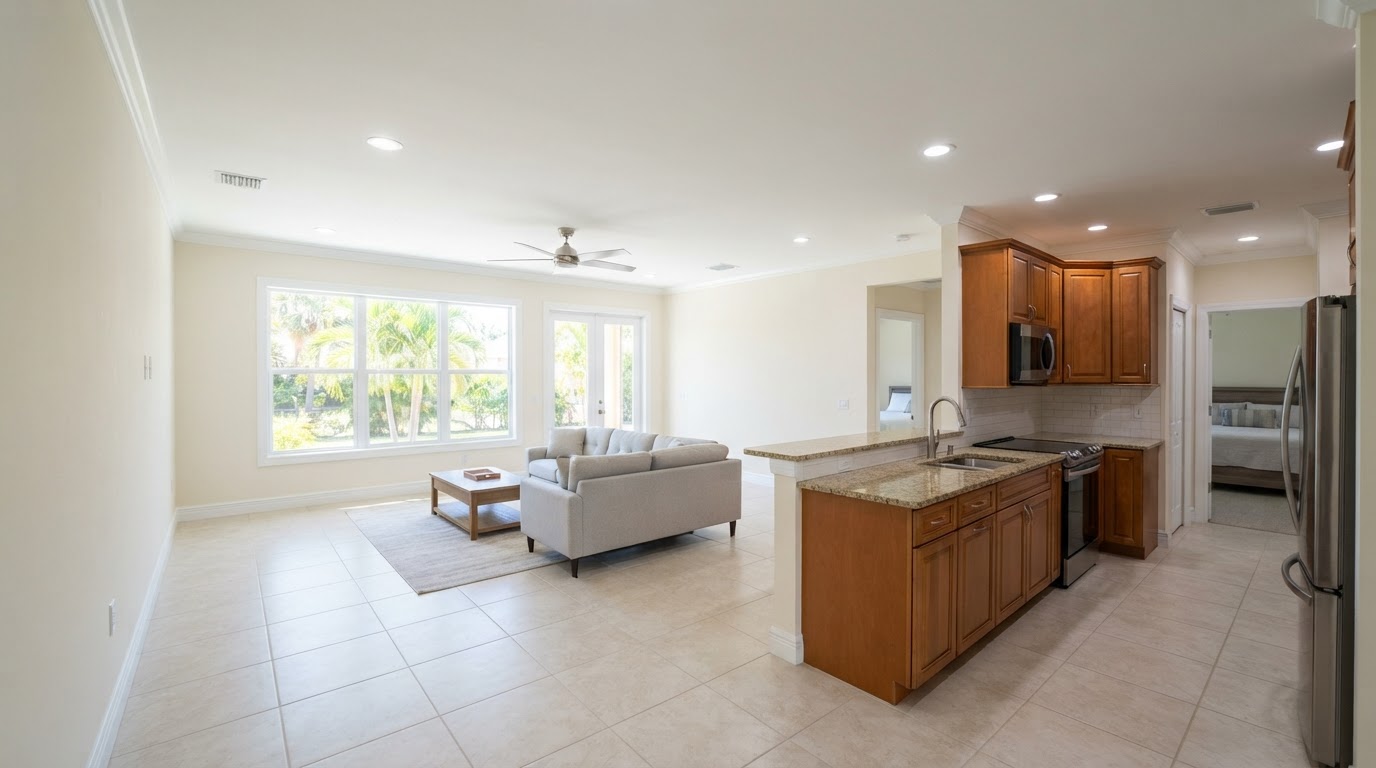
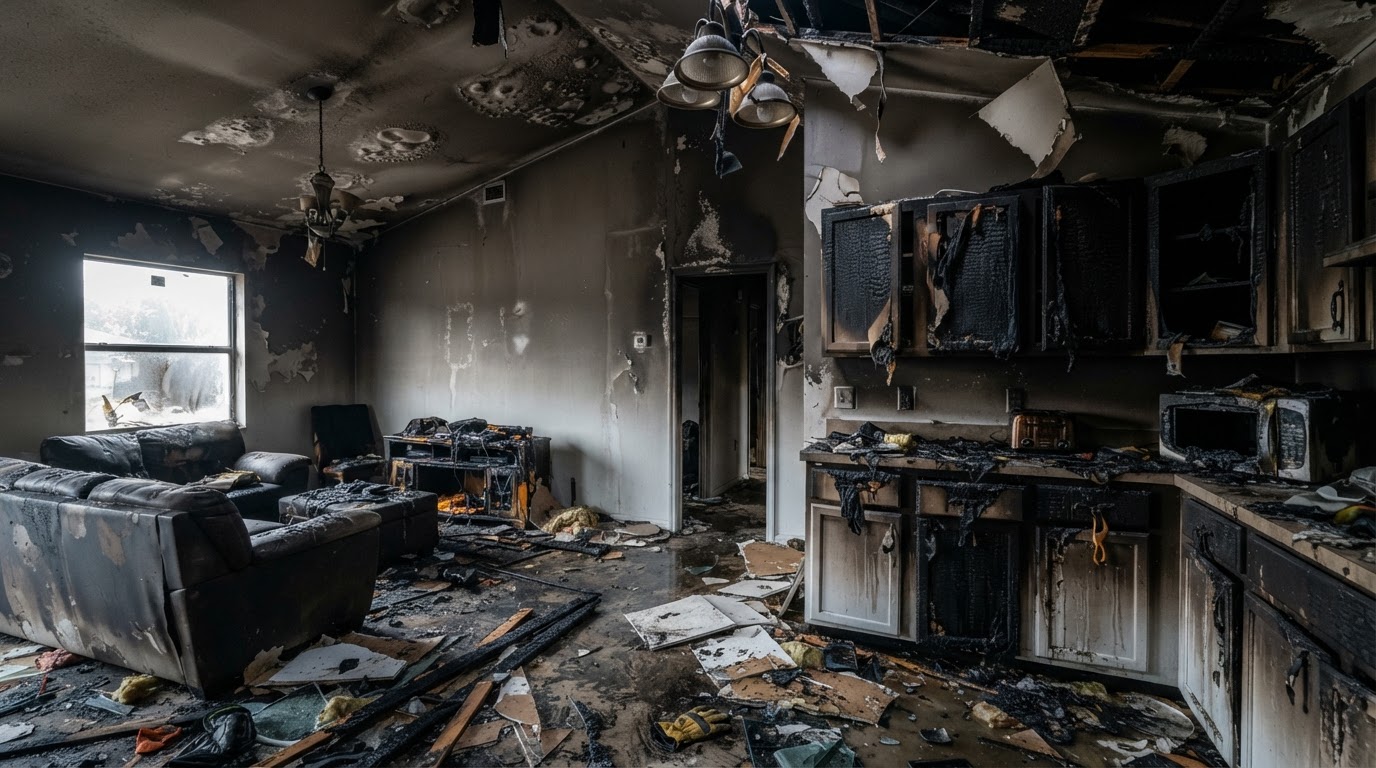
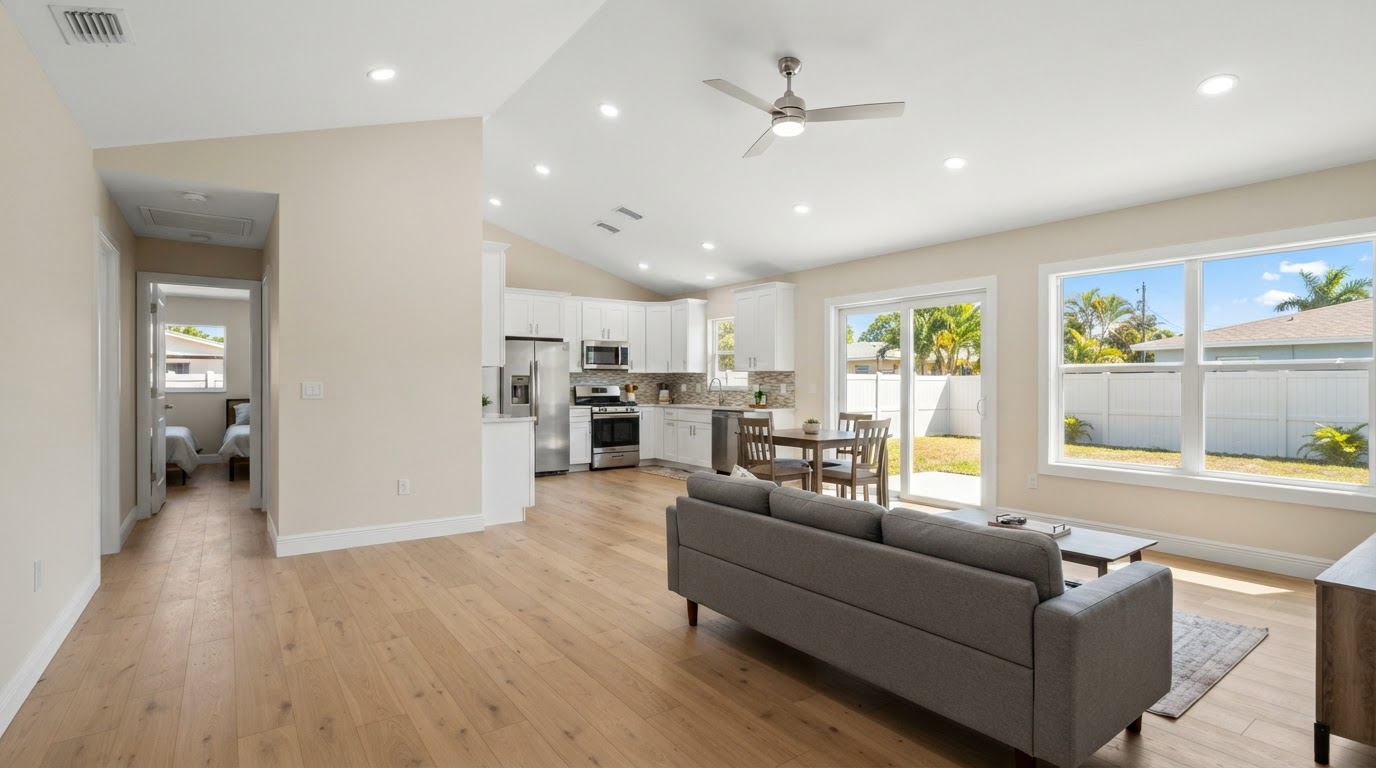
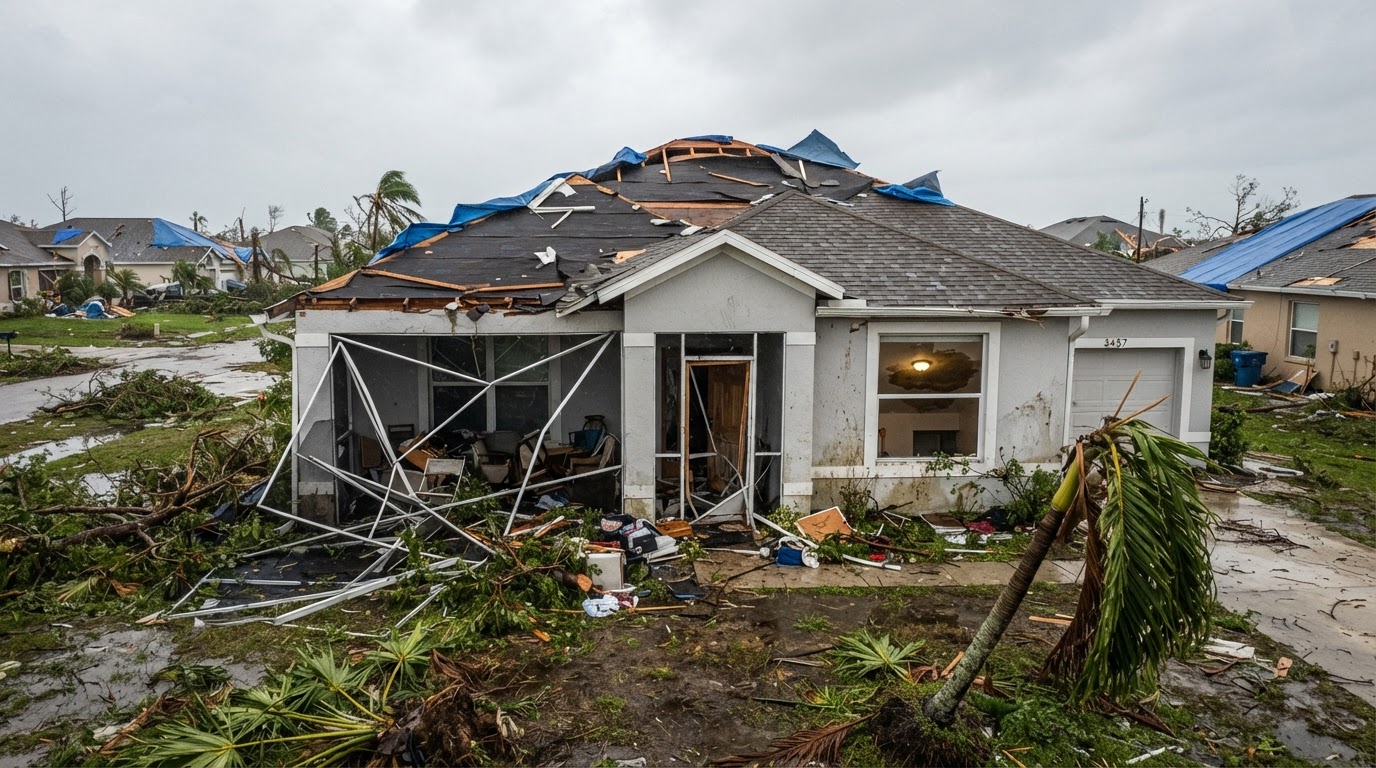
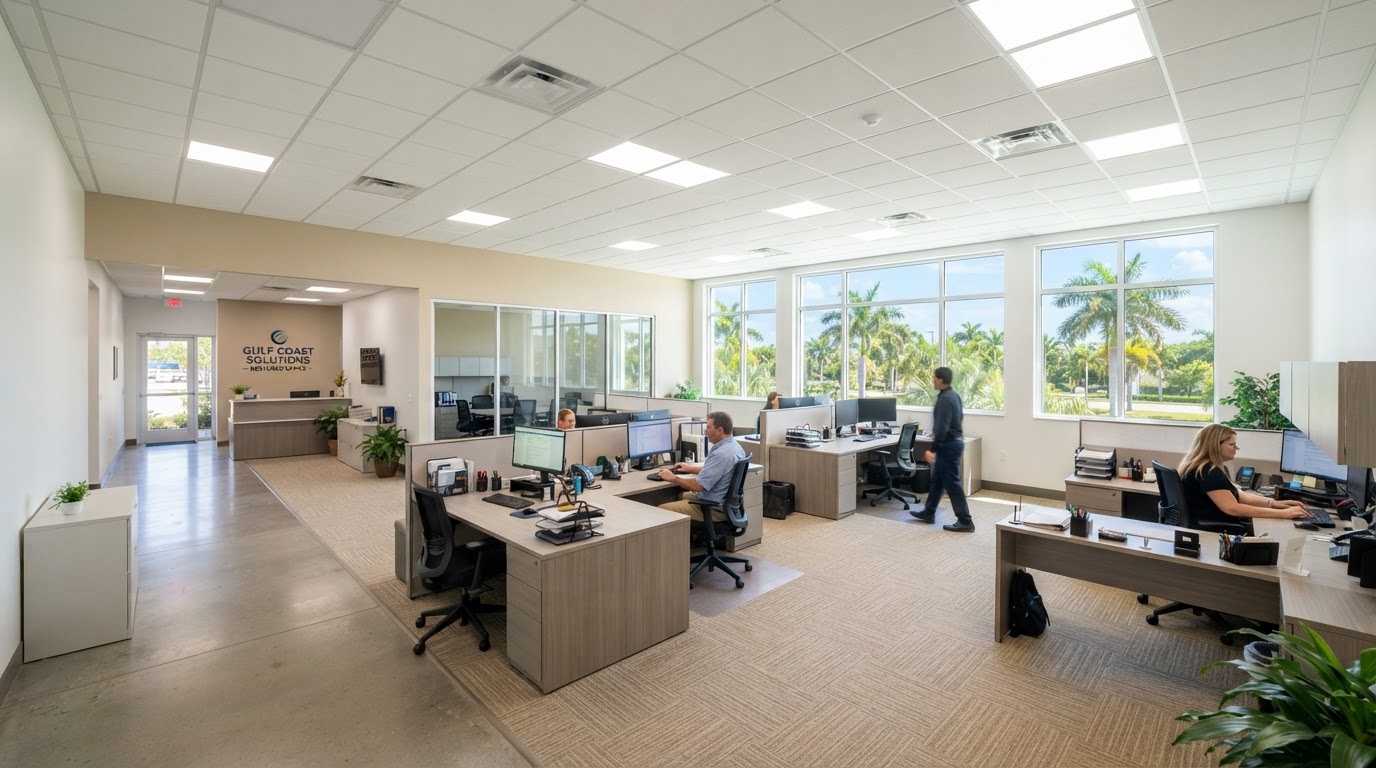
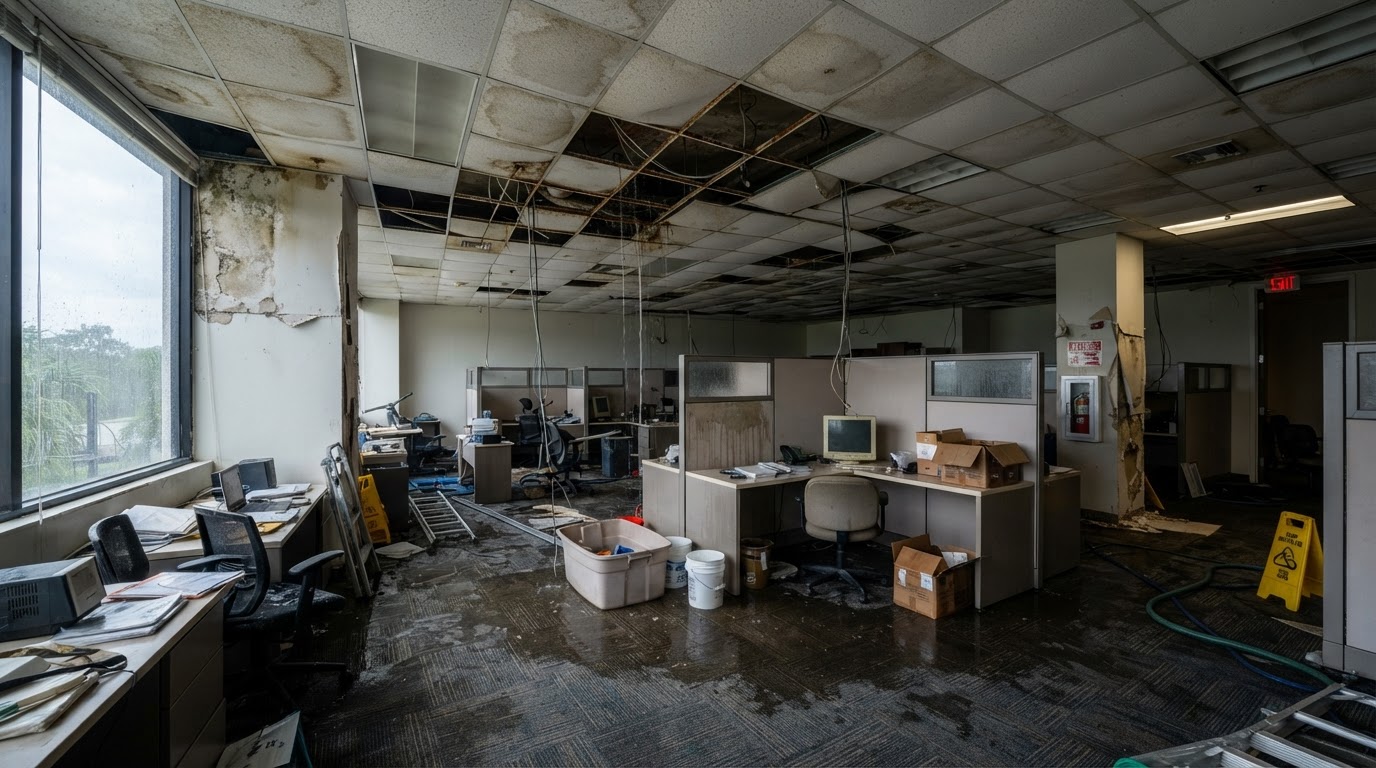
These interactive comparisons illustrate representative transformations tied to residential leak cleanup, roof intrusion, damaged drywall, structural drying, and interior rebuilding relevant to Charlotte Park homes. Water damage restoration near Charlotte Park is scoped from the actual cause and moisture extent — the sliders below are a visual reference, not a documented Charlotte Park project.
Representative imagery: Interactive Before & After images are representative visual examples illustrating possible property restoration conditions and processes. They do not depict verified completed projects by Port Charlotte Fire & Water Damage Restoration. Actual results vary by damage type, materials, contamination, property condition and restoration scope.
Water Damage Restoration & Cleanup in Charlotte Park
Water damage restoration in Charlotte Park may involve water extraction, structural drying, material evaluation, controlled removal of unsalvageable materials, and appropriate repair work. Actual procedures depend on the water source, the saturation extent, any contamination, and the condition of the affected building materials.
 BeforeAfter
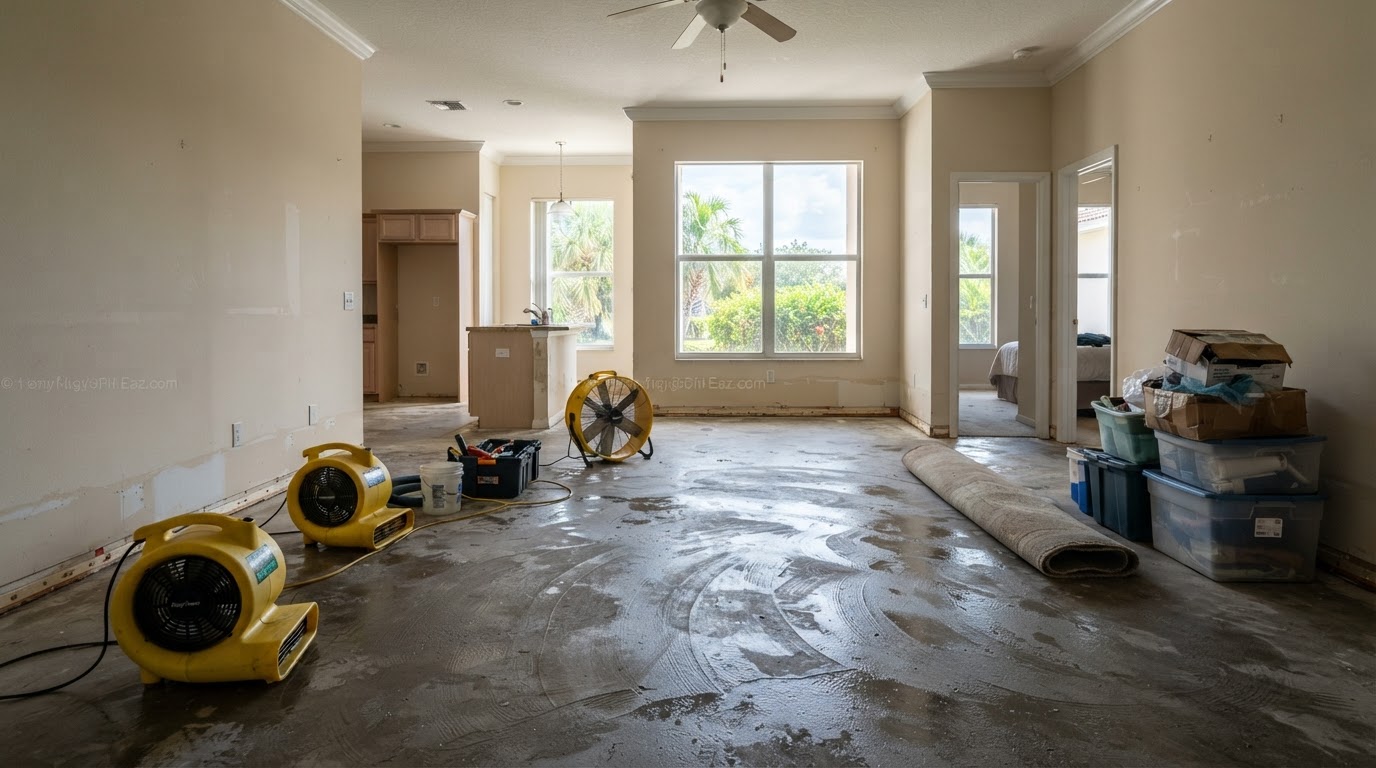
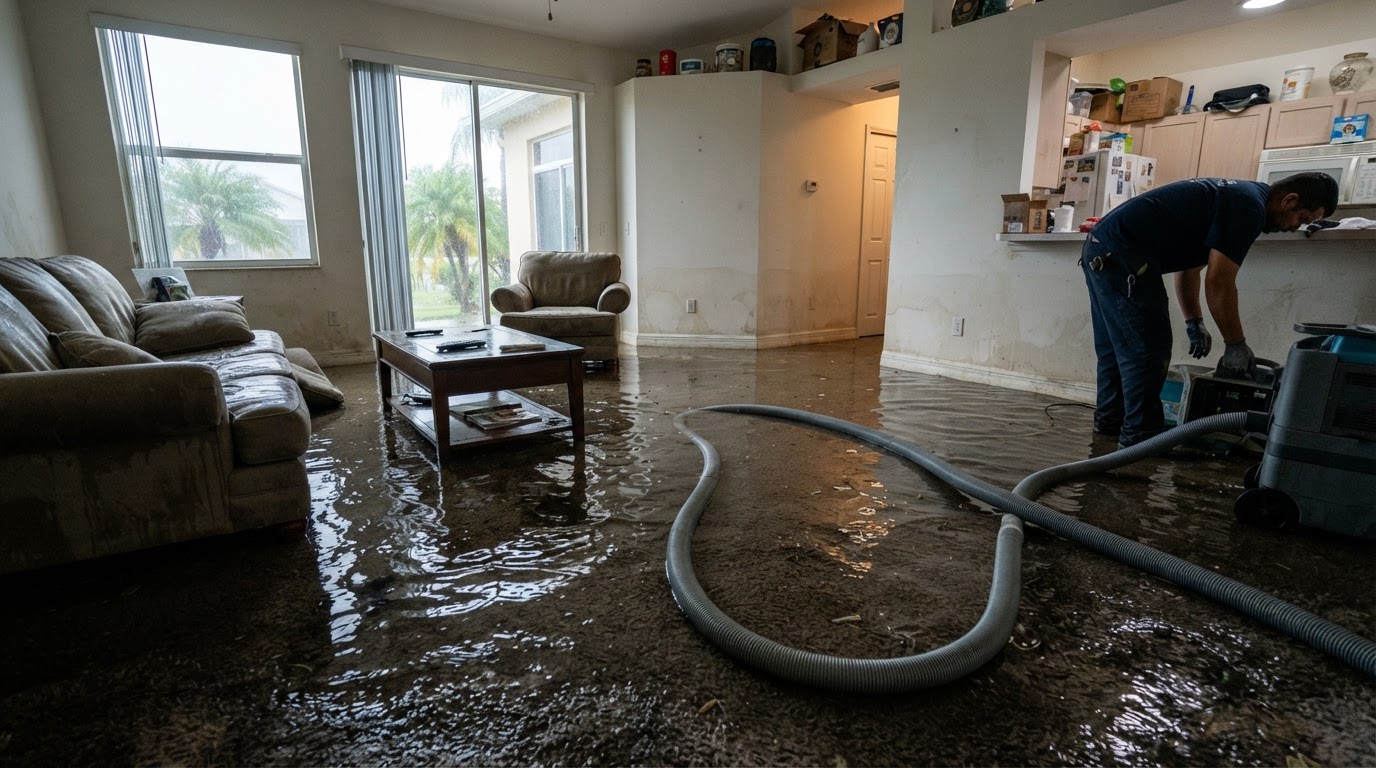
Emergency Water Extraction & Removal Near Charlotte Park
Emergency water extraction removes accessible standing water from an affected Charlotte Park property so the building can be evaluated and structurally dried. Extraction is the first response to a water loss, not the final repair — damp materials may remain after the visible water is gone, and drying continues from there.
 BeforeAfter
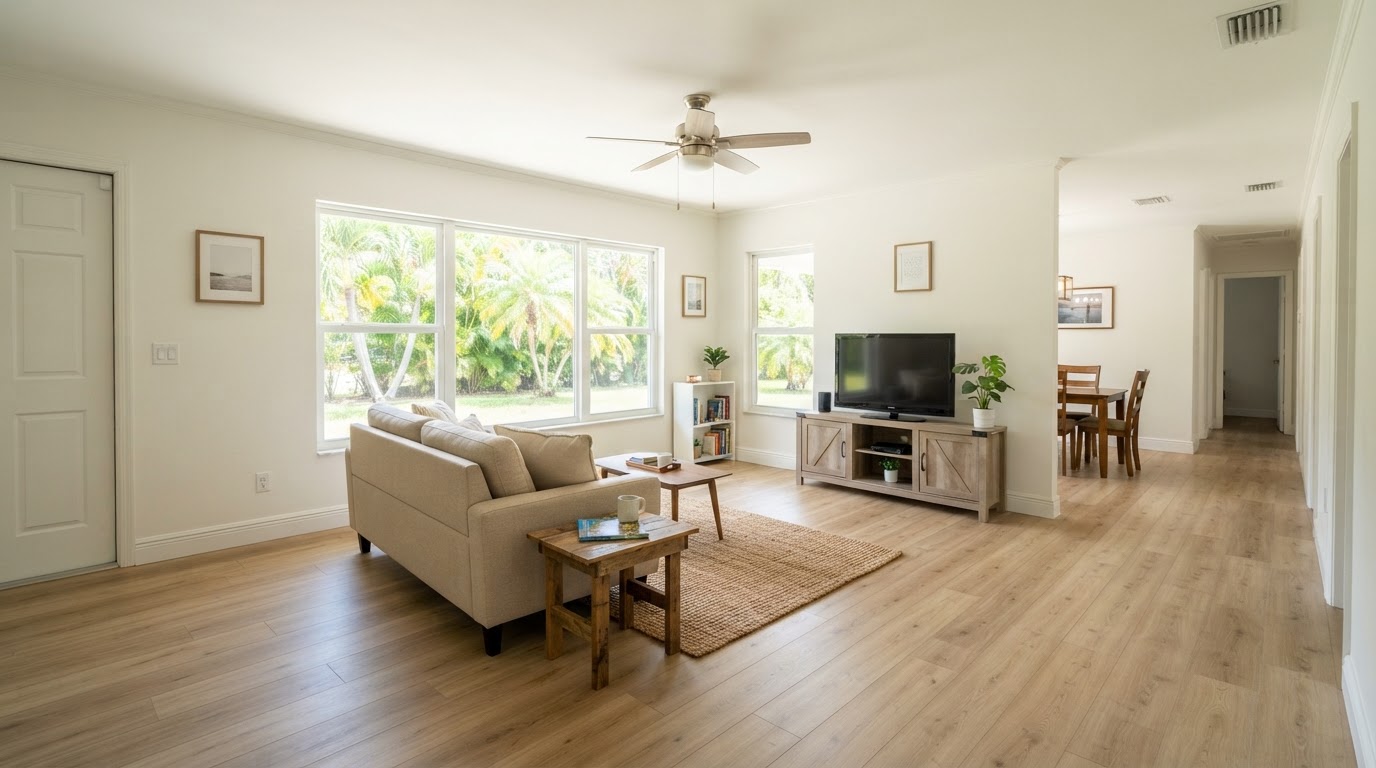
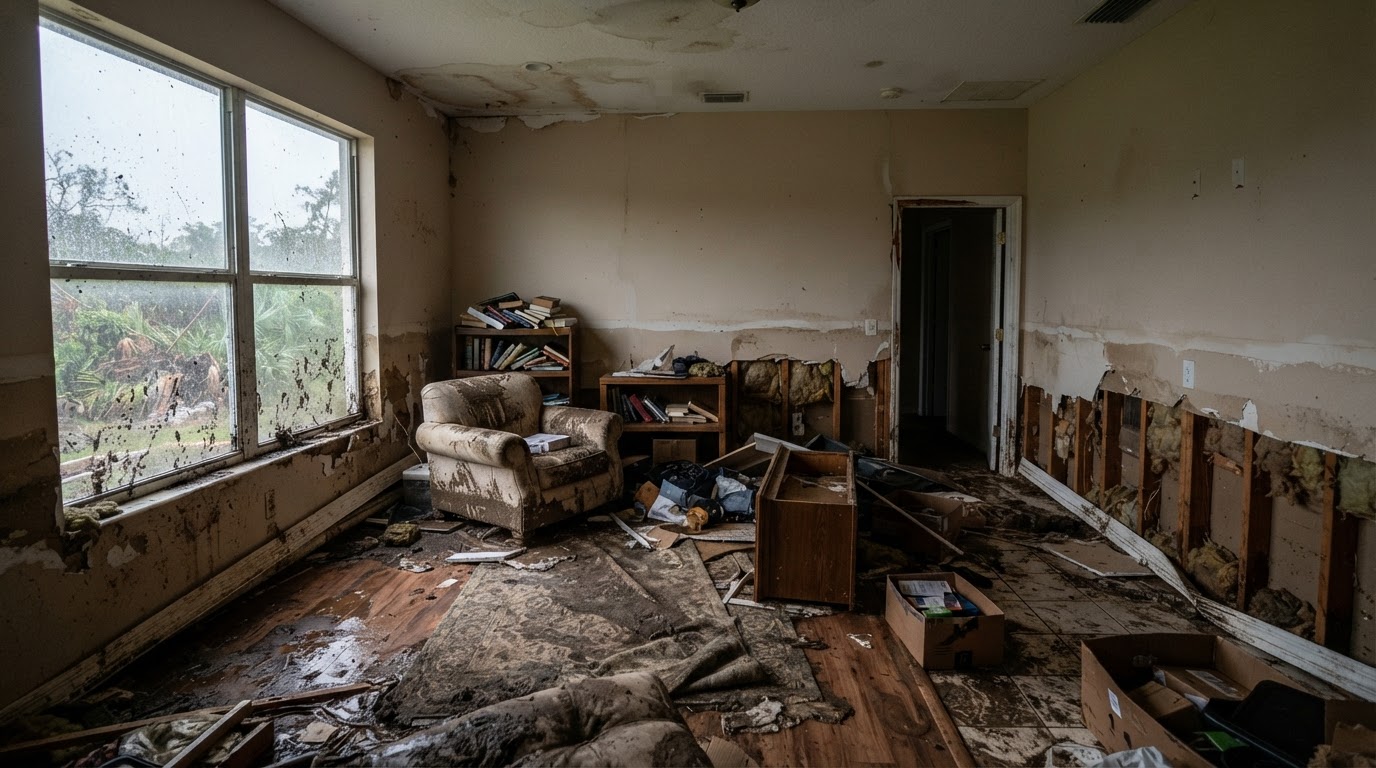
Flood Damage Cleanup & Restoration in Charlotte Park
Flood damage cleanup in Charlotte Park addresses floodwater differently from a clean plumbing leak. Floodwater may carry soil, organic material, and contaminants, so porous materials that have absorbed it are evaluated for removal, affected surfaces are cleaned and sanitized, and the structure is dried with monitoring before any reconstruction is planned.
 BeforeAfter
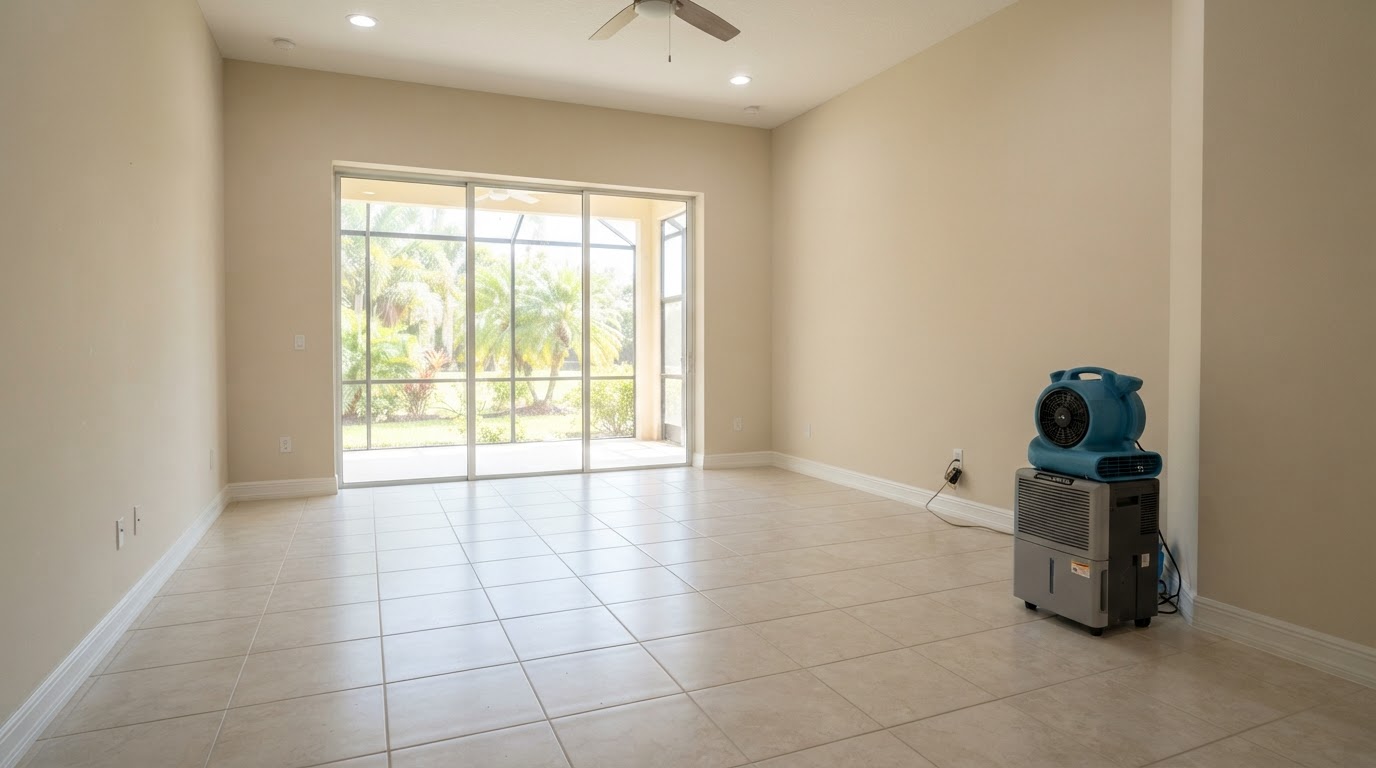
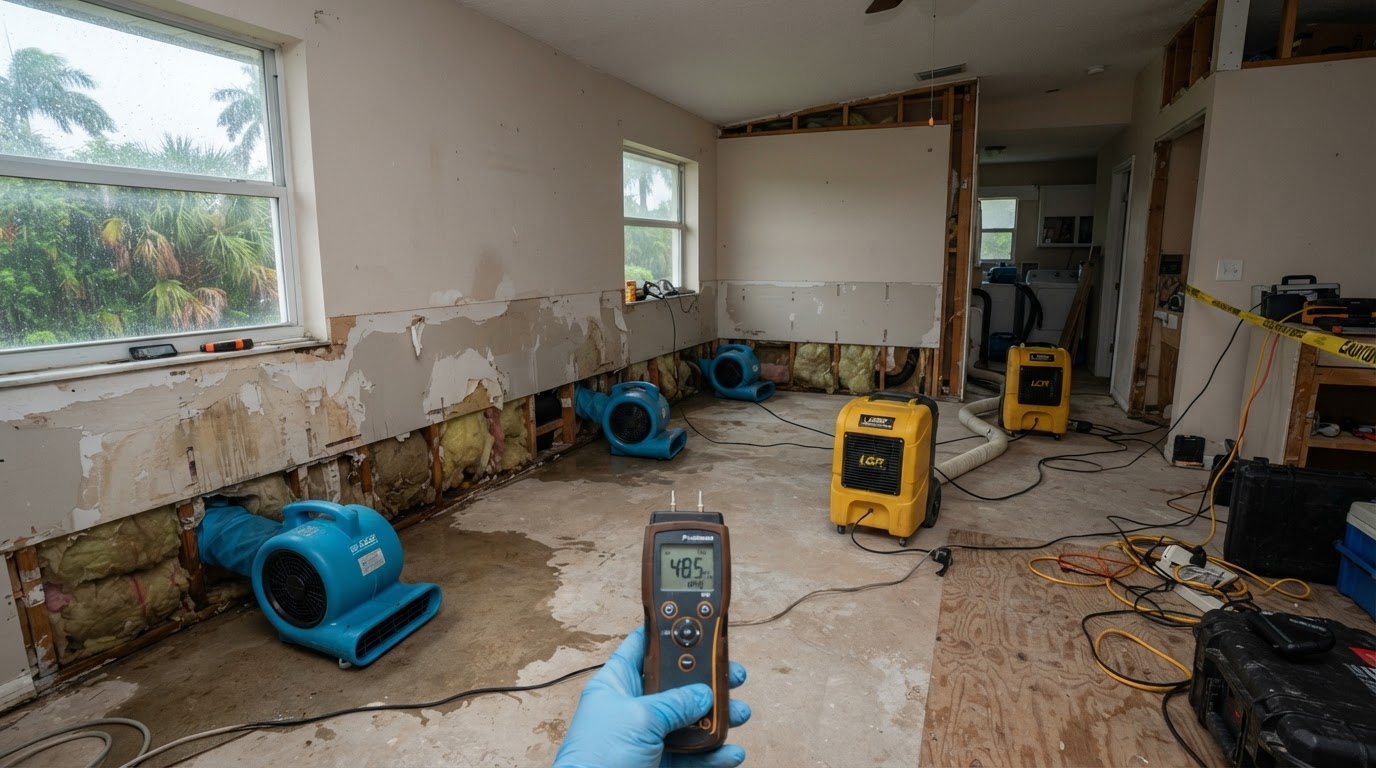
Structural Drying & Dehumidification Near Charlotte Park
Structural drying near Charlotte Park uses air movement, dehumidification, moisture monitoring, and material-specific drying to address water trapped inside drywall, insulation, subfloors, framing, and masonry. A dry-looking surface may still conceal moisture inside an assembly, so completion is determined by assessment rather than appearance.
 BeforeAfter
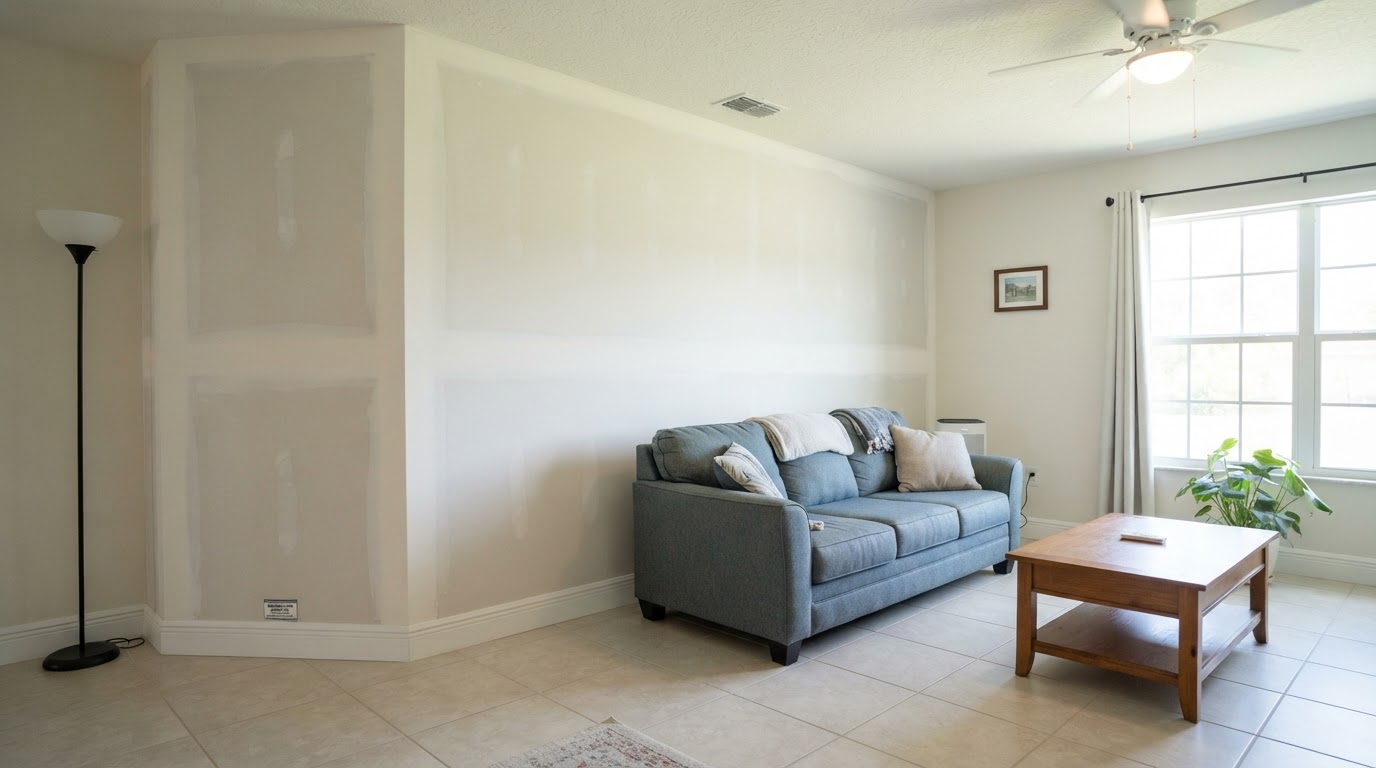
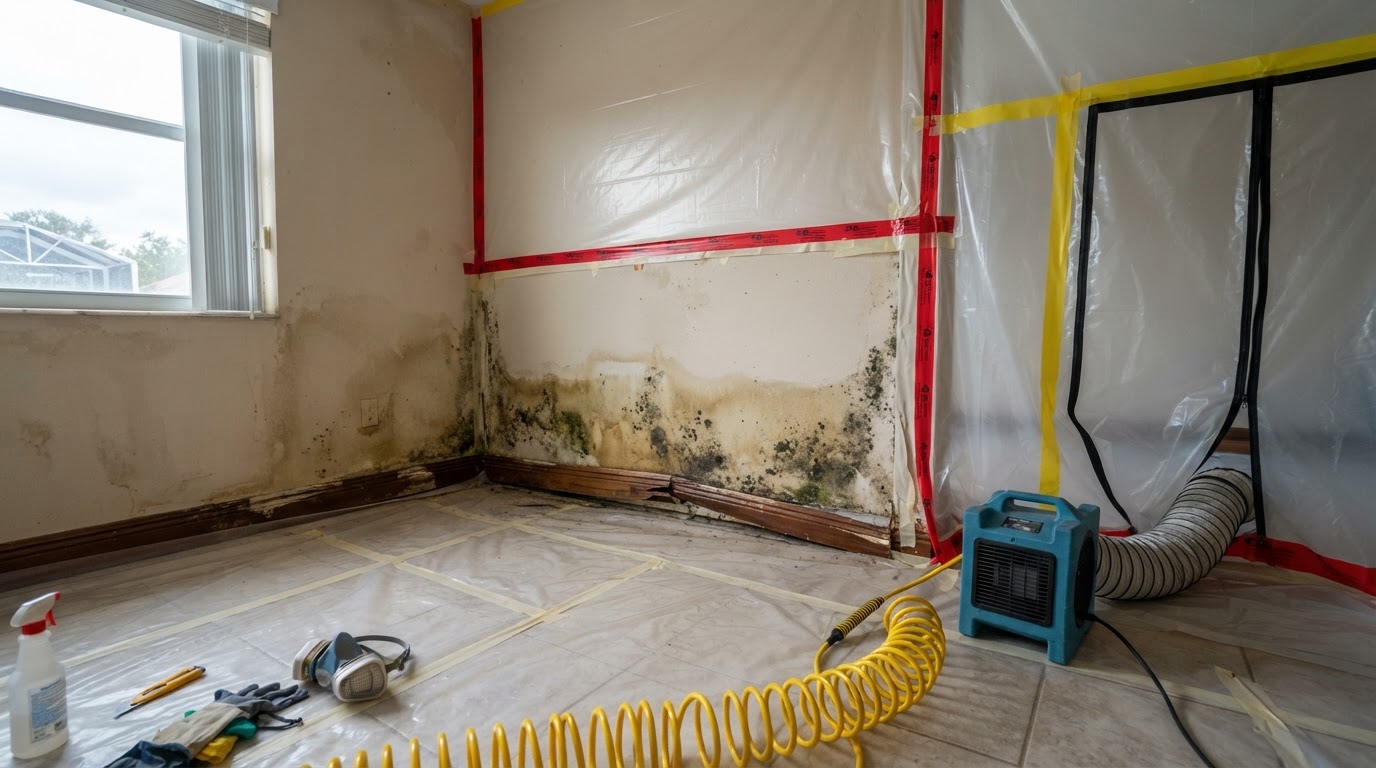
Mold Remediation & Removal in Charlotte Park
Mold remediation in Charlotte Park begins with the moisture source — a leak, condensation, or standing water — because remediation without source control leads to recurrence. Work may involve containment, removal of contaminated porous materials, cleaning of affected surfaces, drying, and post-remediation assessment where appropriate. Mold work is distinct from general surface cleaning.
 BeforeAfter
Fire Damage Restoration & Cleanup Near Charlotte Park
Fire damage restoration near Charlotte Park addresses char, heat damage, smoke residue, soot, odor, and the water used in suppression. Smoke can travel through the HVAC system and openings to rooms beyond the fire source, so the cleaning scope follows the full extent of smoke travel, not only the area of origin. Contents evaluation and reconstruction planning follow the cleaning.
 BeforeAfter
Hurricane & Storm Damage Restoration in Charlotte Park
Hurricane and storm damage restoration in Charlotte Park may include roof protection, floodwater cleanup, structural drying, material replacement, and coordinated rebuilding after wind-driven rain, roof intrusion, or storm-related flooding. The scope follows the actual damage and the property's real exposure, not a uniform storm assumption for the whole community.
 BeforeAfter
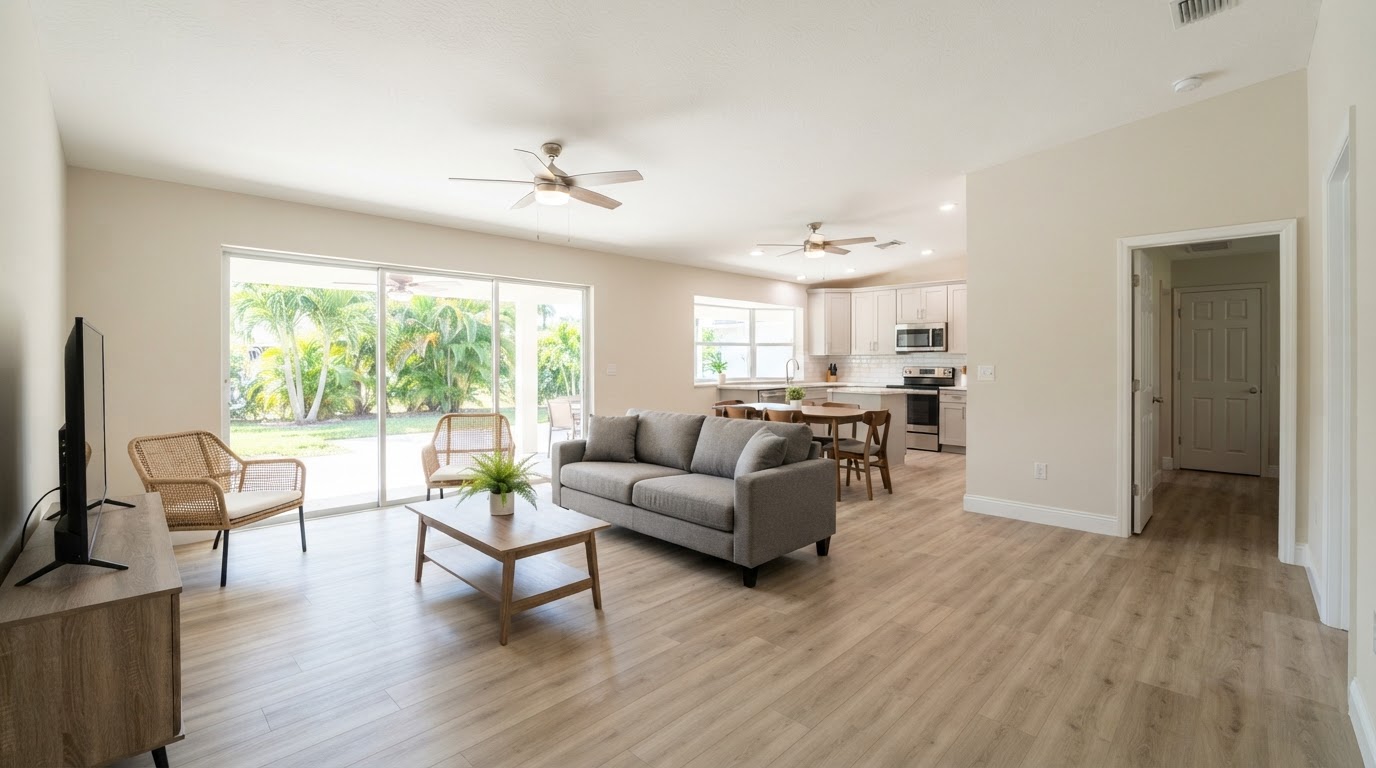
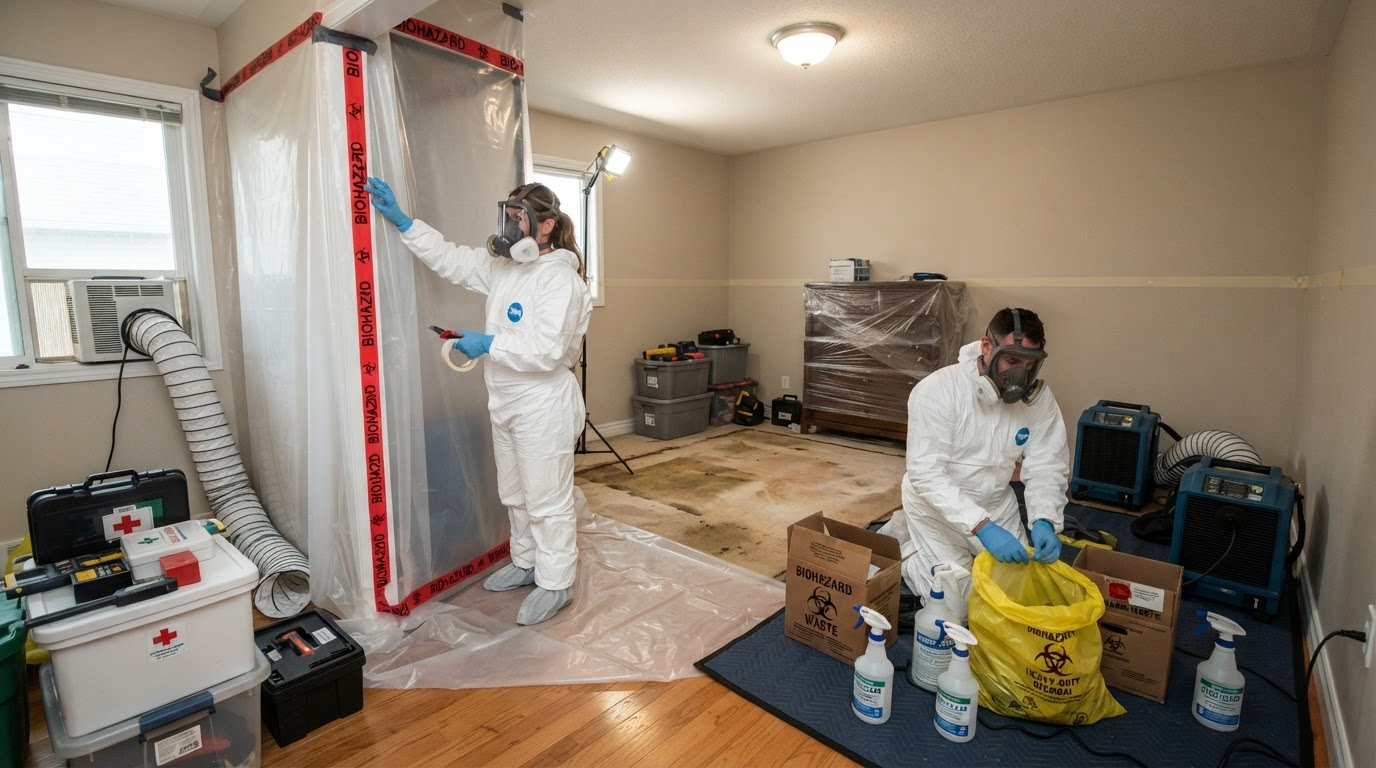
Biohazard Cleanup & Property Restoration Near Charlotte Park
Biohazard cleanup near Charlotte Park can require trained personnel, protective procedures, containment, specialized cleaning and disinfection, regulated waste handling, odor management, and material removal where necessary. Each situation is assessed on what is actually present, and the restoration planning that follows is built from that assessment.
 BeforeAfter
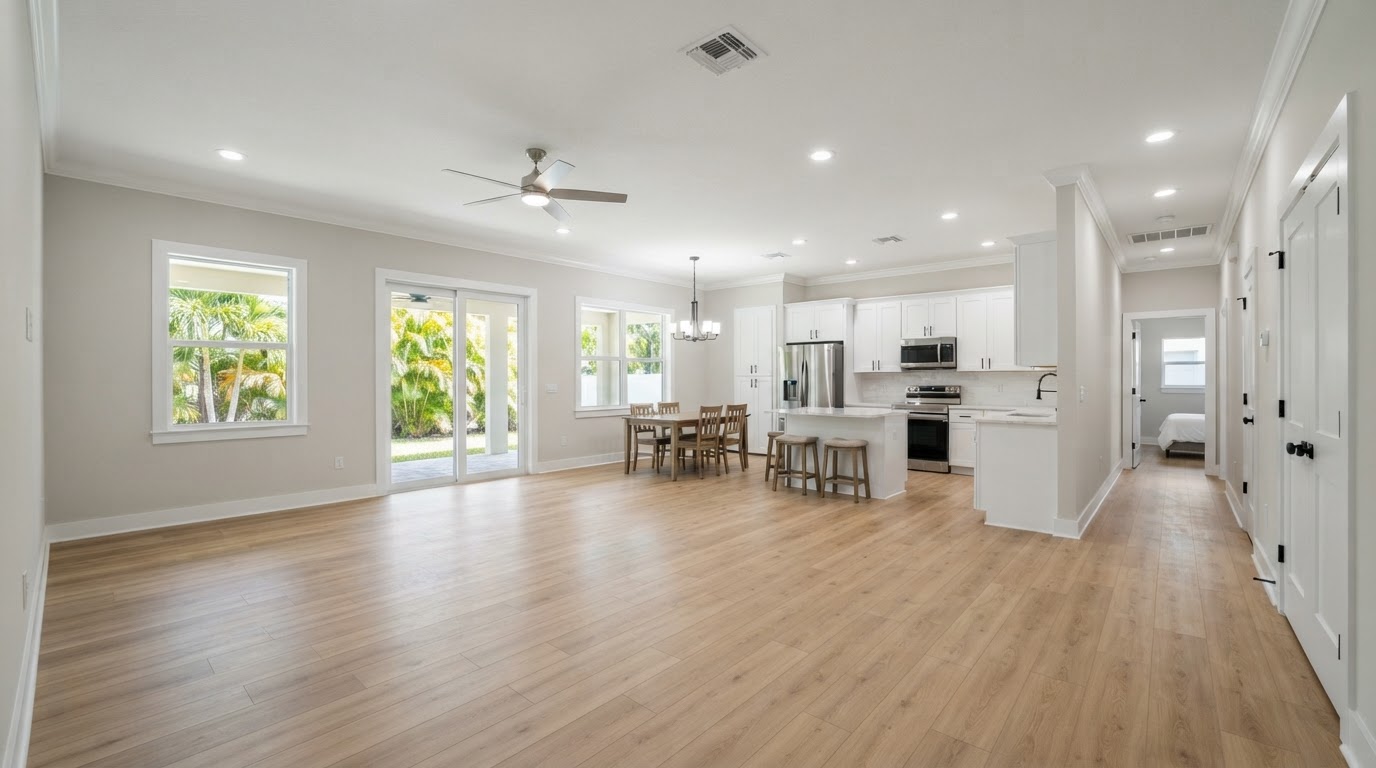
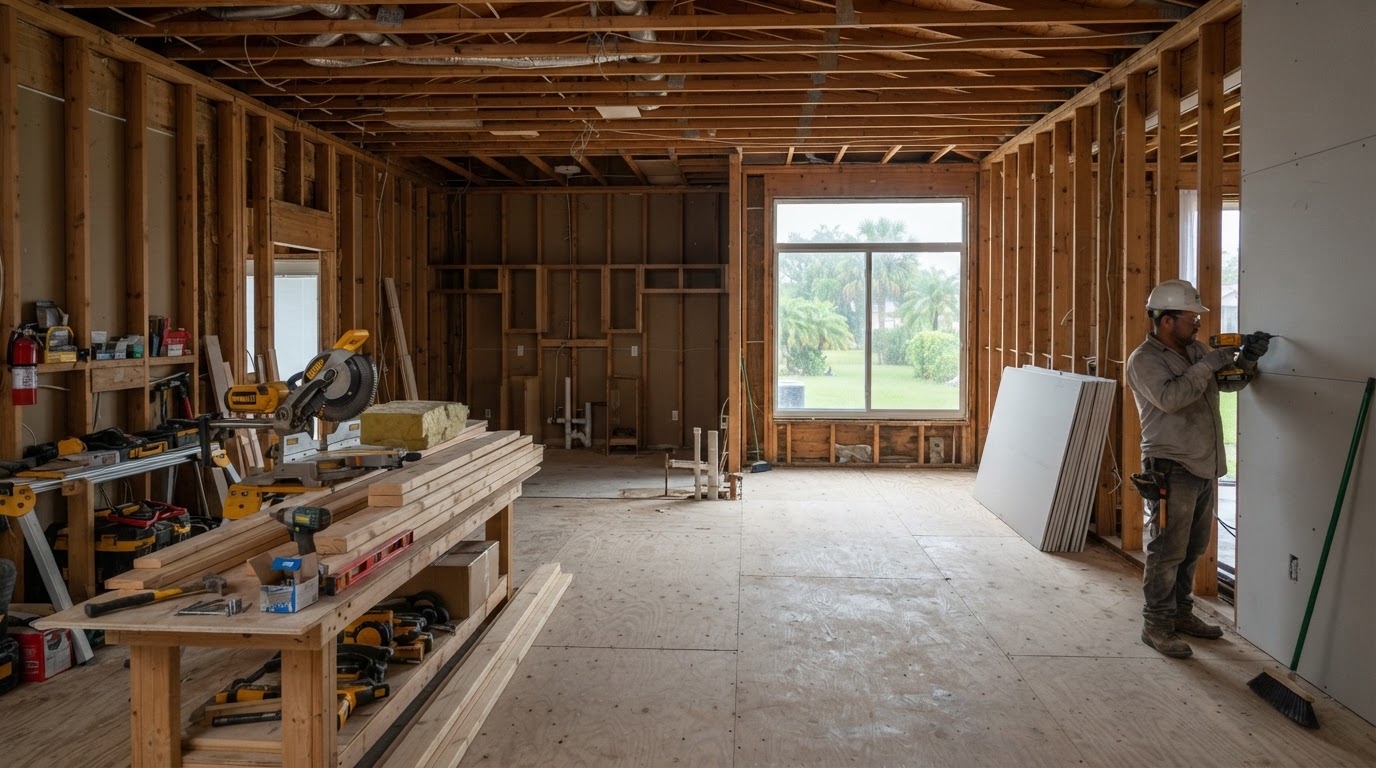
Reconstruction & Build-Back in Charlotte Park
Reconstruction and build-back in Charlotte Park follows mitigation and drying — replacing removed drywall and insulation, restoring or replacing flooring, repairing framing, and finishing the interior back toward pre-loss condition. The reconstruction scope may be quoted separately from initial cleanup and is coordinated with qualified trades and any required permitting.
 BeforeAfter
Commercial Water Damage Restoration Near Charlotte Park
Commercial water damage restoration near Charlotte Park involves water extraction, moisture assessment, structural drying, contents evaluation, tenant or property-manager coordination, and repair planning across affected work areas. A commercial loss may involve multiple suites, shared systems, inventory, and the practical question of whether mitigation can proceed while the business operates.
 BeforeAfter
Explore Property Restoration Services Near Charlotte Park
Charlotte Park property owners can submit an inquiry about plumbing leaks, roof intrusion, wet drywall, ceiling stains, water-damaged cabinets, flooring, mold, fire damage, or reconstruction. Include the property city, damage category, current condition, affected rooms, known water source, date of discovery, and photos when available.
Nearby Service Areas
Charlotte Park Restoration FAQs
Answers to the questions Charlotte Park homeowners most often ask about water, fire, and mold restoration.
Request Charlotte Park Restoration Help
Tell us about the property damage and the location. Submit your inquiry so the appropriate next steps can be discussed.