Water Damage vs. Flood Damage: What's the Difference?
Water damage and flood damage are different losses with different contamination, insurance, and restoration considerations. In Port Charlotte, FL, explore the practical distinction — why it matters for cleanup, salvage, and which insurance policy may apply.
Request Restoration Help
Tell us about the property damage and the location. Submit your inquiry so the appropriate next steps can be discussed.
Water Damage vs. Flood Damage: What's the Difference?
Water damage and flood damage are often used interchangeably, but they describe different losses with different contamination profiles, insurance considerations, and restoration protocols. The distinction matters because it affects how the cleanup is approached, which materials can be salvaged, and which insurance policy may apply. A clean interior plumbing leak and external floodwater entering a building are not the same project.
Water damage, in the restoration sense, typically refers to water that originates inside the building from a plumbing failure, appliance leak, or supply-line failure. The water is often of known quality — Category 1 clean water from a supply line — which allows more materials to be dried and salvaged if caught promptly. Flood damage refers to water that rises from outside and enters the building — surface water runoff, storm surge, an overflowing body of water, or heavy rainfall that pools and enters through openings. That water carries whatever it has traveled through, which is why it is treated as contaminated and why the cleanup protocol shifts toward removal of porous materials.
This guide explains the practical differences so a property owner understands the conversation — the contamination categories, the insurance distinction, and what it means for restoration. It does not provide personalized coverage determinations; coverage depends on the specific policy and the circumstances of the loss.
Key Differences at a Glance
These are the distinctions that separate water damage from flood damage in practice:
How the Restoration Differs
The restoration process differs because the contamination differs. A clean Category 1 water loss — a supply-line leak caught within hours — can often be dried in place: extract the standing water, stage air movers and dehumidification, monitor moisture, and verify the materials reach a dry standard. More materials can be saved because the water is of known quality and the exposure was short.
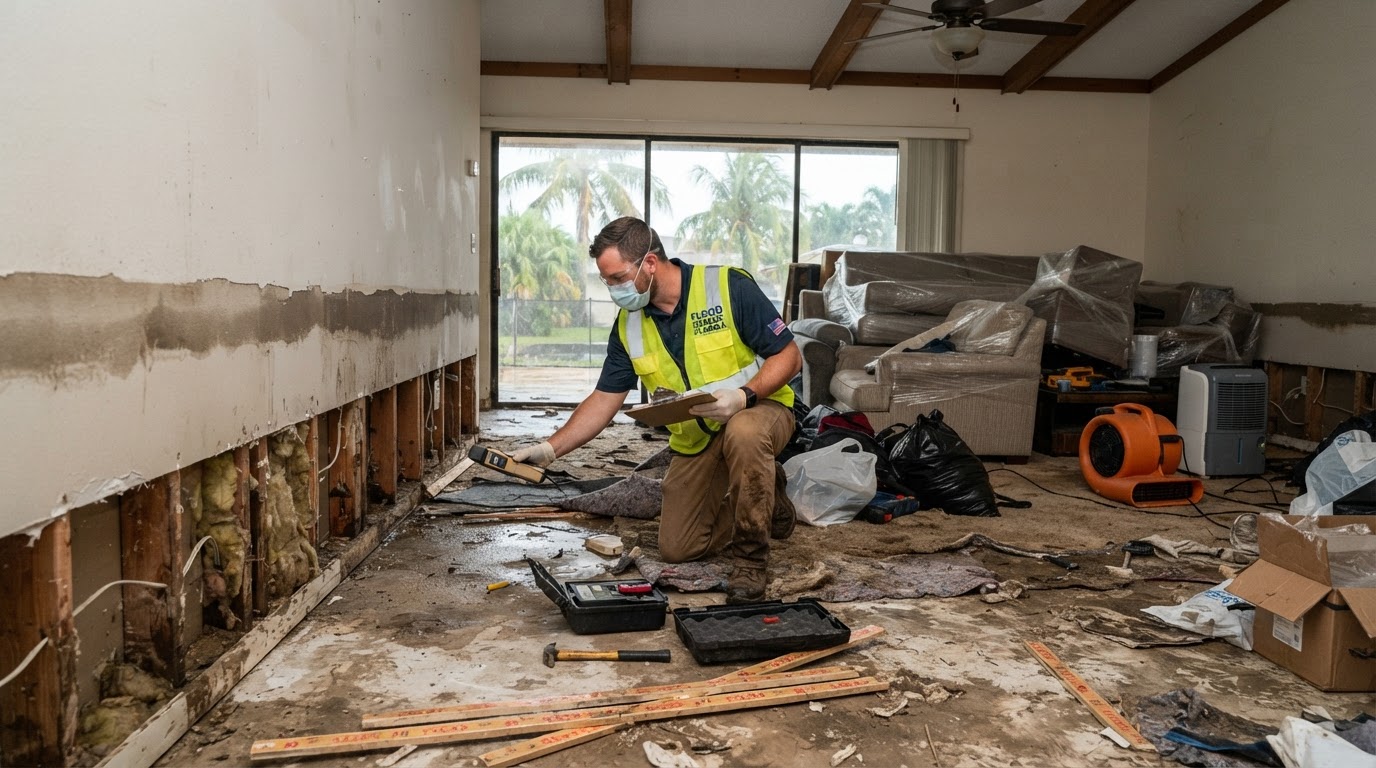
A flood loss shifts the protocol. Floodwater is classified as Category 2 or 3 because it carries contaminants from the exterior environment, which means porous materials that absorbed it — carpet padding, saturated drywall, insulation — are typically removed and disposed of appropriately rather than salvaged. The affected area is sanitized where appropriate, and the structure is dried and monitored. Electrical components that contacted floodwater are evaluated by a qualified professional before re-energizing. The scope is broader, the safety precautions are more involved, and the documentation supports both the restoration and the insurance claim — which may involve separate flood insurance considerations.
Identify the Source
Determine whether the water originated inside (plumbing) or entered from outside (flooding) — the key distinction.
Classify Contamination
Categorize the water as Category 1 (clean), 2 (grey), or 3 (black) to guide salvage and handling.
Extract Water
Remove standing water; floodwater requires contamination precautions that clean water does not.
Evaluate Materials
Determine which materials can be dried in place and which require removal based on contamination.
Dry & Sanitize
Dry the structure with monitored equipment; sanitize affected surfaces where appropriate after floodwater.
Document for Insurance
Compile photographs, moisture readings, and scope records; flood losses may involve separate flood insurance.
Plan Reconstruction
Scope and complete repairs after the structure is dry and stable.
Water vs. Flood Damage in Port Charlotte & Charlotte County
In Port Charlotte and Charlotte County, the water-vs-flood distinction comes up most often during hurricane season. A plumbing failure during a storm is water damage; storm surge from Charlotte Harbor or the canal system is flood damage. Low-lying parcels and properties near drainage features or canals see surface water enter through doors and weep vents, while wind-driven rain through a compromised roof may be treated as water damage rather than flooding depending on the building damage and policy. The distinction affects which insurance policy applies and how the cleanup is approached.
The surrounding service areas — Punta Gorda, North Port, Englewood, Deep Creek, and Rotonda West — share the same exposure. Specific FEMA flood-zone designations apply to individual parcels and vary property by property; a property's flood-zone status cannot be assumed from its city alone. This guide is general; a property owner should review their policies and report any loss promptly. No personalized coverage determination is provided here.
Related Restoration Services
These related services connect to water damage vs flood damage for Port Charlotte properties.
Water Damage vs. Flood Damage FAQs
Clear answers to the questions property owners most often ask about water damage vs flood damage in Port Charlotte. Review them, then share your property details so the appropriate next steps can be discussed.
Request Water or Flood Damage Help
Tell us about the property damage and the location. Submit your inquiry so the appropriate next steps can be discussed.