Hurricane Damage Recovery Checklist for Port Charlotte Properties
Hurricane recovery is a sequence: safety, documentation, stabilization, drying, then reconstruction. In Port Charlotte, FL, explore a practical recovery checklist for storm-damaged properties, with Southwest Florida hurricane and storm-surge context.
Request Restoration Help
Tell us about the property damage and the location. Submit your inquiry so the appropriate next steps can be discussed.
Hurricane Damage Recovery Checklist
Hurricane damage recovery is a sequence: safety first, then documentation, then stabilization and drying, then reconstruction. After a storm, the priority is confirming the property is safe to enter before any assessment or cleanup begins. Storm damage can compromise the roof, windows, doors, and the building envelope, and storm surge or heavy rainfall can flood interiors — each requiring different recovery steps. A structured checklist keeps the recovery organized when the situation is overwhelming.
The checklist below walks through the recovery phases in order. It is general guidance for common hurricane damage scenarios in Southwest Florida; it is not a substitute for assessing the specific conditions of a storm-damaged property. Electrical safety, structural stability, and contamination from storm surge or floodwater are evaluated before entry, and qualified help is contacted for assessment and mitigation when building materials are affected. No specific response time is promised — recovery begins when it is safe to access the property.
Hurricane recovery often involves both wind-driven damage — roof, windows, and envelope — and water damage from surge, rainfall, or intrusion through compromised openings. The two may be addressed under different insurance considerations, and the documentation supports both. This guide does not provide personalized coverage determinations; a property owner should review their policies and report the loss promptly.
Recovery Priorities After a Hurricane
These are the priorities that shape hurricane damage recovery, in the order they matter:
Hurricane Recovery, Phase by Phase
Hurricane recovery proceeds in phases. The first phase is safety and access: before entering, the property is evaluated for electrical hazards, structural damage, and contamination from storm surge or floodwater. Storm-damaged electrical systems that contacted water are not re-energized until evaluated by a qualified electrical professional. Compromised roof, window, and door openings are protected from continued intrusion where temporary stabilization is offered — tarping or board-up — to limit how far the damage spreads.
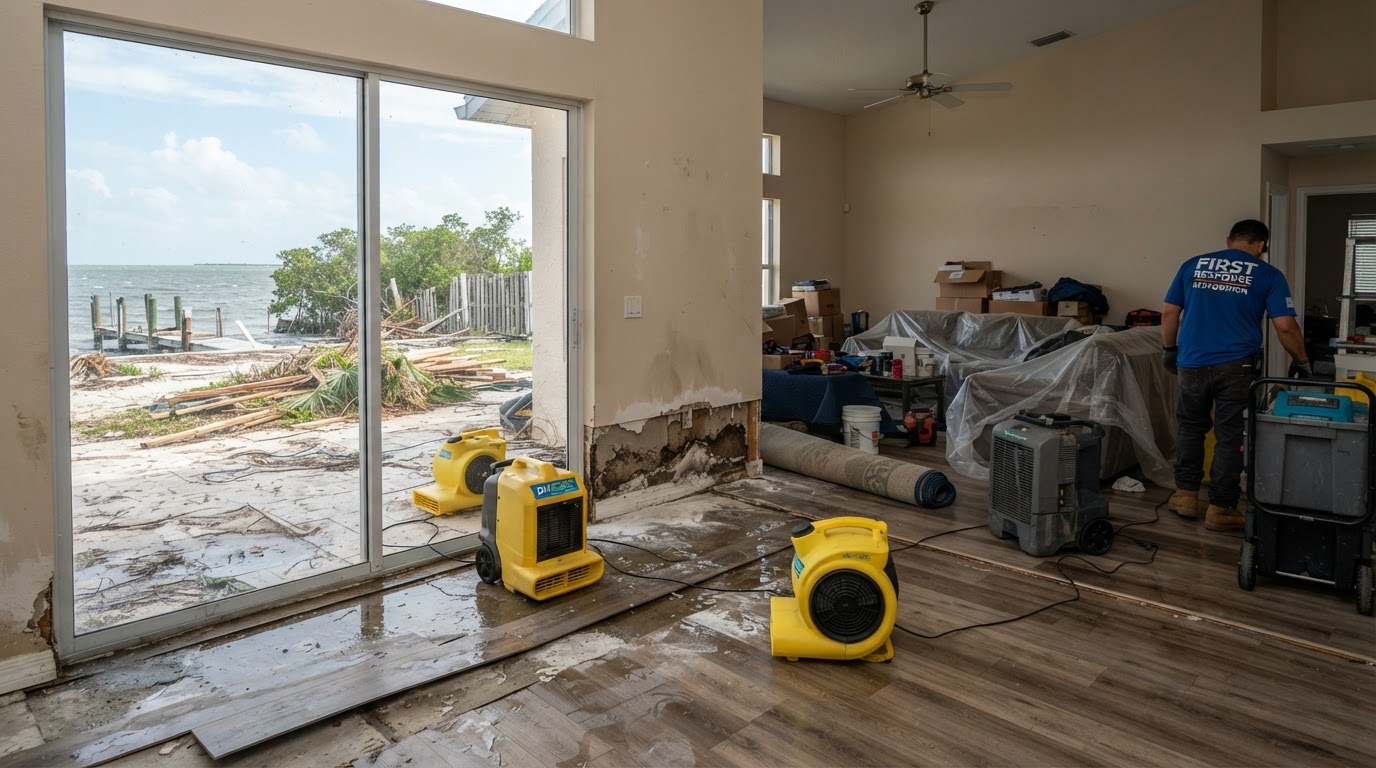
The second phase is documentation and extraction: the waterline, storm debris, and damaged openings are photographed before cleanup, standing water is removed, and the moisture scope is mapped. Storm surge and floodwater are treated as contaminated, which means porous materials that absorbed them are evaluated for removal rather than salvage. The third phase is drying and mold prevention: the structure is dried with monitored equipment, and the documentation supports the insurance claim throughout. The final phase is reconstruction — repairs and build-back — which begins only after the structure is confirmed dry and stable.
Phase 1 — Safety & Access
Confirm electrical, structural, and biological safety; do not enter until the property is safe.
Phase 2 — Stabilize Openings
Protect compromised roof, window, and door openings from continued water intrusion where offered.
Phase 3 — Document
Photograph the waterline, storm debris, damaged openings, and affected materials before cleanup.
Phase 4 — Extract Water
Remove standing water from surge, rainfall, or intrusion; classify contamination.
Phase 5 — Dry & Monitor
Dry building materials with air movers and dehumidification, monitored to verified targets.
Phase 6 — Inventory Contents
Document and evaluate damaged belongings, equipment, and stored materials.
Phase 7 — Report & Plan
Report the loss to the insurer and plan reconstruction after the structure is dry and stable.
Hurricane Recovery in Port Charlotte & Charlotte County
Port Charlotte and Charlotte County sit squarely in the Gulf Coast hurricane exposure zone. Charlotte Harbor and the canal-front communities face storm surge traveling inward through the canal system, while wind-driven rain compromises roofs, windows, and the building envelope across the region. Slab-on-grade construction means floodwater spreads across the slab and into wall assemblies, and high humidity extends the drying timeline and the window for post-storm microbial growth. Seasonal residences add the delayed-discovery pattern — an owner who returns after a storm to find water intrusion from days or weeks earlier, with mold already established.
The surrounding service areas — Punta Gorda, North Port, Englewood, Deep Creek, and Rotonda West — share the same storm exposure. Specific FEMA flood-zone designations apply to individual parcels and vary property by property; a property's flood-zone status cannot be assumed from its city alone. The checklist here is general; assess the specific conditions of the storm-damaged property and prioritize safety. No specific response time is promised.
Related Restoration Services
These related services connect to hurricane damage recovery checklist for Port Charlotte properties.
Hurricane Damage Recovery FAQs
Clear answers to the questions property owners most often ask about hurricane damage recovery checklist in Port Charlotte. Review them, then share your property details so the appropriate next steps can be discussed.
Request Hurricane Damage Restoration Help
Tell us about the property damage and the location. Submit your inquiry so the appropriate next steps can be discussed.