
How Long Does Structural Drying Take After Water Damage?
Drying duration varies and is determined by actual moisture conditions and professional monitoring — there is no universal timeframe. In Port Charlotte, FL, explore what affects structural drying time, how the process works, and how completion is verified.
Request Restoration Help
Tell us about the property damage and the location. Submit your inquiry so the appropriate next steps can be discussed.
How Long Does Structural Drying Take?
There is no universal timeframe for structural drying because drying duration depends on the actual conditions of the loss — the materials affected, how much water they absorbed, how long they were wet, the temperature and humidity of the environment, and how accessible the concealed moisture is. A contained supply-line leak in a single room and a whole-home loss in a vacant seasonal property are not the same project, and they do not dry on the same timeline.
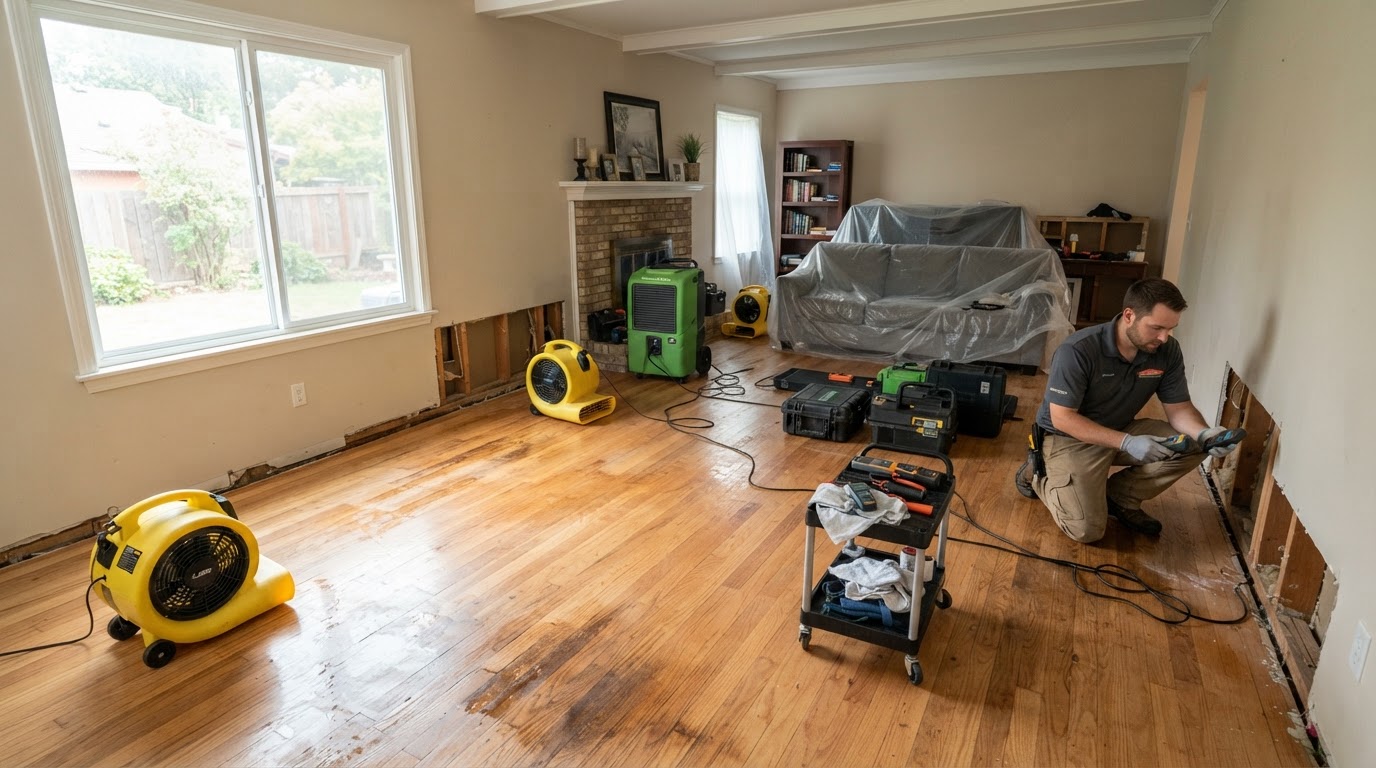
Structural drying is the process of pulling absorbed moisture back out of building materials — drywall, framing, subfloors, insulation, and flooring — after standing water has been extracted. It is not the same as letting a wet surface air-dry. Professional drying uses air movers to create evaporation from wet surfaces and assemblies, paired with dehumidification to remove that moisture from the air so it does not redeposit. The process is monitored over multiple visits with moisture meters and thermal imaging, and it is complete when the materials reach an appropriate dry standard — not when they look dry on the surface.
This guide explains the factors that affect drying time so a property owner understands why a credible provider does not promise a fixed number of days. Drying duration is determined through the measured conditions of the loss, not a standard rate. No universal drying timeframe is promised here.
Factors That Affect Drying Time
These are the variables that determine how long structural drying takes for a given loss:
How Structural Drying Works
Structural drying follows a deliberate sequence. After standing water is extracted, the moisture scope is mapped with moisture meters and thermal imaging to establish a baseline — which materials are wet, how wet, and where the moisture has migrated. Air movers are staged to create evaporation from wet surfaces and assemblies, and dehumidifiers remove that evaporated moisture from the air so it does not redeposit. The drying is monitored over multiple visits, and the equipment layout is adjusted as conditions change.
Different materials dry at different rates. Drywall may dry in place if exposed to clean water for a short period, or require removal if it has lost structural integrity or been saturated by contaminated water. Wood framing is evaluated for moisture and dried, but severe saturation or contamination can require removal. Concrete and subfloor assemblies vary — a slab can hold and release moisture slowly, and flooring over a wet subfloor may need to be lifted to release trapped moisture. The drying is complete when the materials reach an appropriate dry standard verified by meter readings, not when they appear dry on the surface.
Extraction First
Remove standing water before drying begins — drying cannot start effectively while pooled water remains.
Moisture Mapping
Map the full moisture scope with meters and thermal imaging to establish a verifiable baseline.
Staging Equipment
Position air movers for evaporation and dehumidifiers to remove moisture from the air.
Monitored Drying
Monitor moisture over multiple visits and adjust the equipment layout as conditions change.
Material Evaluation
Assess which materials can be dried in place and which require removal based on saturation and contamination.
Dry-Standard Verification
Confirm drying is complete when materials reach an appropriate dry standard verified by meter readings.
Reconstruction Handoff
Transition to repair and reconstruction only after the structure is confirmed dry.
Structural Drying in Port Charlotte & Charlotte County
In Port Charlotte and Charlotte County, regional conditions extend drying timelines. High ambient humidity slows the natural evaporation that drying relies on, which is why dehumidification is central to the process here rather than optional. Slab-on-grade construction means moisture can be held in the concrete slab and released slowly, and the wall assemblies common in the region can conceal moisture behind baseboards and within cavities. Seasonal residences add the delayed-discovery pattern: a loss that ran for days before the owner arrived means materials were wet longer, which extends the drying timeline and raises the risk of microbial growth.
The surrounding service areas — Punta Gorda, North Port, Englewood, Deep Creek, and Rotonda West — share the same conditions. The guidance here is general; drying duration for any specific loss is determined through the measured conditions of that loss. No universal drying timeframe is promised.
Related Restoration Services
These related services connect to how long does structural drying take? for Port Charlotte properties.
How Long Does Structural Drying Take? FAQs
Clear answers to the questions property owners most often ask about how long does structural drying take? in Port Charlotte. Review them, then share your property details so the appropriate next steps can be discussed.
Explore Structural Drying Services
Tell us about the property damage and the location. Submit your inquiry so the appropriate next steps can be discussed.