
Concrete Block Wall Drying & Restoration Port Charlotte
Concrete block walls can absorb and retain moisture long after the surface appears dry. In Port Charlotte, FL, explore how moisture moves through masonry assemblies, how block walls are evaluated after flooding or storm-driven rain, and how structural drying accounts for the complete wall — block, mortar, furring, insulation, and finish — rather than the exposed surface alone.
Request Restoration Help
Tell us about the property damage and the location. Submit your inquiry so the appropriate next steps can be discussed.
Concrete Block Wall Water Damage in Port Charlotte
Concrete block walls are common in Southwest Florida residential and commercial construction, and the masonry can absorb and retain moisture after flooding, plumbing leaks, roof leaks, or storm-driven rain. A concrete masonry unit is a porous material: water can enter through the block surface, through mortar joints, through exterior cracks or openings, and through the cores inside the block. After the visible water is gone, moisture can remain inside the block, in the furring cavity, in attached insulation, and behind the interior finish — long after the wall appears dry on its surface.
Drying a block wall is not the same as drying a wood-frame wall, and different block-wall assemblies dry at different rates. A wall with an open-core cavity, furring strips, foam board, and drywall behaves differently from a wall with a direct-applied finish, a vapor-resistant coating, or an exterior stucco assembly. Existing coatings, the type of interior finish, the ventilation on both sides, and the ambient temperature and humidity all shape how the wall releases the moisture it has absorbed. Surface appearance alone does not determine whether the masonry and the surrounding assembly are dry.
This page focuses on masonry drying and moisture behavior rather than general structural drying alone. It explains how moisture moves into and through concrete block assemblies, how the wall and its finishes are evaluated after water intrusion, and how the drying strategy accounts for the complete wall — block, mortar, furring, insulation, and finish — rather than the exposed surface alone. Not every block wall contains water-filled cavities, and not every block wall dries at the same rate, so the assessment reflects the actual assembly and the actual conditions.
Signs of Moisture Damage Inside Concrete Block Walls
Moisture inside a block-wall assembly can show up at the finish before it is visible in the masonry. These are the signs that warrant evaluation — they do not by themselves determine the current moisture content of the block:
How Concrete Block Wall Drying Works
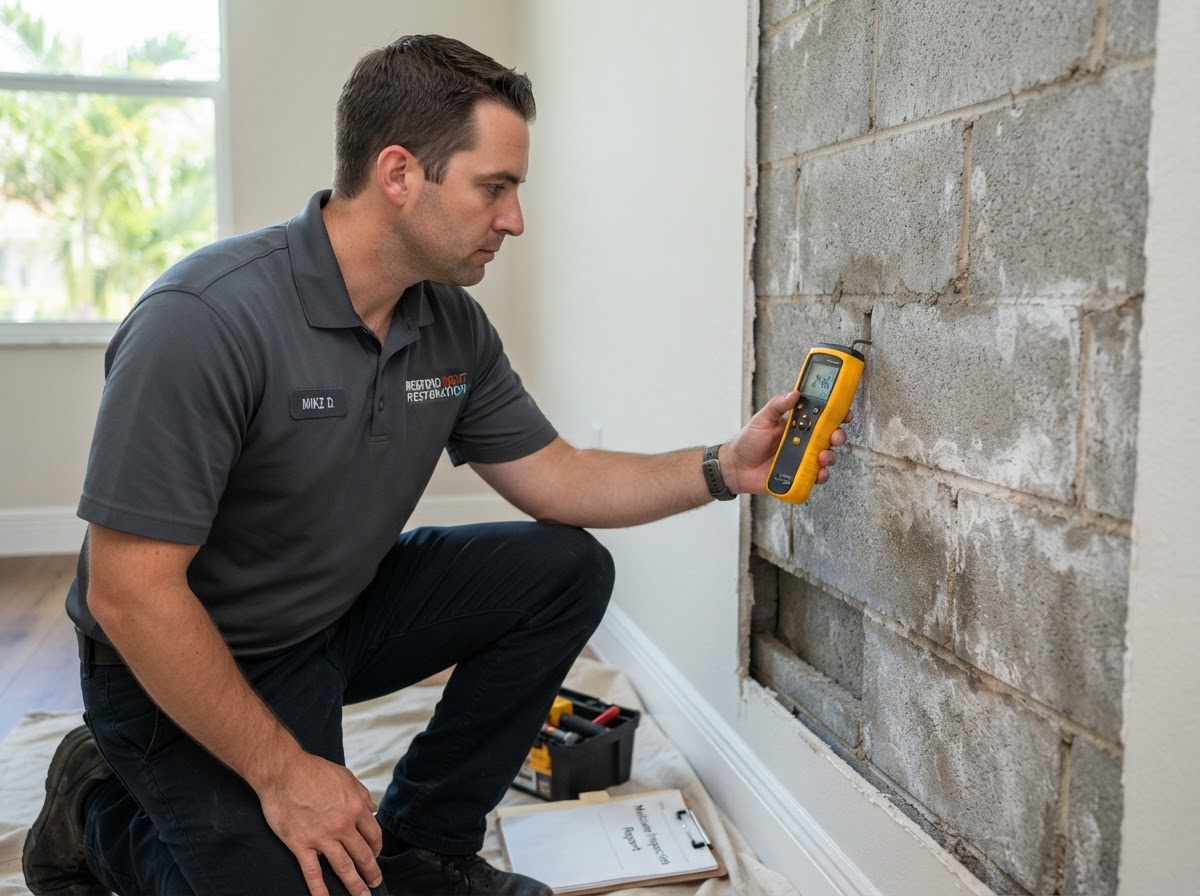
Drying a concrete block wall begins with identifying the moisture source and evaluating the wall construction — the block, the mortar, the furring or framing cavity, the insulation, and the interior finish. The exposed finishes are inspected, and the moisture in accessible materials is assessed with appropriate instruments. Where contamination applies — after floodwater or a sewage-related exposure, for example — the contamination is evaluated before drying proceeds, because contaminated porous materials may require removal rather than in-place drying. The drying conditions are then established with air movement and dehumidification where suitable for the assembly, and the progress is monitored over multiple visits until the wall reaches an appropriate dry standard.
Material-specific decisions shape the work. Drywall attached directly to block may need removal if it has absorbed substantial moisture or if the block behind it is still wet, while a wall with a furring cavity may be dried through the cavity with the finish in place. Efflorescence can indicate that moisture has moved through the masonry, but it does not by itself determine the current moisture content — the block can be dry with residual deposits, or wet with active movement. A handheld moisture reading at one point does not precisely determine the moisture throughout every core of the assembly, and thermal imaging, if used, supports the assessment rather than serving as a standalone moisture measurement or a definitive leak-detection method.
Where materials are removed, the remaining damage is assessed and the reconstruction is planned. If the block has retained moisture but the finish and cavity materials are dry and sound, the drying may continue with monitoring alone. The strategy accounts for the complete wall assembly — not merely its exposed surface — and the documentation reflects what was wet, what was removed, what was dried, and what remains to be repaired. Mold conditions, where suspected, are evaluated under the applicable assessment and remediation considerations and are not assumed from appearance or odor alone.
1. Identify the Moisture Source
Identify and stop the source — flood, leak, storm-driven rain, or plumbing — so the wall is not continuing to absorb water.
2. Evaluate Wall Construction
Evaluate the block, mortar, furring, insulation, and finish that make up the wall assembly.
3. Inspect Affected Finishes
Inspect the exposed finishes for staining, blistering, efflorescence, and softening.
4. Assess Accessible Moisture
Assess moisture in accessible materials with appropriate instruments across the assembly.
5. Evaluate Contamination
Where floodwater or sewage exposure applies, evaluate contamination before drying proceeds.
6. Determine Material Removal
Determine which finishes or cavity materials require removal rather than in-place drying.
7. Establish Drying Conditions
Establish appropriate air movement, dehumidification, and temperature for the assembly.
8. Monitor Drying Progress
Monitor the block, cavity, and finish over multiple visits until an appropriate dry standard is met.
9. Assess Remaining Damage
Assess any remaining damage — efflorescence, staining, or material loss — after drying.
10. Plan Reconstruction
Plan reconstruction of removed finishes, insulation, or cavity materials where needed.
Concrete Masonry Water Restoration Near Port Charlotte
In Port Charlotte and Charlotte County, concrete block construction is common in both residential and commercial buildings, and storm-driven rain, floodwater intrusion, and exterior wall penetration can introduce moisture into the masonry and the finish assembly behind it. Interior drywall attached to block, furring cavities with insulation, and baseboards run along the base of exterior walls are all places where moisture can remain after the surface has dried. Florida humidity can slow the release of moisture from masonry, which is part of why the drying strategy accounts for the complete wall assembly rather than the exposed surface.
The drying approach for a block wall is not a single rule for every property. A wall with an open cavity and a recoverable finish may be dried in place with monitoring; a wall where the finish has absorbed substantial moisture or where contamination applies may require material removal first. Where storm surge or floodwater is the source, the contamination evaluation precedes the drying, and the restoration follows the applicable contamination-aware procedures rather than ordinary structural drying alone. The guidance here does not claim that every concrete block wall in the area has the same drying characteristics, because the assembly varies by age, finish, and construction.
Where the moisture has reached drywall, insulation, or baseboards attached to the block, those materials are evaluated for salvageability, and the related restoration — drywall repair, insulation replacement, and finish work — is coordinated with the drying. The documentation supports the owner's record of what was wet, what was removed, what was dried, and what remains to be repaired, and coverage questions belong to the owner's insurer or a qualified professional rather than to the restoration provider.
Related Water Restoration Services
These related services often appear alongside concrete block wall drying & restoration in Port Charlotte properties.
Concrete Block Wall Drying FAQs
Clear answers to the questions property owners most often ask about concrete block wall drying & restoration in Port Charlotte. Review them, then share your property details so the appropriate next steps can be discussed.
Request Concrete Block Wall Drying Help
Tell us about the property damage and the location. Submit your inquiry so the appropriate next steps can be discussed.