Does Homeowners Insurance Cover Water Damage in Florida?
Whether homeowners insurance covers water damage in Florida depends on the cause of loss, policy wording, exclusions, and endorsements. In Port Charlotte, FL, explore common covered scenarios, exclusions, documentation, and what restoration contractors can and cannot determine.
Request Restoration Help
Tell us about the property damage and the location. Submit your inquiry so the appropriate next steps can be discussed.
Does Homeowners Insurance Cover Water Damage in Florida?
There is no single answer to whether homeowners insurance covers water damage in Florida, because coverage depends on the cause of the damage, the specific policy wording, applicable exclusions and endorsements, and the conditions of the loss. A sudden burst pipe and a slow leak that developed over months are both water damage, but they may be treated very differently under the same policy. The question is not whether water damage is covered in general — it is whether this specific loss is covered under this specific policy.
Florida homeowners policies commonly distinguish between sudden and accidental water damage — a supply line that fails and releases water — and gradual damage from wear, deterioration, or a leak that went unrepaired. Sudden and accidental losses are frequently covered, subject to deductibles and limits, while damage that results from a lack of maintenance or a long-standing leak is frequently excluded. Flooding from rising surface water, storm surge, or an overflowing body of water is typically excluded from standard homeowners policies and generally requires separate flood insurance.
This guide explains the common scenarios, exclusions, and documentation steps so a property owner can understand the conversation and prepare useful records. It does not provide personalized legal or insurance coverage determinations — coverage decisions belong to the insurer under the applicable policy terms, and a property owner should review their own policy and report any loss promptly.
Common Covered Scenarios & Exclusions
These are the water damage scenarios Florida property owners most often ask about, and the coverage considerations that commonly apply — no outcome is guaranteed without reviewing the specific policy:
Documentation That Supports a Water Damage Claim
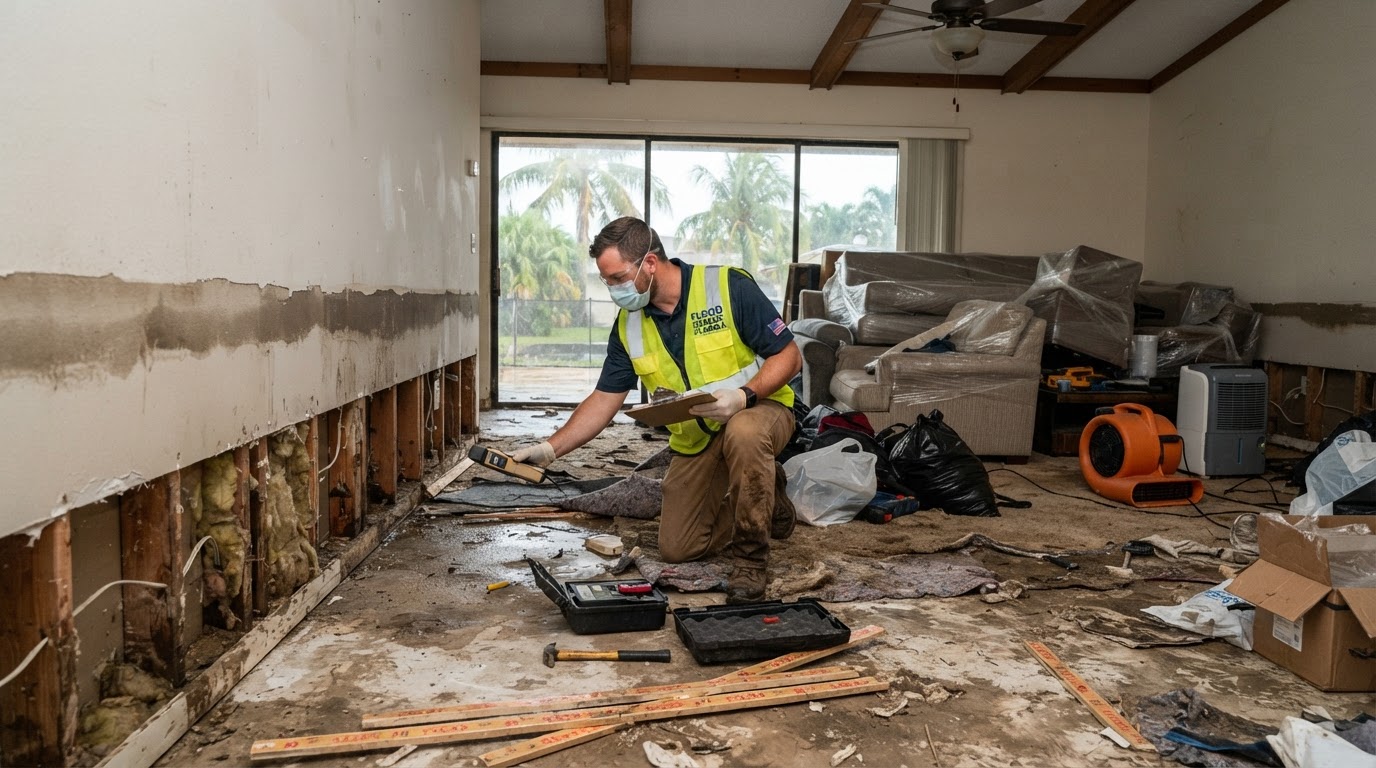
The documentation a property owner gathers after a loss supports the insurance process, but it does not determine coverage — that decision belongs to the insurer under the policy terms. Useful records include date-stamped photographs and video of the affected rooms, the water source, and the damaged materials; a written log of when the damage was discovered and what was observed; and records of any steps taken to mitigate, such as shutting off water or power. The more complete the record, the more accurately the scope can be evaluated.
A restoration contractor can contribute to that documentation where the work is performed — moisture readings, drying logs, photographs of the affected scope, and itemized estimates and invoices. What a restoration contractor cannot do is approve or guarantee an insurance claim, determine coverage, or bind the insurer. The contractor documents the restoration scope; the insurer determines coverage under the policy. Keeping these roles clear helps the process move without confusion.
Photograph the Damage
Capture date-stamped photos and video of affected rooms, the water source, and damaged materials before anything is moved.
Log the Timeline
Note when the damage was discovered, what was observed, and any steps taken such as shutting off water or power.
Mitigate Reasonably
Take reasonable steps to prevent additional damage where safe — stopping the source, protecting belongings — subject to policy and safety.
Report the Loss
Contact the insurer promptly to report the loss; reporting timelines can affect coverage.
Gather Restoration Records
Collect moisture readings, drying logs, estimates, and invoices from the restoration provider where the work is performed.
Keep Communication Records
Retain correspondence with the insurer, adjuster, and restoration provider throughout the claim.
Review Your Policy
Review your specific policy terms, exclusions, and endorsements — coverage depends on the policy, not on general guidance.
Water Damage Insurance in Port Charlotte & Charlotte County
In Port Charlotte and Charlotte County, the water damage insurance conversation is shaped by the same regional conditions that shape the losses themselves. Hurricane season brings wind-driven rain and storm surge, and the distinction between wind-driven damage — often covered under a homeowners policy — and excluded flooding is a recurring question after every storm. Seasonal and snowbird residences add the delayed-discovery pattern: a loss that runs for days in an unoccupied home can raise questions about how long the damage occurred before it was reported, which can affect coverage.
The surrounding service areas — Punta Gorda, North Port, Englewood, Deep Creek, and Rotonda West — share the same storm exposure and seasonal-occupancy considerations. The guidance here is general; a property owner should review their own policy and report any loss promptly to their insurer. No personalized coverage determination is provided on this page.
Related Restoration Services
These related services connect to florida homeowners insurance & water damage for Port Charlotte properties.
Florida Homeowners Insurance & Water Damage FAQs
Clear answers to the questions property owners most often ask about florida homeowners insurance & water damage in Port Charlotte. Review them, then share your property details so the appropriate next steps can be discussed.
Explore Water Damage Restoration Services
Tell us about the property damage and the location. Submit your inquiry so the appropriate next steps can be discussed.