Flood Insurance vs. Homeowners Insurance in Florida
Standard homeowners policies generally exclude flooding, while separate flood insurance may cover qualifying flood losses. In Port Charlotte, FL, explore the key differences between flood and homeowners insurance, storm surge, wind-driven rain, and what each may cover.
Request Restoration Help
Tell us about the property damage and the location. Submit your inquiry so the appropriate next steps can be discussed.
Flood Insurance vs. Homeowners Insurance in Florida
The distinction between flood insurance and homeowners insurance matters in Florida because standard homeowners policies generally exclude flooding as defined by the policy, while a separate flood insurance policy may cover qualifying flood losses. The two policies insure different causes of water damage, and after a hurricane or heavy-rainfall event, which policy applies can depend on where the water came from and how it entered the building.
Homeowners insurance commonly covers sudden and accidental water damage that originates inside the building — a burst supply line, a failed appliance, or a plumbing failure. Flood insurance commonly covers damage from water that rises from outside and enters the building — surface water runoff, storm surge, an overflowing body of water, or heavy rainfall that pools and enters through openings. The same wet carpet can be covered under one policy and excluded under the other depending on the source.
This guide explains the key differences so a property owner understands the conversation. It does not provide personalized coverage determinations — coverage depends on the specific policy terms, limits, exclusions, and the circumstances of the loss. A property owner should review their own policies and report any loss promptly.
What Each Policy Commonly Covers
These are the coverage considerations that commonly distinguish flood insurance from homeowners insurance in Florida — no outcome is guaranteed without reviewing the specific policy:
Comparing Flood and Homeowners Coverage
The practical way to understand the distinction is to compare how the same damage scenario is treated under each policy. A burst supply line that floods a kitchen from inside is typically an interior plumbing loss under a homeowners policy. Floodwater that rises across the ground and enters through a door is typically a flood loss under a flood policy. Storm surge — Gulf water driven ashore by a hurricane — is commonly treated as flooding. Wind-driven rain that enters through a storm-damaged roof or window may be treated differently, depending on whether the building damage is covered and the policy conditions.
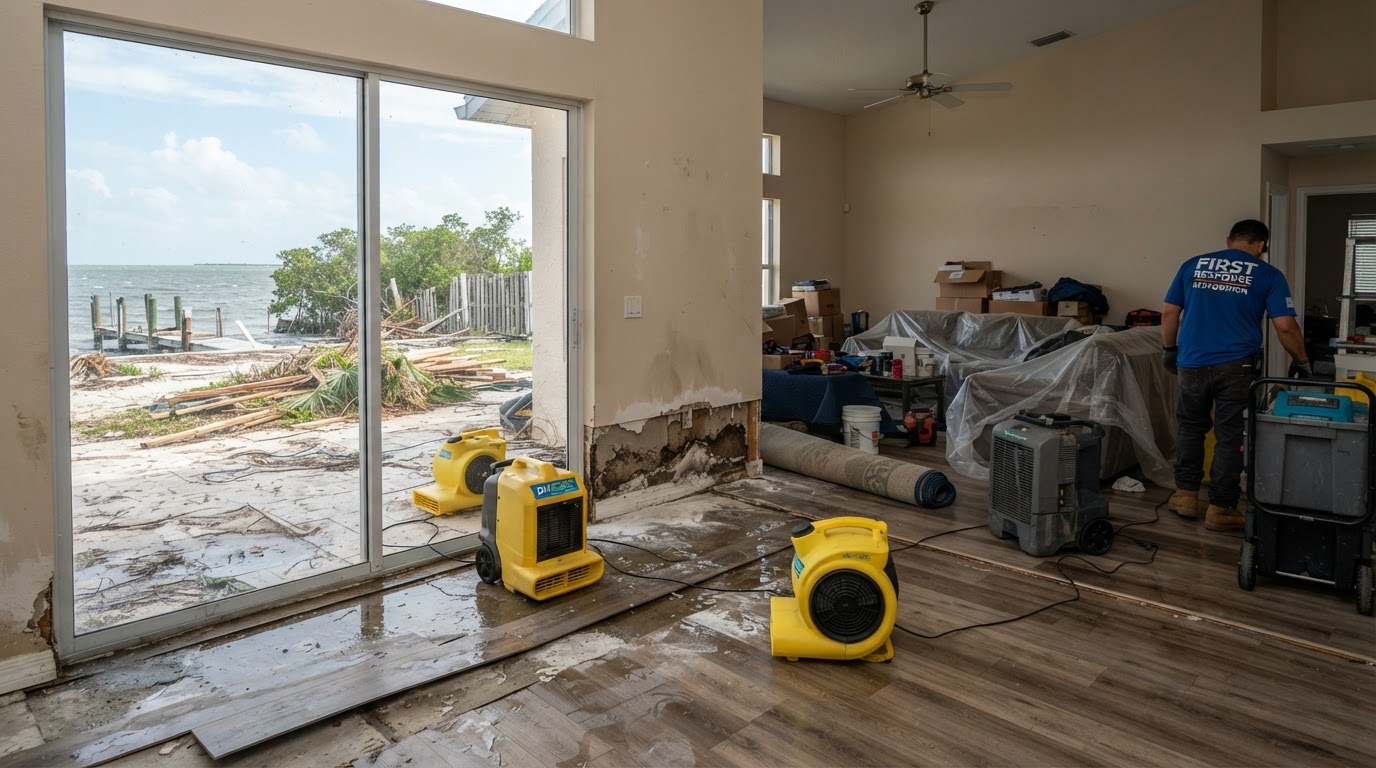
After any flood event, documentation supports the insurance process: photographs of the waterline, the affected rooms, and the damaged materials; a written inventory of damaged belongings; and records of any mitigation steps taken. Floodwater is treated as contaminated and may require removal of porous materials that absorbed it, which is part of the restoration scope. The restoration provider documents the scope; the insurer determines coverage under the applicable policy.
Identify the Source
Determine where the water came from — an interior plumbing failure or external flooding — which is the key coverage question.
Document the Damage
Photograph the waterline, affected rooms, and damaged materials; inventory damaged belongings.
Ensure Safety
Confirm electrical and structural safety before entry; floodwater is treated as contaminated.
Mitigate Reasonably
Take reasonable steps to prevent additional damage where safe, subject to policy conditions.
Report the Loss
Contact the appropriate insurer — homeowners for interior losses, flood for external flooding — promptly.
Gather Restoration Records
Collect moisture readings, drying logs, and invoices from the restoration provider where work is performed.
Review Both Policies
Review your homeowners and any flood policy for the specific terms, limits, and exclusions that apply.
Flood vs. Homeowners Insurance in Port Charlotte & Charlotte County
In Port Charlotte and Charlotte County, the flood-vs-homeowners question comes up most often after hurricanes and heavy Gulf Coast rainfall. Storm surge from Charlotte Harbor and the canal system, wind-driven rain through compromised roofs and windows, and surface water pooling across low-lying parcels each raise the question of which policy applies. The distinction between wind-driven damage — often a homeowners question — and surge or surface flooding — often a flood insurance question — is central to how a storm loss is evaluated.
Specific FEMA flood-zone designations apply to individual parcels and vary property by property; a property's flood-zone status cannot be assumed from its city alone. The surrounding service areas — Punta Gorda, North Port, Englewood, Deep Creek, and Rotonda West — share the same storm exposure. This guide is general; a property owner should review their own policies and report any loss promptly. No personalized coverage determination is provided here.
Related Restoration Services
These related services connect to flood insurance vs. homeowners insurance for Port Charlotte properties.
Flood Insurance vs. Homeowners Insurance FAQs
Clear answers to the questions property owners most often ask about flood insurance vs. homeowners insurance in Port Charlotte. Review them, then share your property details so the appropriate next steps can be discussed.
Explore Flood Damage Cleanup Services
Tell us about the property damage and the location. Submit your inquiry so the appropriate next steps can be discussed.