
Shower Pan Leak Water Damage Restoration in Port Charlotte, FL
A leaking shower pan or failed waterproofing membrane can allow moisture to escape beneath the tile and into the subfloor, wall framing, and flooring around the shower — often running for weeks before it is discovered. In Port Charlotte, FL, explore how shower pan leaks are detected, how the concealed moisture is assessed, and how the assembly is dried.
Request Restoration Help
Tell us about the property damage and the location. Submit your inquiry so the appropriate next steps can be discussed.
What Is a Shower Pan Leak?
A shower pan is the waterproof barrier beneath the shower floor that directs water to the drain, and when that barrier fails the water escapes beneath the tile and into the subfloor, the wall framing, and the flooring around the shower. A failed waterproofing membrane, a deteriorated seal at the drain connection, a cracked shower base, or an installation defect can all let water travel where it should not — and because the leak is concealed beneath the shower finish, it can run for weeks or months before it is discovered.
The damage pattern is almost entirely hidden. Water that escapes the shower pan saturates the subfloor beneath the shower, wicks into the wall framing behind the surround, and travels outward beneath the bathroom flooring — appearing as loose tiles, damp flooring outside the shower, staining on the wall or ceiling below, or a soft subfloor. By the time the visible signs appear, the concealed assembly beneath the shower has often absorbed substantial moisture, which is why the assessment maps the moisture beneath and beyond the shower, not just the visible damage.
Shower pan leaks are distinct from a plumbing leak inside the wall. A supply-line or valve leak behind the wall is a plumbing repair; a shower pan leak is a waterproofing failure that allows shower water to escape the intended drainage path. The two require different source-repair work — a waterproofing or tile contractor for one, a plumber for the other — and the restoration is coordinated with the appropriate professional rather than replacing that work. The source is corrected so the water stops, and the restoration addresses the building materials the leak has affected.
Warning Signs of a Shower Pan Leak
A shower pan leak reveals itself through the surrounding finishes before it is visible beneath the shower. These are the signs that warrant a subfloor and wall moisture assessment:
Shower Pan Leak Assessment & Structural Drying
Restoration begins with identifying the source of the leakage — the failed waterproofing, the deteriorated seal, the cracked base, or the installation defect — and coordinating the appropriate source-repair professional so the water stops. A moisture inspection then maps how far the water has traveled beneath the shower: into the subfloor, the wall framing behind the surround, and the flooring around the shower. Because the leak is concealed, the visible damage is rarely the full extent, and the assessment reads the subfloor and the wall cavity, not just the surface.
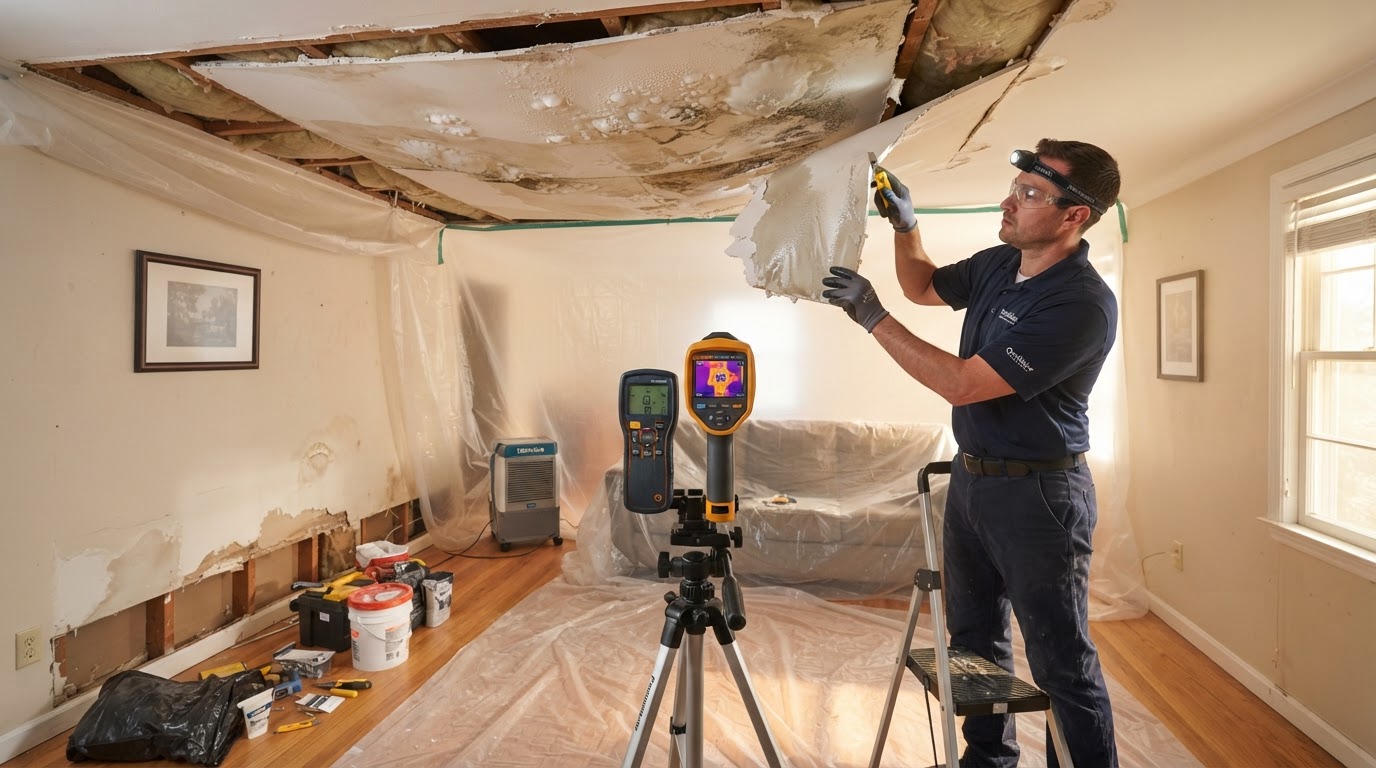
Where the subfloor has absorbed water and softened or where the wall framing is saturated, materials are evaluated for removal to access and dry the assembly beneath. Tile and shower surround materials that have loosened from a wet underlayment are evaluated for removal, and the wall cavity is inspected for wet insulation. Air movers and dehumidification are set up and monitored to verified moisture targets, with particular attention to the subfloor and the framing that absorbed water. The scope is documented, and the shower and bathroom restoration is planned once the assembly is confirmed dry — coordinated with the waterproofing or tile repair that corrects the source.
1. Source Identification
Identify the shower pan or waterproofing failure that is allowing water to escape the drain path.
2. Source Repair Coordination
Coordinate the appropriate waterproofing or tile professional to correct the failed pan, seal, or base.
3. Moisture Assessment
Map the moisture in the subfloor, wall framing, and surrounding flooring with meters and thermal imaging.
4. Material Evaluation
Assess tile, surround, drywall, and subfloor for removal versus salvage to access and dry the assembly.
5. Structural Drying
Dry the subfloor, wall cavity, and framing with monitored airflow and dehumidification to verified targets.
6. Restoration Planning
Document the scope and plan the shower, subfloor, and finish repair coordinated with the source correction.
Bathroom Shower Leak Restoration Near Port Charlotte
In Port Charlotte and Charlotte County, bathroom construction commonly places showers over a subfloor with tile set in a mortar bed or over backer board — and a shower pan leak can saturate that assembly and the framing beneath it before any visible sign appears. Seasonal residences add the delayed-discovery pattern: a shower pan failure in an unoccupied home can leak for weeks, saturating the subfloor and the wall cavity, and the damage is found only on return. In those cases, the assessment accounts for the extended exposure and the possibility of suspected mold conditions.
Because a shower pan leak is a waterproofing failure rather than a plumbing leak, the source-repair work is performed by a waterproofing or tile professional, not a plumber — and the restoration is coordinated with that repair so the shower does not re-leak after the assembly is dried. The documentation reflects the source, the moisture migration, the materials removed or dried, and the repairs planned, which supports both the restoration scope and any insurance process.
Related Water Restoration Services
These related services often appear alongside shower pan leak water damage restoration in Port Charlotte properties.
Shower Pan Leak Water Damage FAQs
Clear answers to the questions property owners most often ask about shower pan leak water damage restoration in Port Charlotte. Review them, then share your property details so the appropriate next steps can be discussed.
Request Shower Leak Water Damage Help
Tell us about the property damage and the location. Submit your inquiry so the appropriate next steps can be discussed.