
Post-Hurricane Moisture & Mold Prevention in Port Charlotte, FL
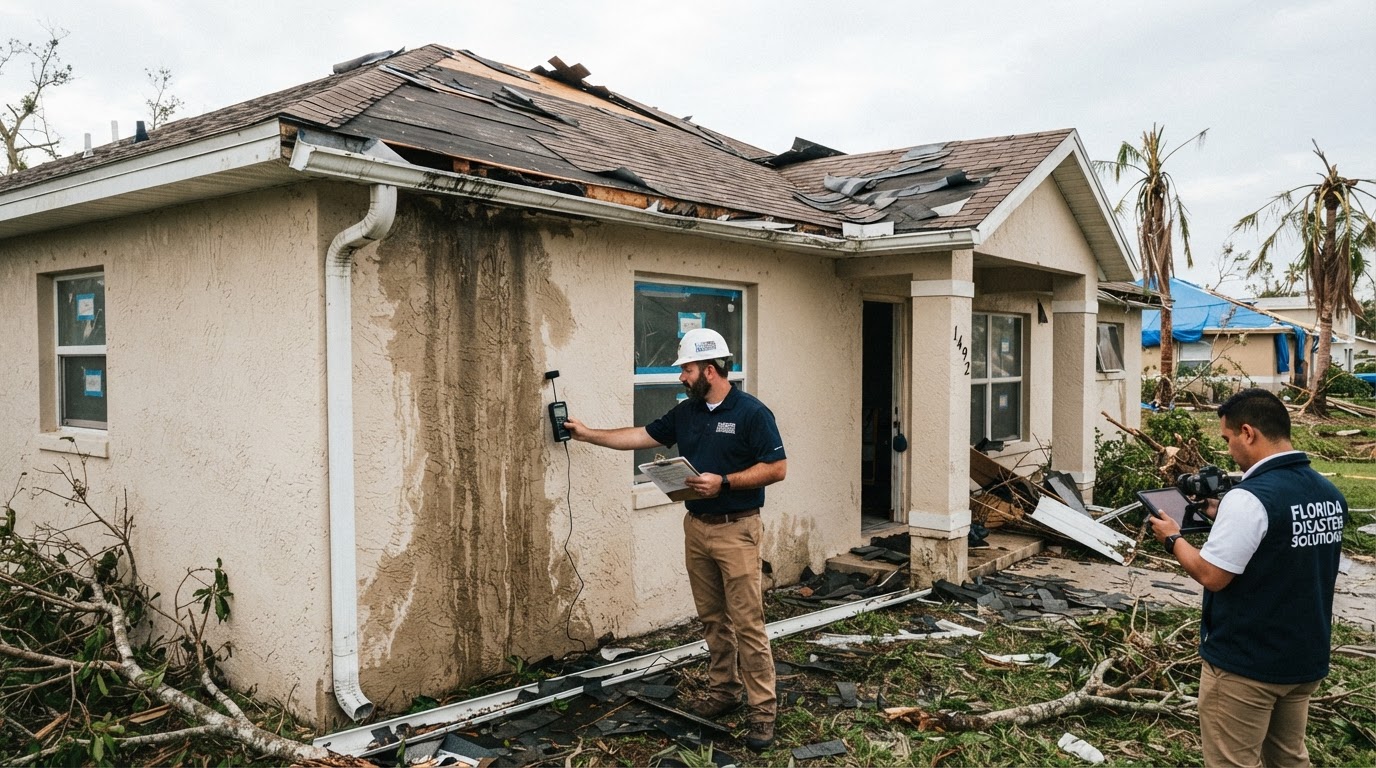
After a hurricane, the moisture that has entered the building is often the more consequential problem than the visible damage, because it can drive mold growth within 24 to 48 hours. In Port Charlotte, FL, explore how post-storm moisture is assessed, how hidden water in the walls and attic is mapped, and how the building is dried to prevent mold.
Request Restoration Help
Tell us about the property damage and the location. Submit your inquiry so the appropriate next steps can be discussed.
Moisture & Mold After a Hurricane
After a hurricane, the visible damage — downed trees, broken windows, roof damage — is what owners see first, but the moisture that has entered the building is often the more consequential problem. Wind-driven rain pushes water through roof penetrations, around windows and doors, and through siding and vents into the wall cavities, the attic, and the interior. Storm surge and flooding leave standing water in crawl spaces, garages, and lower levels. Even when the visible water has been removed, moisture remains in the building materials — the drywall, the insulation, the framing, the flooring — and in a humid climate like Port Charlotte's, that moisture stays for far longer than most owners expect.
Mold development is the primary concern after a hurricane, because the conditions that follow a storm — warm temperatures, high humidity, and saturated building materials — are favorable to microbial growth. Mold can begin to develop on wet porous materials within 24 to 48 hours under the right conditions, which is why prompt moisture assessment and drying matter. The goal of post-hurricane moisture and mold prevention is to identify where water has entered the building, remove the standing water, dry the affected materials to verified targets, and address the conditions that would allow mold to develop — before growth establishes.
This page is distinct from the hurricane damage restoration and storm surge cleanup pages, which address the emergency mitigation and reconstruction work. It focuses on the moisture assessment and drying that prevents mold after a storm — the hidden water in the wall cavities, the attic, the subfloor, and the building materials that the visible cleanup does not address. The assessment maps the moisture that remains after the storm, and the drying plan targets the assemblies at risk.
Signs of Post-Hurricane Moisture & Hidden Water Damage
After a hurricane, the moisture that has entered the building is often hidden in the wall cavities, the attic, and the subfloor. These are the signs that warrant a post-storm moisture assessment:
Post-Hurricane Moisture Assessment & Drying
Restoration begins with a moisture assessment that maps where water has entered the building — the roof and attic, the walls and window assemblies, the crawl space or lower level, and the flooring and subfloor. Moisture meters read the water content of the drywall, the framing, and the subfloor, and an infrared thermal camera visualizes the wet areas in the wall cavities and the ceiling that visual inspection misses. The assessment identifies which materials are wet, how wet they are, and where the moisture has traveled, because the visible water is often a fraction of what has entered the concealed assemblies.
Standing water is removed where present, and wet porous materials are evaluated for drying in place versus removal. Drywall and insulation that have absorbed stormwater — which is Category 3 when it has entered from outside — may require removal rather than salvage, because porous materials that have absorbed contaminated water cannot be reliably cleaned. The framing and sheathing are assessed for moisture and for signs of growth, and the subfloor is dried with monitored air movement and dehumidification to verified targets. Where suspected mold conditions are already present, the applicable mold assessment and remediation considerations apply.
The drying plan targets the assemblies at risk — the wall cavities, the attic, the subfloor, and the ceiling — and the moisture is monitored over multiple visits until the building materials reach an appropriate dry standard for the ambient conditions. The goal is to remove the moisture that would allow mold to develop, not just the visible water. The scope is documented to support the repair and reconstruction work that follows, and the documentation reflects the moisture conditions found and the drying verified.
1. Post-Storm Moisture Assessment
Map where water has entered the building — roof, walls, attic, crawl space, and subfloor.
2. Standing Water Removal
Remove standing water from the crawl space, garage, lower level, and interior spaces.
3. Contamination Classification
Classify the water by its source — stormwater is Category 3 and shapes the salvage decisions.
4. Material Evaluation
Assess drywall, insulation, framing, and flooring for drying in place versus removal.
5. Structural Drying
Dry the wall cavities, attic, subfloor, and ceiling with monitored airflow and dehumidification.
6. Moisture Monitoring
Monitor moisture conditions over multiple visits until building materials reach an appropriate dry standard.
7. Mold Assessment Where Indicated
Where suspected mold conditions are present, apply the applicable assessment and remediation considerations.
8. Documentation & Repair Planning
Document the moisture conditions and drying verified to support the repair and reconstruction work.
Post-Hurricane Moisture Prevention Near Port Charlotte
In Port Charlotte and Charlotte County, hurricanes and tropical storms are a recurring part of the climate, and the moisture that follows a storm is the factor most owners underestimate. Wind-driven rain from a hurricane can push water through roof penetrations, around windows and doors, and through vents into the wall cavities and the attic, even when there is no visible flooding. Storm surge and heavy rainfall can leave standing water in crawl spaces and lower levels. The high humidity that follows a storm means the building materials stay wet far longer than they would in a drier climate, which is why prompt moisture assessment and monitored drying matter.
Seasonal homes are particularly vulnerable. A property that is unoccupied when a storm passes can sit with moisture in the wall cavities, the attic, and the subfloor for days or weeks before the owner returns, by which point mold may have already begun to develop on the drywall, the framing, or the insulation. In those cases, the assessment accounts for the extended exposure and the possibility of established growth, and the applicable mold assessment and remediation considerations apply where indicated. The goal is to identify the moisture, dry the affected materials, and address the conditions that would allow mold to develop — before growth establishes.
Related Water Restoration Services
These related services often appear alongside post-hurricane moisture & mold prevention in Port Charlotte properties.
Post-Hurricane Moisture & Mold Prevention FAQs
Clear answers to the questions property owners most often ask about post-hurricane moisture & mold prevention in Port Charlotte. Review them, then share your property details so the appropriate next steps can be discussed.
Request Post-Hurricane Moisture Assessment
Tell us about the property damage and the location. Submit your inquiry so the appropriate next steps can be discussed.