
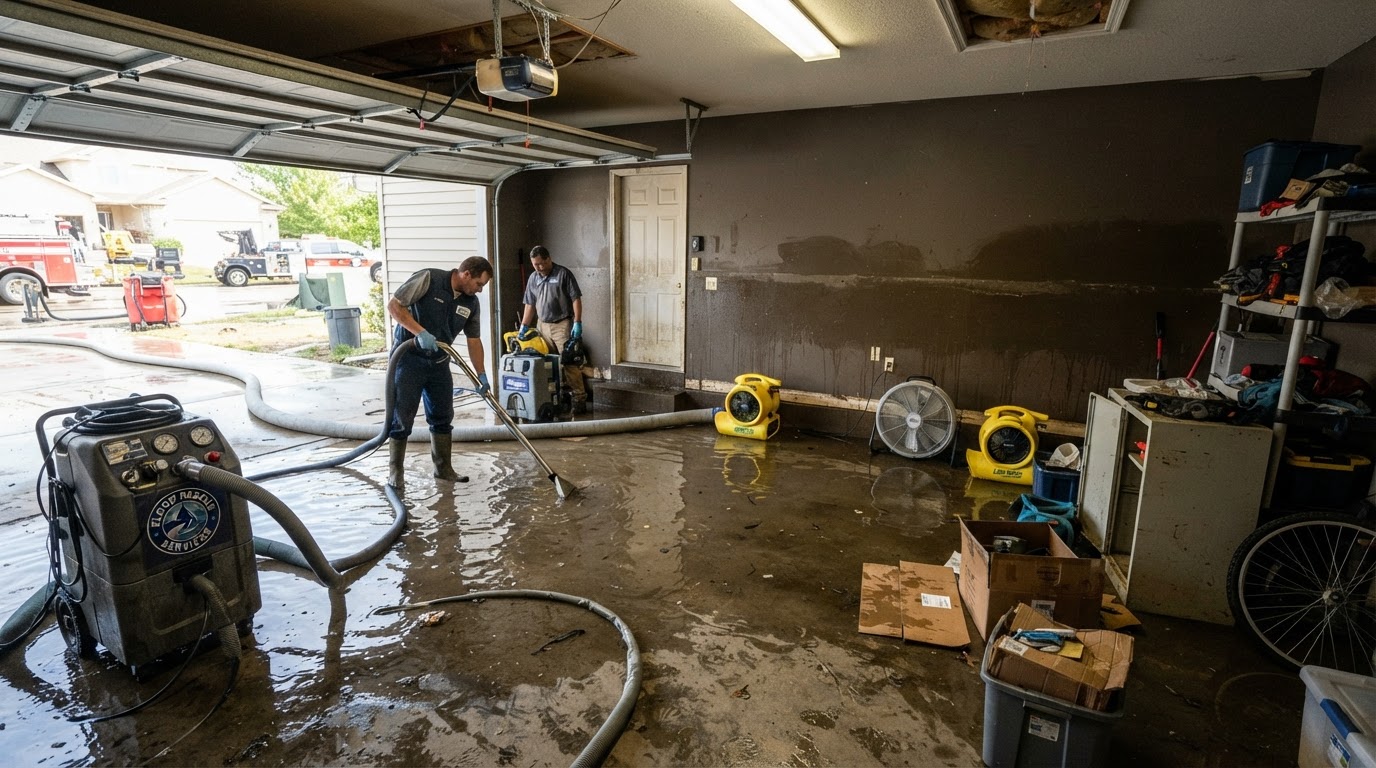
Garage Flood Cleanup & Water Removal in Port Charlotte, FL
A garage is often the lowest point on a property and the first interior space that stormwater, drainage runoff, or a plumbing failure reaches. In Port Charlotte, FL, explore how garage flooding is assessed, how standing water is extracted, how contamination is handled, and how the concrete and shared walls are dried.
Request Restoration Help
Tell us about the property damage and the location. Submit your inquiry so the appropriate next steps can be discussed.
Garage Flooding & Water Intrusion
A garage is often the lowest point on a property and the first interior space that stormwater, drainage runoff, or a plumbing failure reaches, which makes it a common site of residential flooding. Heavy rainfall, hurricane storm surge, a failed water heater, a burst supply line, or drainage that backs up through the garage door can each leave standing water across the garage floor and moisture in the walls, the ceiling, and the shared wall of the attached house. Because garages store equipment, vehicles, and belongings and often share a wall with the living space, the cleanup extends beyond the concrete floor.
The contamination level matters. Stormwater and floodwater that has entered from outside is considered Category 3, because it can carry soil, debris, petroleum, and biological contaminants. A clean supply-line leak from a water heater in the garage is a different situation. The water category shapes the handling, the salvage decisions for stored contents, and the cleaning and disinfection requirements — and the restoration is not represented as able to save contaminated contents or to sterilize the space. The goal is to remove the water, address the contamination, dry the affected materials, and return the garage to a safe, dry condition.
In an attached garage, the water does not always stay in the garage. Water that has reached the shared house wall can migrate into the interior drywall, the wall cavity, and the flooring of the adjoining room, which is why the assessment extends beyond the garage into the living space where the water has traveled.
Signs of Garage Water Damage
Garage flooding shows up on the concrete floor and in the shared wall first. These are the signs that warrant a moisture assessment of the garage and any adjoining interior spaces:
Garage Water Extraction & Structural Drying
Restoration begins with evaluating the safety of the garage before anyone enters standing water — electrical hazards from outlets, panels, or stored equipment near the water are a primary concern, and power to the garage circuit is cut at the breaker only if the panel is safely accessible. The water is classified by its contamination category, because storm floodwater and a clean supply-line leak are handled differently. Standing water is extracted with appropriate equipment, and the affected materials — the concrete floor, the drywall on the shared wall, the baseboards, and any ceiling materials — are assessed for moisture.
The concrete floor is evaluated for moisture and dried with air movement and dehumidification, because concrete is porous and can hold water even after the surface looks dry. Drywall on the shared house wall that has wicked moisture is evaluated for drying in place versus removal, and the wall cavity is inspected for wet insulation. Stored contents are evaluated case by case — porous materials that have absorbed contaminated water are generally disposed of, while non-porous items may be cleaned. Where contamination is involved, affected non-porous surfaces are appropriately cleaned and disinfected.
The adjoining interior space is assessed where water has migrated through the shared wall, because the damage often extends into the living space. Air movers and dehumidification are set up and monitored to verified moisture targets on the concrete, the walls, and the ceiling. The scope is documented to support the drywall, flooring, and finish repair that follows, and the documentation reflects the water category and the work performed.
1. Safety Evaluation
Evaluate electrical and structural hazards before entering standing water; cut power only if safely accessible.
2. Contamination Classification
Classify the water by its source to determine handling, salvage, and cleaning requirements.
3. Water Extraction
Remove standing water from the garage floor with appropriate extraction equipment.
4. Contents Evaluation
Evaluate stored belongings, boxes, and equipment for salvage versus disposal based on water category.
5. Wall & Ceiling Assessment
Assess the shared house wall, drywall, baseboards, and ceiling for moisture and migration into the interior.
6. Concrete & Structural Drying
Dry the concrete floor, walls, and ceiling with monitored airflow and dehumidification to verified targets.
7. Cleaning & Disinfection
Clean and disinfect affected non-porous surfaces where contamination is involved.
8. Documentation & Repair Planning
Document the scope and water category to support the repair work and any insurance process.
Garage Flood Cleanup Near Port Charlotte
In Port Charlotte and Charlotte County, garage flooding is often storm-related. Hurricane storm surge, heavy rainfall, and drainage failures can push water through garage door openings and low-lying driveways, and because many garages sit at or below the surrounding grade, the water pools there first. An attached garage shares a wall with the living space, which means water that reaches the shared wall can migrate into the interior drywall and the flooring of the adjoining room — the assessment extends into the house where the water has traveled.
Florida humidity extends the drying timeline for garage assemblies. A concrete floor that would dry quickly in an arid climate can hold moisture for days here, and the drywall on the shared wall can wick moisture into the wall cavity. When stormwater is involved, the cleanup is treated as a Category 3 loss, and the documentation reflects the contamination category — which is relevant to any insurance process, because flood damage may be subject to separate flood insurance terms rather than standard homeowners coverage.
Related Water Restoration Services
These related services often appear alongside garage flood cleanup & water removal in Port Charlotte properties.
Garage Flood Cleanup & Water Removal FAQs
Clear answers to the questions property owners most often ask about garage flood cleanup & water removal in Port Charlotte. Review them, then share your property details so the appropriate next steps can be discussed.
Request Garage Flood Cleanup
Tell us about the property damage and the location. Submit your inquiry so the appropriate next steps can be discussed.