
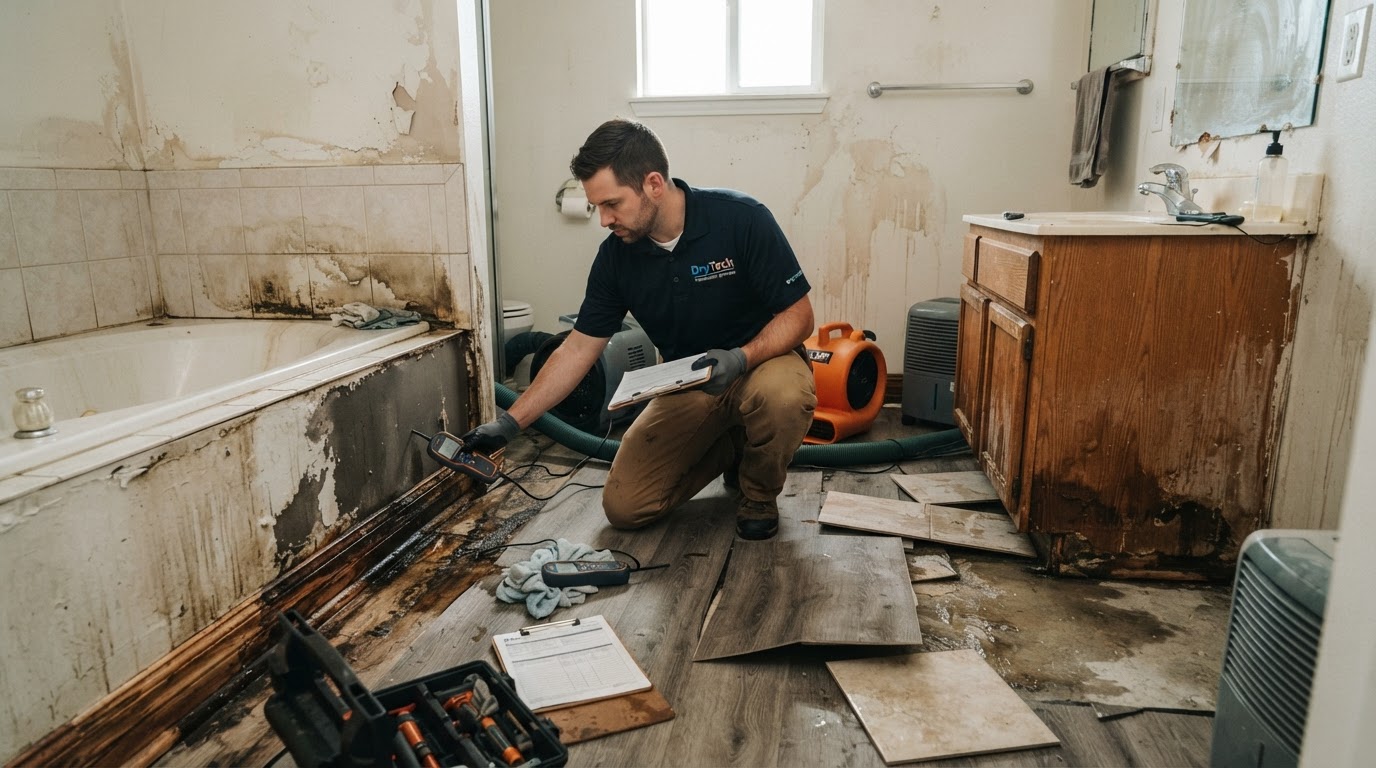
Bathroom Water Damage Restoration in Port Charlotte, FL
A bathroom concentrates more plumbing and water sources in a small space than any other room, and a toilet overflow, shower pan failure, or supply line leak can each send water beneath the flooring, behind the walls, and into the ceiling below. In Port Charlotte, FL, explore how complete bathroom water damage is assessed, dried, and restored.
Request Restoration Help
Tell us about the property damage and the location. Submit your inquiry so the appropriate next steps can be discussed.
Bathroom Water Damage: Floors, Walls & Ceilings
A bathroom concentrates more plumbing, fixtures, and water sources in a small space than any other room in a home, which makes it one of the most common origins of residential water damage. A toilet overflow, a shower pan failure, a supply line leak, a tub drain backup, or a failed waterproofing seal can each release water that travels beneath the flooring, behind the walls, and into the ceiling of the room below. Because the bathroom is finished with tile, waterproofing, and cabinetry that can conceal moisture, the visible damage is often a fraction of what has traveled into the concealed assemblies.
The damage pattern depends on the source. A toilet overflow or sewer backup introduces contamination that shapes the salvage and handling decisions. A shower pan or waterproofing failure allows water to escape beneath the tile and into the subfloor and wall framing. A supply line leak behind the wall is a plumbing repair that saturates the drywall and insulation in the wall cavity. A tub overflow or drain leak runs across the floor and into the ceiling below in a two-story home. Each path leaves moisture in a different set of materials, and each needs a different drying scope.
This page addresses complete bathroom water damage assessment and restoration — the floor, the walls, the ceiling below, the subfloor, and the concealed assemblies — and it is distinct from the individual toilet overflow and shower pan leak pages, which address those specific sources. Where the damage involves contamination, the applicable Category 2 or 3 handling considerations apply; where it involves a concealed plumbing leak, the source repair is coordinated with the restoration.
Signs of Bathroom Water Damage
Bathroom water damage often appears in the surrounding finishes before it is visible at the source. These are the signs that warrant a floor, wall, and subfloor moisture assessment:
Bathroom Water Damage Assessment & Drying
Restoration begins with identifying the water source — the toilet, the shower, the tub, the supply line, or the drain that has failed — and coordinating the appropriate source repair, whether that is a plumber for a supply or drain leak or a waterproofing or tile contractor for a shower pan failure. The water is classified by its contamination category, because a clean supply-water leak is handled differently than a sewage-contaminated backup. A moisture inspection then maps how far the water has traveled: into the subfloor beneath the tile, the wall cavity behind the drywall, the ceiling below, and the adjoining rooms.
Standing water is removed where present, and affected materials are evaluated. Flooring that has absorbed water and loosened from the underlayment is assessed for removal to dry the subfloor beneath. Drywall that has wicked moisture is evaluated for drying in place versus removal, and the wall cavity is inspected for wet insulation. Where contamination is involved, porous materials that have absorbed it are removed rather than salvaged, and affected non-porous surfaces are appropriately cleaned and disinfected. Air movers and dehumidification are set up and monitored to verified moisture targets on the subfloor, walls, and ceiling.
The scope is documented to support the flooring, drywall, and finish repair that follows, and where reconstruction is needed — replacing removed tile, drywall, or cabinetry — it is planned once the assembly is confirmed dry. The restoration is not represented as sterilization when contamination is involved; the goal is to remove the contamination, dry the affected materials, and return the bathroom to a safe, dry condition. The documentation reflects the water category, the materials removed, and the drying verified.
1. Source Identification
Identify the toilet, shower, tub, supply line, or drain that has failed and coordinate the repair.
2. Contamination Classification
Classify the water by its source and contents to determine handling, salvage, and disposal.
3. Moisture Mapping
Map the moisture in the subfloor, wall cavity, ceiling below, and adjoining rooms.
4. Water Extraction
Remove standing water from the bathroom and any adjacent rooms it has reached.
5. Material Evaluation
Assess flooring, drywall, baseboards, and cabinetry for salvageability versus removal.
6. Structural Drying
Dry the subfloor, walls, and ceiling with monitored airflow and dehumidification to verified targets.
7. Reconstruction Planning
Plan the replacement of removed tile, drywall, or cabinetry once the assembly is confirmed dry.
8. Documentation & Repair
Document the scope and the water category to support the repair work and any insurance process.
Bathroom Water Damage Restoration Near Port Charlotte
In Port Charlotte and Charlotte County, bathroom water damage often involves tile flooring over a mortar bed or backer board, which can hold moisture against the subfloor even after the surface looks dry. The subfloor beneath a bathroom vanity is a common place for concealed moisture to concentrate, because the water runs under the cabinet before it spreads across the visible floor. Two-story homes add the ceiling of the room below as an affected assembly, because an upstairs bathroom leak can travel down through the floor system. The assessment reads the subfloor, the wall cavity, and the ceiling below, not just the visible tile.
Florida humidity extends the drying timeline for bathroom assemblies. A subfloor and drywall that would dry quickly in an arid climate can hold moisture for days or weeks here, which raises the risk of microbial growth in the wall cavity and beneath the flooring. When sewage is involved, the cleanup is treated as a contaminated-water loss, not a standard water damage event, and the documentation reflects the contamination category. The source is corrected, the assembly is dried, and the reconstruction is planned once the bathroom is confirmed dry.
Related Water Restoration Services
These related services often appear alongside bathroom water damage restoration in Port Charlotte properties.
Bathroom Water Damage Restoration FAQs
Clear answers to the questions property owners most often ask about bathroom water damage restoration in Port Charlotte. Review them, then share your property details so the appropriate next steps can be discussed.
Request Bathroom Water Damage Help
Tell us about the property damage and the location. Submit your inquiry so the appropriate next steps can be discussed.