
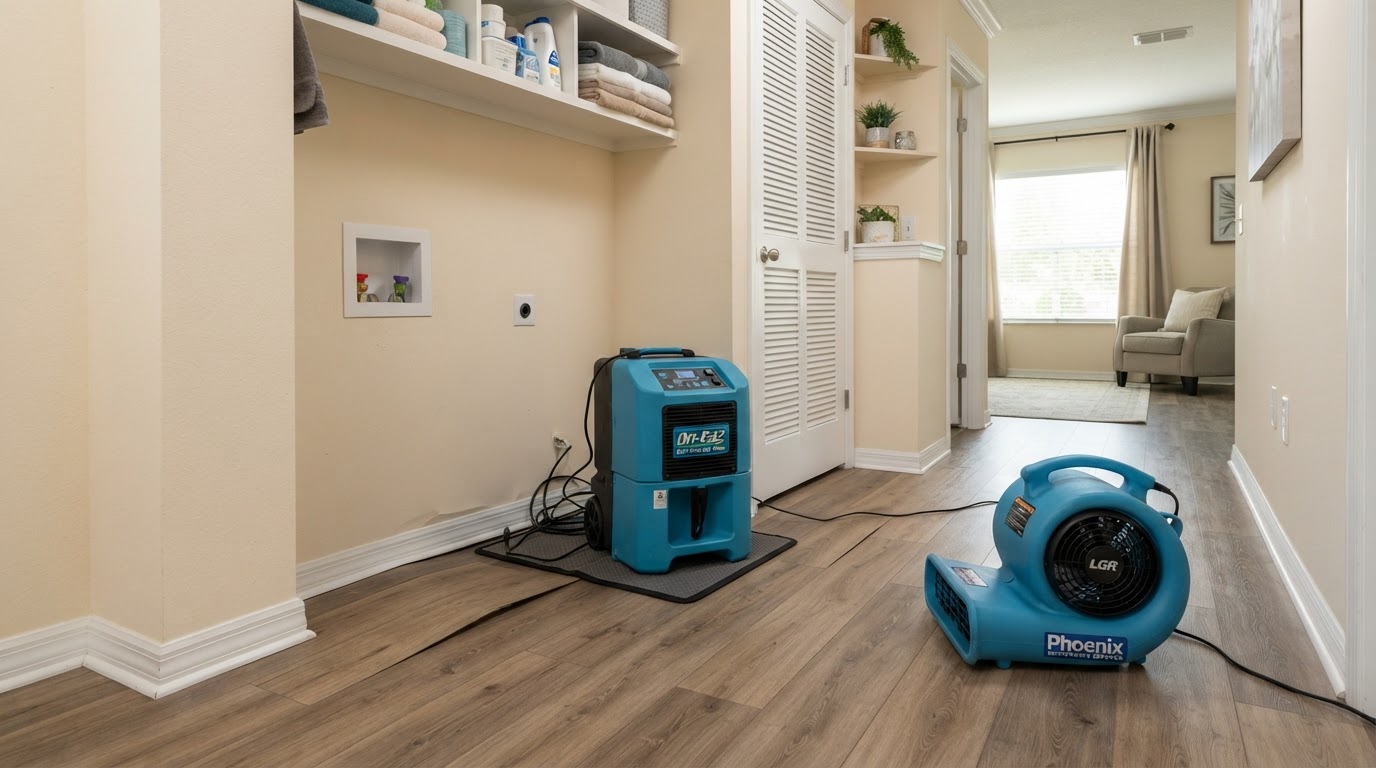
Manufactured & Mobile Home Water Damage Port Charlotte
Manufactured and mobile home water damage restoration addresses the specific flooring assemblies, plumbing layouts, and under-home spaces that distinguish these homes from conventional site-built construction. In Port Charlotte, FL, explore water extraction, subfloor and insulation evaluation, structural drying, and repair planning for manufactured homes throughout Charlotte County.
Request Restoration Help
Tell us about the property damage and the location. Submit your inquiry so the appropriate next steps can be discussed.
Manufactured Home Water Damage Cleanup in Port Charlotte
Manufactured and mobile home water damage restoration addresses water intrusion in homes that may have specific flooring assemblies, plumbing layouts, insulation arrangements, and under-home spaces that differ from conventional site-built construction. In Port Charlotte and Charlotte County, where manufactured home communities are a significant part of the housing stock, water damage in these homes can involve particleboard or other moisture-sensitive subfloor materials, plumbing that runs beneath the home, insulation and vapor barriers in the underbelly, and floor coverings that can trap moisture against the subfloor.
The construction methods and materials vary by age, manufacturer, and home design, so the restoration approach depends on the specific home. Some manufactured homes use particleboard subflooring that can swell and lose integrity after substantial moisture exposure; others use plywood or oriented strand board that may behave differently. Plumbing may run through the underbelly or in accessible crawlspaces, and leaks in those areas can saturate insulation and vapor barriers beneath the floor. Understanding the home's construction is the first step in planning an appropriate restoration.
This page focuses on broad water intrusion and building-specific mitigation — identifying the source, assessing the flooring and subfloor, drying the affected materials, and planning repairs. It connects to the more specialized mobile home subfloor replacement page, which addresses the specific question of when subfloor materials need to be removed and replaced rather than dried.
Water Damage Risks in Manufactured & Mobile Homes
Manufactured homes can present specific water damage risks related to their construction. These are the conditions that warrant professional assessment:
Manufactured Home Water Damage Assessment & Restoration
The restoration process begins with a damage assessment and source identification — a plumbing supply line, drain line, water heater, AC condensation, appliance overflow, roof leak, or storm intrusion. Safe access planning accounts for the home's construction, including any need to access the under-home space. Water extraction removes standing water, and moisture mapping establishes the extent of the saturation in the flooring, subfloor, walls, and under-home materials.
Flooring and subfloor evaluation is central to a manufactured home loss. The subfloor material is identified — particleboard, plywood, or another panel product — and its condition is assessed for swelling, softening, or structural compromise. Accessible under-home materials, including insulation and vapor barriers, are inspected where safe to do so. Structural drying addresses the moisture in the flooring and subfloor assemblies, and the insulation and protective barriers are evaluated for whether they can be dried or require replacement.
Material replacement planning follows where materials cannot be salvaged. The response depends on the material, the degree of swelling, the structural condition, the contamination, and the drying feasibility — not every wet subfloor must be replaced. Structural supports, electrical equipment, and damaged under-home components should be assessed by appropriately qualified professionals, and unsafe entry beneath an unstable home is never recommended.
1. Damage Assessment
Assess the visible damage and identify the water source — plumbing, appliance, roof, or storm.
2. Source Identification
Identify and stop the water source, coordinating plumbing or appliance repair where needed.
3. Safe Access Planning
Plan safe access to the affected areas, including any under-home space, without unsafe entry.
4. Water Extraction
Remove standing water from the interior and affected areas.
5. Moisture Mapping
Map the extent of saturation in flooring, subfloor, walls, and under-home materials.
6. Flooring & Subfloor Evaluation
Identify the subfloor material and assess its condition for swelling, softening, or compromise.
7. Under-Home Inspection
Inspect accessible under-home materials — insulation, vapor barriers — where safe to do so.
8. Structural Drying
Dry the flooring and subfloor assemblies with monitoring over multiple visits.
9. Insulation & Barrier Evaluation
Evaluate insulation and protective barriers for drying feasibility versus replacement.
10. Replacement Planning
Plan material replacement where materials cannot be salvaged, coordinating qualified trades.
Mobile Home Water Restoration Near Port Charlotte & Charlotte County
In Port Charlotte and Charlotte County, manufactured and mobile home communities are found throughout the area, and many are occupied seasonally. Seasonal occupancy means a plumbing leak can go undiscovered for weeks or longer, allowing moisture to saturate flooring and subfloor materials and foster mold growth before anyone is aware. When the owner returns and discovers the damage, the restoration often involves more extensive drying and material evaluation than a loss caught immediately.
Flooring material deterioration is a common consequence. Moisture-sensitive subfloor products can swell and lose structural integrity, and moisture trapped beneath floor coverings can affect the subfloor even when the surface appears dry. Storm-related intrusion — wind-driven rain, roof leaks, or floodwater exposure — can affect both the interior and the under-home materials. Exterior moisture and under-home access restrictions add to the complexity of the assessment.
The restoration versus replacement decision depends on the material and the condition, not on a blanket rule. Some subfloor materials can be dried and retained; others require removal and replacement. The guidance here is respectful and professional — the goal is to help homeowners understand the conditions and the options, and to coordinate the appropriate work. Not every manufactured home has identical plumbing or flooring construction, because the construction varies by age, manufacturer, and design.
Related Water Restoration Services
These related services often appear alongside manufactured & mobile home water damage in Port Charlotte properties.
Manufactured & Mobile Home Water Damage FAQs
Clear answers to the questions property owners most often ask about manufactured & mobile home water damage in Port Charlotte. Review them, then share your property details so the appropriate next steps can be discussed.
Request Manufactured Home Water Damage Help
Tell us about the property damage and the location. Submit your inquiry so the appropriate next steps can be discussed.