Condo Association & HOA Water Damage Port Charlotte
Condo association and HOA water damage response coordinates restoration across shared systems, common areas, and multiple units. In Port Charlotte, FL, explore coordinated multiunit mitigation, structural drying, association-level documentation, and restoration planning throughout Charlotte County's managed residential communities.
Request Restoration Help
Tell us about the property damage and the location. Submit your inquiry so the appropriate next steps can be discussed.
Water Damage Response for Condo Associations in Port Charlotte
Water damage in a condominium or managed residential community can affect shared property, common areas, and multiple units at once. When a shared plumbing system fails, a roof leak affects several units, an exterior wall allows water intrusion, or building drainage backs up, the response requires coordination between building management, occupants, and qualified service providers. This page focuses on association-level coordination, affected common property, shared systems, and multiunit response — which distinguishes it from the upstairs condo water damage page that addresses water originating in a single neighboring unit.
Restoration in a managed community involves more than drying wet materials. The association or HOA often needs to coordinate authorized access to affected units and common areas, identify which building components are involved, document the damage by unit and by common element, and communicate with occupants throughout the process. The scope may span hallways, stairwells, mechanical rooms, and individual units, and the documentation needs to reflect which components and which owners were affected.
It is important to distinguish condominium associations from homeowners' associations. Florida condominium associations and HOAs may operate under different legal structures, governing documents, and maintenance responsibilities. A condominium association typically maintains common elements and limited common elements, while an HOA may maintain common areas but not the interior of a privately owned home. Treating all HOAs as condominium associations — or assuming an HOA is responsible for the interior of a privately owned home — can lead to incorrect expectations about who handles the restoration.
Association Water Damage Scenarios & Shared Systems
Water damage in a managed community often involves shared systems and common property. These are the scenarios that typically require an association-level response:
Multiunit Water Damage Mitigation & Structural Drying
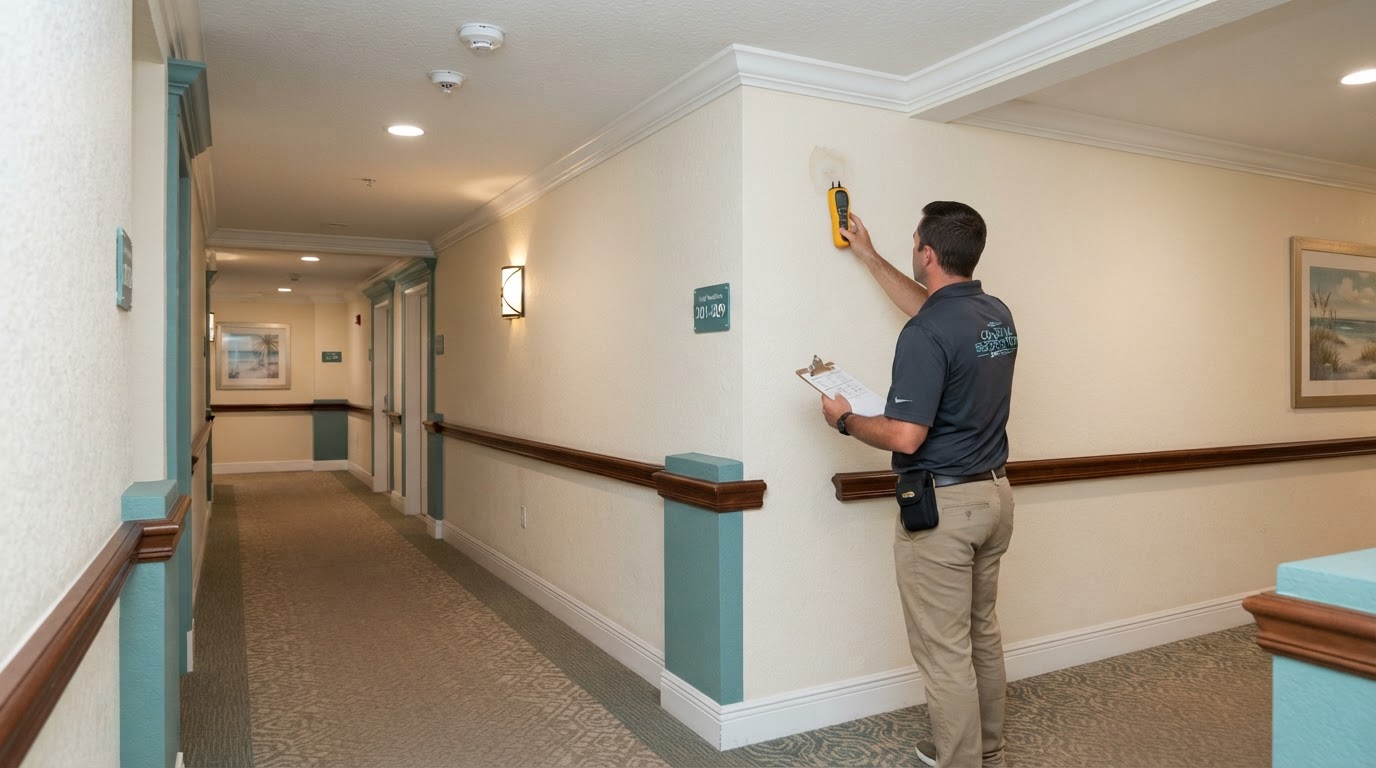
A coordinated response begins with identifying all affected units and common areas — not just the unit with the most visible damage. Authorized access is coordinated through the association or property manager, and the water source is identified and controlled. Safety concerns are addressed first, particularly any electrical hazards in wet common areas or near shared mechanical equipment. Water extraction removes standing water, and moisture mapping establishes the full extent of the migration across units and common elements.
Structural drying addresses the affected building materials — drywall, insulation, flooring, and ceiling assemblies — with monitoring across the affected area. Building material assessments determine what can be dried and salvaged versus what requires removal, and the documentation is organized by affected area so the association and each owner have a clear record of what was damaged and what was done. Occupant communication keeps residents informed, and the restoration scheduling accounts for the logistics of working across multiple units and shared spaces.
Emergency mitigation — the rapid work of removing water and stabilizing the building — is distinct from permanent repair. The mitigation phase protects the property and prevents further damage; the reconstruction phase addresses the drywall, flooring, and finishes that need replacement. In a multiunit loss, the documentation distinguishes between common-element work and unit-owner work, which helps the association and the owners coordinate with their respective insurers.
1. Affected Area Identification
Identify all affected units and common areas, not just the unit with the most visible damage.
2. Access Coordination
Coordinate authorized access through the association or property manager for units and common areas.
3. Source Identification
Identify and control the water source, whether a shared system, common element, or unit component.
4. Safety Assessment
Address safety concerns, particularly electrical hazards in wet common areas or near shared equipment.
5. Water Extraction
Remove standing water from units and common areas.
6. Moisture Mapping
Map the full extent of moisture migration across units and common elements.
7. Structural Drying
Dry affected building materials with monitoring across the affected area.
8. Material Assessment
Assess building materials for salvageability versus removal and document by affected area.
9. Occupant Communication
Communicate with occupants throughout the process and coordinate the restoration schedule.
10. Reconstruction
Coordinate reconstruction, distinguishing common-element work from unit-owner work.
Association Water Damage Restoration Near Port Charlotte
In Port Charlotte and Charlotte County, condominium management and managed residential communities involve common elements, shared interior spaces, and seasonal residents who may be away when a loss occurs. Multiunit restoration logistics — coordinating access across units, documenting damage by component, and communicating with owners who are not on-site — are a regular part of the response. The association's maintenance responsibilities, as defined in the governing documents, shape which building components the association addresses and which the individual owner addresses.
Responsibility is determined by the actual legal and contractual arrangements, not merely by whether water originated inside or outside a unit. A leak from an association-owned common element may make the association responsible for the common-element repair, while the resulting damage to a unit owner's finishes may involve the owner's individual policy. Where Florida law is relevant — condominium statutes, insurance requirements, or association responsibilities — the information should be current and verified, and personalized legal conclusions should come from a qualified Florida legal professional, not from the restoration provider.
Insurance documentation in a multiunit loss benefits from clear organization. Photographs of the damage, moisture readings, a scope organized by unit and common element, and the restoration invoices help the association and each owner maintain an organized loss file. The restoration provider documents the work performed and the affected components; the determination of coverage and responsibility is addressed by the parties, their insurers, and qualified professionals.
Related Water Restoration Services
These related services often appear alongside condo association & hoa water damage response in Port Charlotte properties.
Condo Association & HOA Water Damage FAQs
Clear answers to the questions property owners most often ask about condo association & hoa water damage response in Port Charlotte. Review them, then share your property details so the appropriate next steps can be discussed.
Request Association Water Damage Help
Tell us about the property damage and the location. Submit your inquiry so the appropriate next steps can be discussed.