Trauma & Crime Scene Cleanup Port Charlotte
Trauma and crime scene cleanup addresses the biological contamination left behind after a traumatic incident, once the scene has been officially released by investigating authorities. In Port Charlotte, FL, explore discreet, respectful biohazard cleaning, contaminated material handling, and property restoration throughout Charlotte County.
Request Restoration Help
Tell us about the property damage and the location. Submit your inquiry so the appropriate next steps can be discussed.
Professional Trauma & Crime Scene Cleanup in Port Charlotte
Trauma and crime scene cleanup addresses the biological contamination left behind after a traumatic incident, once the scene has been officially released by the investigating authorities. This work involves the removal of biological material, the decontamination of affected surfaces and materials, and the restoration of the property to a safe condition. It is performed discreetly, with respect for the property owners and authorized representatives involved.
Not every trauma situation is a criminal event. Accidents, medical emergencies, and other non-criminal incidents can leave the same types of biological contamination and require the same professional cleanup. The restoration provider does not perform law enforcement investigations, determine what happened, or interfere with any official process. The role is to address the property damage — the contamination and affected materials — after the scene has been released.
Cleanup after a traumatic incident involves the same principles as other biohazard cleanup: assess the contamination, establish containment, protect workers, remove unsalvageable materials, clean and disinfect salvageable surfaces, handle waste appropriately, and plan the restoration. What is different is the sensitivity of the situation, which requires discreet, respectful communication and an understanding that the people involved are often dealing with a difficult experience.
Contamination Concerns Following Traumatic Incidents
Traumatic incidents can leave biological contamination that affects porous and nonporous materials. These are the considerations that shape the cleanup approach:
How Trauma & Crime Scene Property Cleanup Works
Cleanup begins only after the scene has been released by the investigating authorities and permission to enter has been confirmed. The restoration provider does not enter a scene that is still under investigation, and does not disturb preserved evidence. Once the scene is released, authorized access is established, and an initial contamination assessment identifies the affected areas and the extent of the contamination.
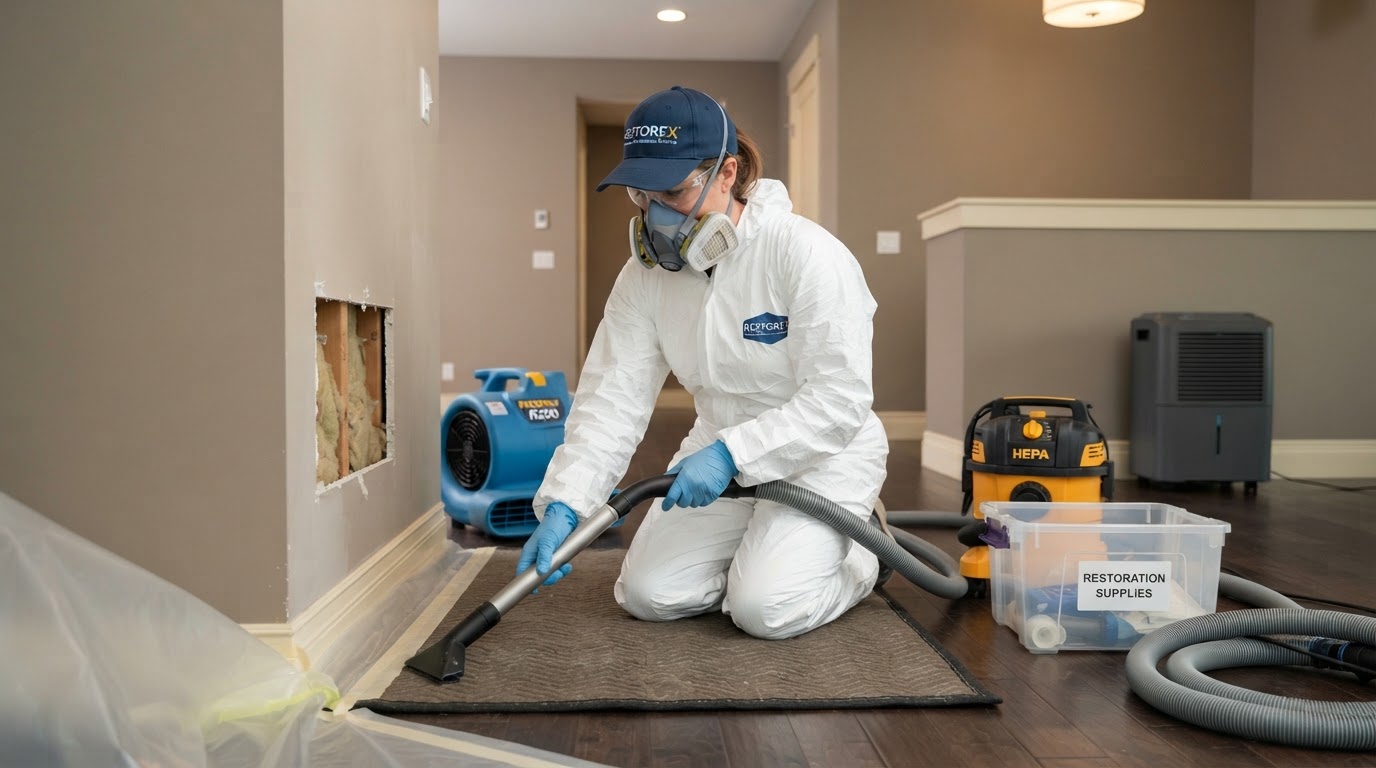
Appropriate containment and worker protection are established, and controlled cleanup proceeds. Biological material is removed, and unsalvageable contaminated materials — porous materials that cannot be effectively decontaminated — are removed under controlled conditions. Salvageable surfaces are cleaned and disinfected, and waste is handled according to applicable requirements. Odor evaluation addresses any persistent odors from the contamination.
Throughout the process, sensitive information is kept private. The cleanup is performed discreetly, and the property is brought toward a safe, re-occupiable condition. Restoration planning addresses any structural materials that were removed. The work is coordinated with the property owner or authorized representative, with clear communication about the scope and the progress.
1. Scene Release & Permission
Confirm the scene has been released by investigating authorities and permission to enter has been established before any work begins.
2. Authorized Access
Confirm access is authorized by the property owner or authorized representative.
3. Contamination Assessment
Assess the affected areas and the extent of contamination, including hidden contamination in porous materials and concealed spaces.
4. Containment & Protection
Establish appropriate containment and worker protection to prevent cross-contamination during cleanup.
5. Controlled Cleanup
Remove biological material from affected surfaces and materials under controlled conditions.
6. Material Removal
Remove unsalvageable contaminated materials that cannot be effectively decontaminated.
7. Cleaning & Disinfection
Clean and disinfect salvageable surfaces using appropriate methods for the contamination present.
8. Waste Handling
Handle and dispose of waste according to applicable requirements and procedures.
9. Odor Evaluation
Evaluate and address any persistent odors from the contamination by treating the sources.
10. Restoration Planning
Plan the restoration of structural materials that were removed to return the property toward a safe condition.
Trauma Scene Cleanup Near Port Charlotte & Charlotte County
Trauma and crime scene cleanup needs arise in residential properties, apartment and condominium buildings, rental units, commercial locations, and property management situations throughout Port Charlotte and Charlotte County. The property type shapes some of the considerations — a multi-unit building may involve shared spaces and neighboring-unit concerns, while a single-family home may have a more contained scope. The cleanup approach adapts to the actual property and conditions.
Authorized estate representatives, property managers, and family members often coordinate these situations, and the cleanup is performed with careful, respectful communication. The people involved are frequently dealing with a difficult experience alongside the practical matters of property recovery, and the cleanup should not add to that difficulty. Discretion is central to the work — the cleanup is performed without drawing attention to the circumstances.
The restoration provider does not perform law enforcement functions, does not determine the cause of an incident, and does not interfere with any investigation or official process. The role is strictly to address the property damage — the biological contamination, affected materials, and odors — after the scene has been released, and to coordinate the restoration of the affected areas with the authorization of the appropriate party.
Related Water Restoration Services
These related services often appear alongside trauma & crime scene cleanup in Port Charlotte properties.
Trauma & Crime Scene Cleanup FAQs
Clear answers to the questions property owners most often ask about trauma & crime scene cleanup in Port Charlotte. Review them, then share your property details so the appropriate next steps can be discussed.
Request Discreet Cleanup Assistance
Tell us about the property damage and the location. Submit your inquiry so the appropriate next steps can be discussed.