Black Mold Remediation & Removal Port Charlotte
Dark-colored mold-like growth is a common concern for Port Charlotte property owners, but appearance alone does not identify a species or establish a health risk. The remediation focus is the moisture source and the affected materials — not the color of the growth. Explore professional assessment, containment, controlled removal, and moisture correction without fear-based claims.
Request Restoration Help
Tell us about the property damage and the location. Submit your inquiry so the appropriate next steps can be discussed.
Black Mold Concerns in Port Charlotte Properties
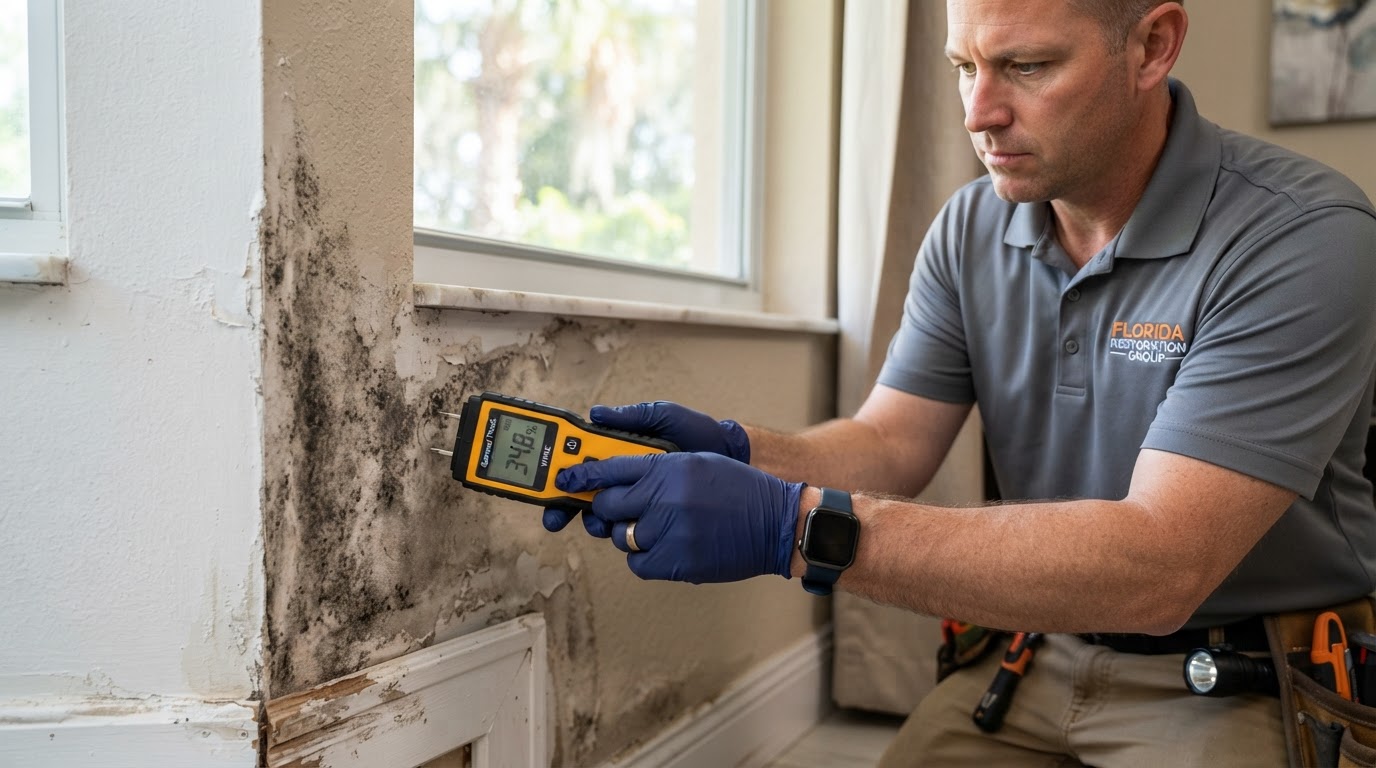
Black mold is a widely used consumer search term for dark-colored mold-like growth found on building materials, and it is one of the most common concerns property owners raise when they discover discoloration on drywall, wood, or behind cabinetry. The term is understandable but imprecise: many different molds can appear dark, and appearance alone does not identify a species or establish a health risk. What is accurate to say is that any visible mold-like growth inside a building reflects available moisture, and that the moisture source — not the color of the growth — is what a remediation plan must address.
It is a mistake to assume that every dark-colored mold is a particular species such as Stachybotrys, or that all dark mold is uniquely dangerous. Color is not identification. A qualified assessment can determine what is present and whether further evaluation is warranted, but the remediation approach for visible mold growth is driven by the extent of the affected area, the materials involved, and the moisture source — not by the color of the growth. The same containment, removal, and moisture-correction principles apply regardless of appearance.
What this page addresses is the practical, evidence-based path for a property owner who has found dark mold-like growth: confirm whether moisture is present, determine the appropriate remediation scope, and proceed without alarmist assumptions about toxicity. The goal is a corrected, dry condition and the safe removal of affected materials.
Signs of Dark Mold Growth & Hidden Water Damage
Dark discoloration on building materials almost always points to a moisture source. These are the conditions that warrant professional evaluation:
How Black Mold Remediation & Containment Works
Remediation of dark mold-like growth follows the same professional sequence as any mold remediation: an initial assessment to confirm the extent and the moisture source, containment of the work area, worker protection, material-specific cleaning or removal, contamination controls, drying, and correction of the moisture source. Porous materials that have supported growth are removed under controlled conditions; suitable non-porous surfaces are cleaned. The moisture problem is corrected so the condition is sustained.
Post-remediation verification may be appropriate depending on the scope. The process is deliberately measured rather than rushed, because the objective is a corrected building condition — not simply the removal of visible discoloration. Where the growth is widespread or concealed, the assessment may recommend sampling to inform the remediation plan, but the remediation work itself is driven by the materials and the moisture, not by the color of what was found.
Initial Assessment
Confirm the extent of the affected area, the materials involved, and the moisture source driving the growth.
Moisture Investigation
Locate the leak, condensation, or humidity source so it can be corrected as part of the scope.
Containment & Protection
Isolate the work area and use appropriate worker protection to prevent cross-contamination.
Material-Specific Removal
Remove contaminated porous materials; clean suitable non-porous surfaces under controlled conditions.
Drying & Source Correction
Dry the structure to verified targets and repair the moisture source so the condition is sustained.
Verification
Conduct post-remediation assessment or verification when appropriate and document the completed scope.
Black Mold Remediation Near Port Charlotte Homes
The moisture conditions that produce dark mold-like growth in Southwest Florida homes are familiar: roof leaks that saturate ceiling drywall, floodwater intrusion that was never fully dried, air conditioning condensation around supply registers and in attic air handlers, and sustained high indoor humidity in closed seasonal properties. Each of these paths creates the damp, low-airflow environment where dark growth appears, and the remediation scope is shaped by which path is involved.
Because color does not identify a species, the practical focus for a Port Charlotte property owner is on the moisture source and the affected materials. A qualified assessment can determine what is present and the appropriate scope, and the remediation proceeds on that evidence rather than on assumptions about toxicity or danger. The objective is a dry, corrected condition and the safe handling of affected materials.
Related Water Restoration Services
These related services often appear alongside black mold remediation in Port Charlotte properties.
Black Mold Remediation FAQs for Port Charlotte Property Owners
Clear answers to the questions property owners most often ask about black mold remediation in Port Charlotte. Review them, then share your property details so the appropriate next steps can be discussed.
Request Black Mold Remediation Help
Tell us about the property damage and the location. Submit your inquiry so the appropriate next steps can be discussed.