
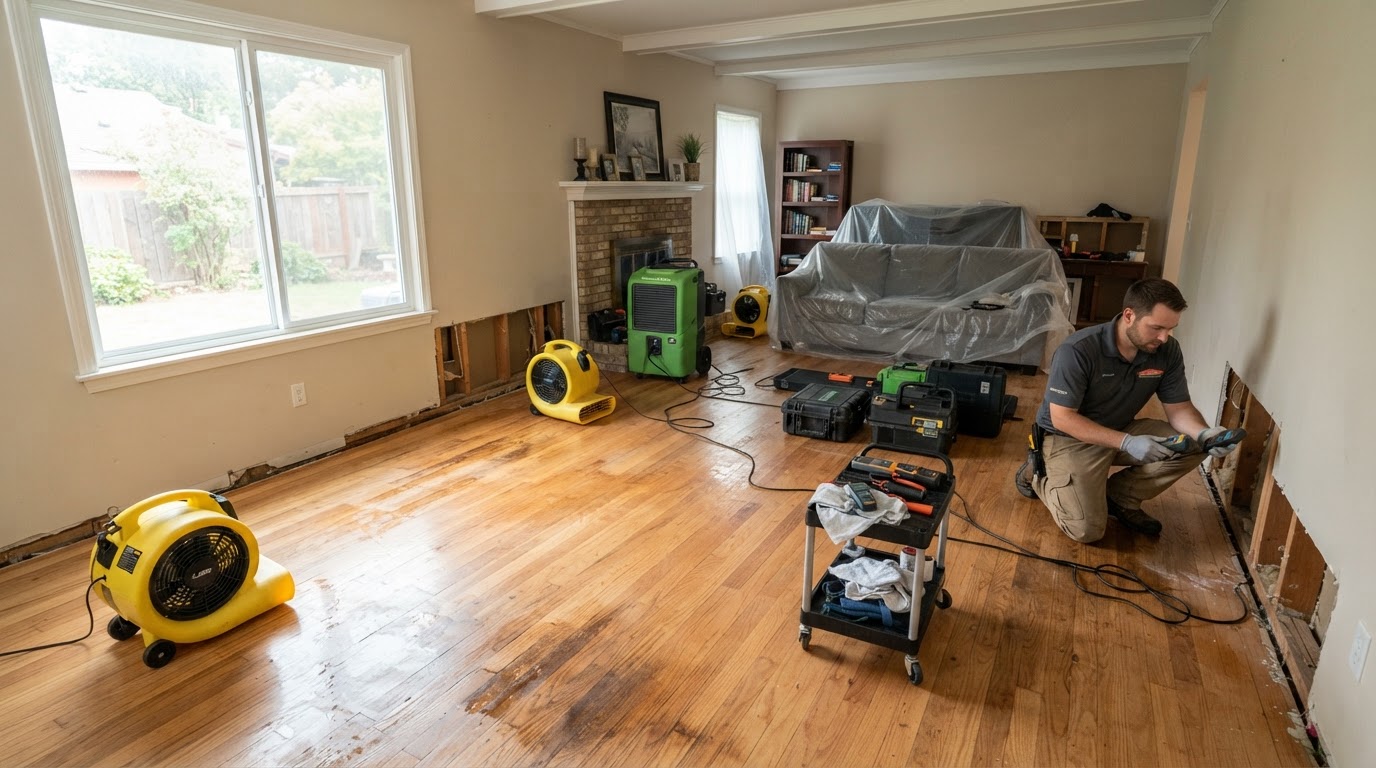
Signs of Hidden Water Damage Behind Walls & Under Floors
Water damage is often hidden behind walls, beneath flooring, and inside cavities where it is not visible from the living space. In Port Charlotte, FL, explore the signs that warrant professional moisture evaluation and why surface appearance is not reliable.
Request Restoration Help
Tell us about the property damage and the location. Submit your inquiry so the appropriate next steps can be discussed.
Signs of Hidden Water Damage
Hidden water damage is water that has migrated into building materials — behind walls, beneath flooring, inside ceiling assemblies, or within cabinetry — where it is not visible from the living space. It is one of the most common and costly problems in residential restoration, because the visible surface often looks unaffected while the structure behind it is saturated. A floor that looks dry can hold significant moisture in the subfloor beneath, and drywall that looks intact can be soaked behind the painted surface.
Water migrates through capillary action, gravity, and air movement. It wicks up drywall behind baseboards, travels along framing members, pools beneath flooring, and collects in wall cavities. The signs are often subtle — a musty odor, a slight discoloration, a soft spot — and they can appear days or weeks after the water entered. By the time hidden moisture is discovered, microbial growth may already be established inside the cavity.
This guide explains the signs that warrant professional moisture evaluation and why surface appearance is not a reliable indicator of whether a structure is dry. Professional moisture evaluation with meters and thermal imaging is how hidden moisture is detected, because visual inspection alone misses it. The guidance here is general; whether hidden moisture is present in any specific property is determined through assessment.
Signs That Warrant Professional Evaluation
These are the indicators that hidden water damage may be present behind walls, beneath flooring, or inside concealed assemblies:
How Hidden Water Damage Is Detected
Hidden water damage is detected with tools that see beyond the visible surface. Moisture meters — pin and pinless types — read the moisture content of materials directly, and thermal imaging cameras show temperature differences that indicate where moisture is cooling a surface through evaporation. Together they map the full scope of hidden moisture: which materials are wet, how wet, and where the moisture has migrated. This is why a surface that looks dry can be confirmed wet — and dried — rather than assumed dry and left to drive microbial growth.
The evaluation also traces the moisture to its source. Hidden water damage is almost always a symptom of an underlying leak, intrusion, or condensation problem — a slow plumbing leak inside a wall, a roof leak that travels along framing, an AC condensate line that is dripping into a ceiling cavity, or condensation from humidity. Correcting the source is essential, because drying the materials without stopping the moisture means the problem returns. Professional evaluation identifies both the hidden moisture and the source so both are addressed.
Visual Assessment
Identify signs — odors, stains, soft materials, warping — that warrant deeper evaluation.
Moisture Meter Readings
Use pin and pinless meters to measure moisture content in walls, floors, and framing.
Thermal Imaging
Use infrared to reveal temperature differences that indicate hidden moisture behind surfaces.
Trace the Source
Identify the underlying leak, intrusion, or condensation problem causing the hidden moisture.
Map the Scope
Document the full affected area — not just the visible signs — to inform the drying plan.
Correct the Source
Resolve the leak or intrusion so moisture does not return after drying.
Dry & Verify
Dry the affected materials with monitored equipment and verify dryness by meter readings.
Hidden Water Damage in Port Charlotte & Charlotte County
In Port Charlotte and Charlotte County, hidden water damage is especially common because of the regional construction and climate. Concrete block walls and slab-on-grade construction can hold and slowly release moisture, and the wall assemblies common in the region can conceal moisture behind baseboards and within cavities. High ambient humidity slows natural drying, which means hidden moisture persists longer and is more likely to drive microbial growth before it is discovered. Seasonal residences add the delayed-discovery pattern: a slow leak in an unoccupied home can saturate wall cavities and flooring for weeks before anyone arrives.
AC condensate overflows are a particularly common hidden-water source in the region — a clogged drain line dripping into a ceiling cavity or wall, staining the drywall below before the moisture is found. The surrounding service areas — Punta Gorda, North Port, Englewood, Deep Creek, and Rotonda West — share the same conditions. The guidance here is general; whether hidden moisture is present in any specific property is determined through professional assessment.
Related Restoration Services
These related services connect to signs of hidden water damage for Port Charlotte properties.
Signs of Hidden Water Damage FAQs
Clear answers to the questions property owners most often ask about signs of hidden water damage in Port Charlotte. Review them, then share your property details so the appropriate next steps can be discussed.
Request Hidden Water Damage Evaluation
Tell us about the property damage and the location. Submit your inquiry so the appropriate next steps can be discussed.