
Mold After Water Damage: Warning Signs, Risks & Prevention
Mold follows moisture. When building materials stay wet long enough, microbial growth can establish — often hidden inside wall cavities or beneath flooring. In Port Charlotte, FL, explore the warning signs, the moisture-mold relationship, and what prevention involves.
Request Restoration Help
Tell us about the property damage and the location. Submit your inquiry so the appropriate next steps can be discussed.
Mold After Water Damage: What to Know
Mold after water damage is a consequence of moisture that remains in building materials long enough for microbial growth to establish. Mold needs moisture, a food source — and building materials like drywall paper, wood, and insulation provide that — and time. A water loss that is extracted and dried promptly limits the conditions mold needs; a loss that sits, or one where hidden moisture is missed, creates the environment mold thrives in. The relationship is direct: moisture control is mold control.
The signs of mold after a water loss are not always visible growth. Musty odors, moisture staining, soft or discolored drywall, and persistent dampness can all indicate that moisture has remained long enough to support microbial activity. Mold can grow inside wall cavities, beneath flooring, and in concealed assemblies where it is not visible from the living space — which is why a surface that looks dry is not a reliable indicator that the structure is dry. Professional moisture evaluation with meters and thermal imaging is how hidden moisture is detected.
This guide explains the warning signs, the moisture-mold relationship, and the prevention steps that matter after a water loss. It does not claim that all mold requires laboratory testing, nor that every water loss leads to mold — it explains what to watch for and when professional evaluation helps. Florida licensing considerations for mold remediation are noted where relevant; no license or certification is claimed for the business without verification.
Warning Signs of Mold After a Water Loss
These are the indicators that moisture may have remained long enough to support microbial growth after water damage:
Preventing Mold After Water Damage
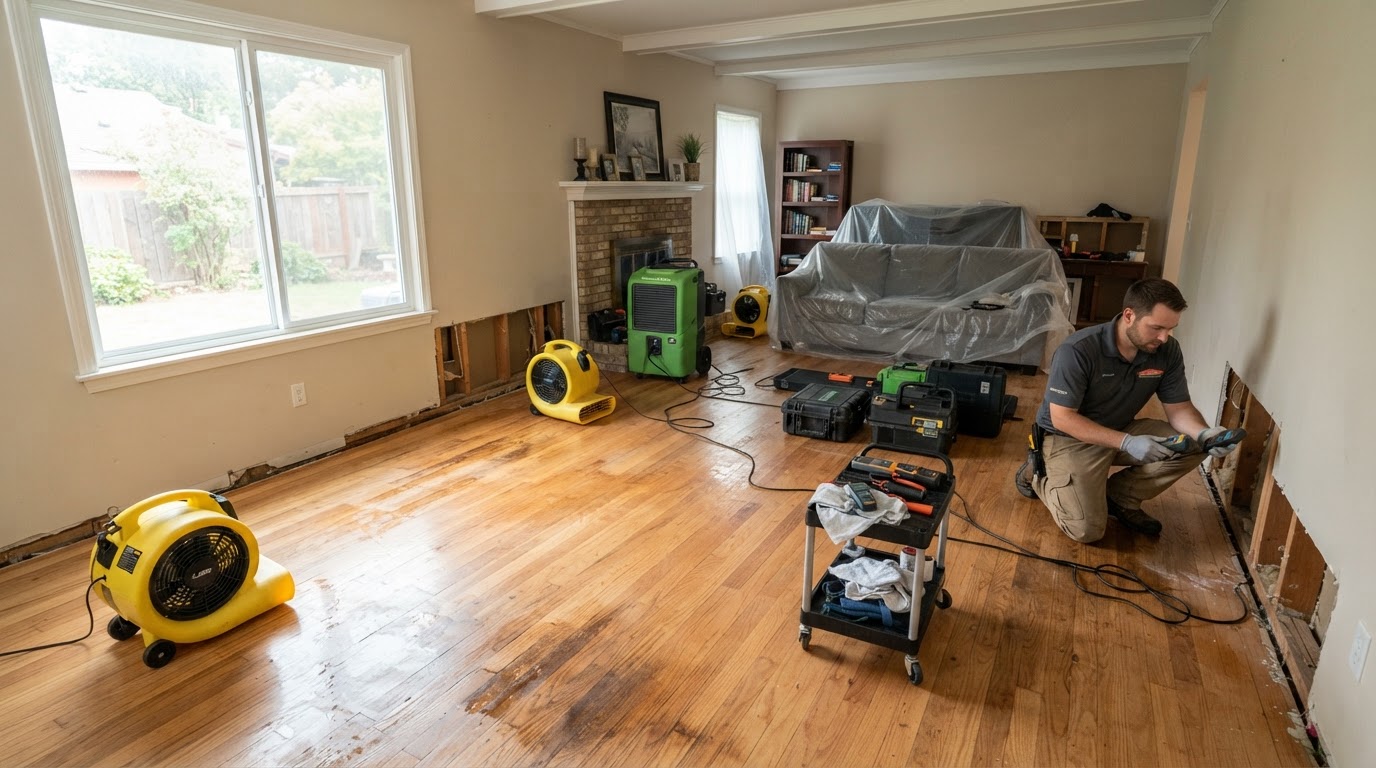
Mold prevention after a water loss is fundamentally moisture control. The sooner standing water is extracted and building materials are dried to an appropriate standard, the less opportunity mold has to establish. That means prompt extraction, monitored structural drying with air movers and dehumidification, and verification by moisture meter that concealed assemblies are dry — not just the visible surfaces. A floor that looks dry can hold significant moisture in the subfloor beneath, and drywall that looks intact can be saturated behind the painted surface.
Correcting the underlying moisture source is essential. If the leak, condensation, or intrusion that caused the water damage is not resolved, the moisture returns and the mold risk persists regardless of drying. Hidden moisture is the other common cause of post-loss mold: moisture that migrated behind baseboards, into wall cavities, or beneath flooring and was not addressed because the visible surface looked dry. Professional moisture evaluation maps that hidden scope so it is dried, not missed. When mold is already present, professional remediation — containment, removal of affected materials, and cleaning — addresses the established growth, and the underlying moisture source is corrected so it does not return.
Extract Promptly
Remove standing water as soon as it is safe — every hour water sits, it soaks deeper into materials.
Dry the Structure
Stage air movers and dehumidification to pull absorbed moisture back out of building materials.
Map Hidden Moisture
Use moisture meters and thermal imaging to find moisture behind walls and beneath flooring that visual inspection misses.
Correct the Source
Resolve the leak, condensation, or intrusion that caused the water damage so moisture does not return.
Verify Dryness
Confirm materials reach an appropriate dry standard by meter readings, not by appearance.
Watch for Signs
Monitor for odors, staining, or recurring dampness in the days and weeks after the loss.
Evaluate Mold if Present
If mold is visible or suspected, arrange professional assessment and remediation where appropriate.
Mold After Water Damage in Port Charlotte & Charlotte County
In Port Charlotte and Charlotte County, the mold-after-water-damage conversation is shaped by climate. High ambient humidity extends the window in which wet materials stay vulnerable to microbial growth — a structure that might dry on its own in an arid climate holds moisture in wall cavities and subfloor assemblies for weeks here. Slab-on-grade construction means moisture can be held in the concrete and released slowly, and the wall assemblies common in the region can conceal moisture behind baseboards. Seasonal residences add the delayed-discovery pattern: a loss that ran for days or weeks before the owner arrived often means mold is already established by the time it is found.
The surrounding service areas — Punta Gorda, North Port, Englewood, Deep Creek, and Rotonda West — share the same conditions. The guidance here is general; whether mold is present and what remediation is appropriate for any specific property is determined through assessment. No Florida mold remediation license is claimed for the business without verification.
Related Restoration Services
These related services connect to mold after water damage for Port Charlotte properties.
Mold After Water Damage FAQs
Clear answers to the questions property owners most often ask about mold after water damage in Port Charlotte. Review them, then share your property details so the appropriate next steps can be discussed.
Request Mold Evaluation Assistance
Tell us about the property damage and the location. Submit your inquiry so the appropriate next steps can be discussed.