
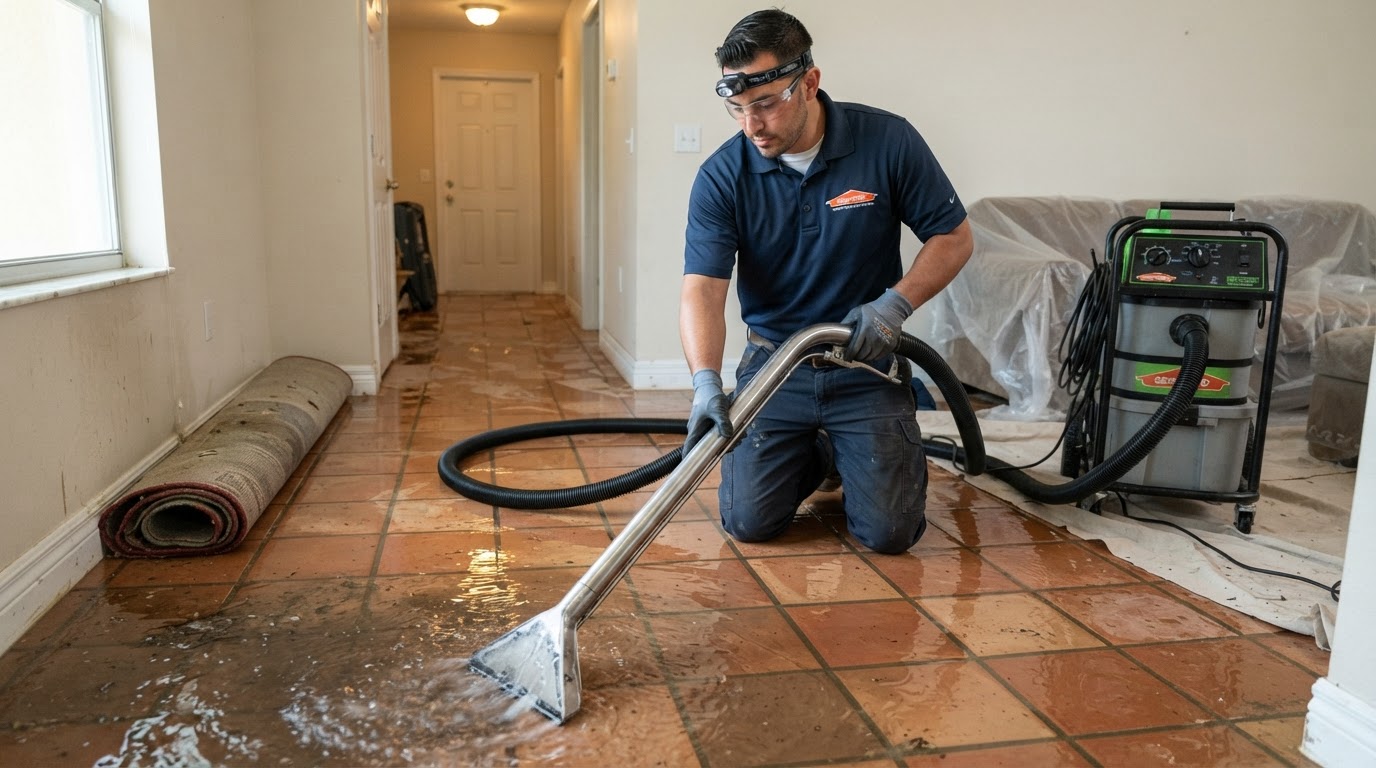
Washing Machine Overflow Water Damage Cleanup in Port Charlotte, FL
A washing machine is one of the higher-volume water sources in a home, and when a supply line bursts, a drain backs up, or a pump fails, the water can spread quickly into the laundry room and adjacent spaces. In Port Charlotte, FL, explore how washer overflows damage flooring, subfloors, and drywall, and how the water is extracted and the structure dried.
Request Restoration Help
Tell us about the property damage and the location. Submit your inquiry so the appropriate next steps can be discussed.
Washing Machine Overflows & Laundry Room Flooding
A washing machine is one of the higher-volume water sources in a home, and when it fails the water can spread quickly. A burst supply line releases pressurized water that floods the laundry room and tracks into adjacent spaces within minutes. A drain line backup or an overflowing wash cycle sends water across the floor and beneath the baseboards. A pump failure or an internal hose leak is a slower release that can run behind the machine and into the wall before it is noticed. Each path leaves moisture in a different set of materials, and each needs a different drying scope.
Because the laundry room often shares a wall with a hallway, bathroom, or garage — and in two-story homes sits above a finished room below — the water does not stay confined to the laundry space. Water migrates beneath floating flooring, behind baseboards, through wall cavities, and, in multi-level buildings, down through the ceiling of the room below. The visible puddle in the laundry room is usually a fraction of the moisture that has already traveled into the surrounding assemblies, which is why the assessment maps the moisture beyond the room of origin.
The contamination level of the water depends on the source and conditions. A fresh supply-line burst is clean water; a drain-line backup or a wash cycle that has carried soil and detergent can be grey water; a long-standing leak that has sat in contact with flooring and wall materials may carry elevated biological content. The water is not automatically classified as clean simply because it came from a washing machine — the category is determined by the source and what the water has contacted, and it shapes the salvage and drying decisions.
How Washer Flooding Spreads
Washing machine water moves fast and travels beneath and behind the surfaces it reaches. These are the conditions that shape a laundry room flood cleanup scope:
Laundry Room Water Extraction & Structural Drying
Restoration begins with safe shutoff of the washing machine's water supply and power, so the leak stops and there is no electrical hazard from water near the appliance or outlet. If water has reached outlets or other appliances, power to the circuit is cut at the breaker only if the panel is safely accessible. Standing water is extracted with appropriate equipment, and a moisture inspection maps how far the water has traveled — beneath the flooring, behind the baseboards, into the wall cavity, and, in multi-level homes, down to the ceiling below.
Flooring that has absorbed water and warped or swelled is evaluated for removal to dry the subfloor beneath it. Drywall and baseboards that have wicked moisture are assessed for drying in place versus removal, and the wall cavity is inspected for wet insulation. Air movers and dehumidification are set up and monitored to verified moisture targets, with particular attention to the subfloor and the framing that absorbed water. The scope is documented to support the flooring, drywall, and finish repair that follows.
1. Safe Shutoff
Shut the washing machine water supply and power; cut the circuit at the breaker only if safely accessible.
2. Water Extraction
Remove standing water from the laundry room and any adjacent rooms it has reached.
3. Moisture Mapping
Map the moisture beneath flooring, behind baseboards, into wall cavities, and through ceilings below.
4. Flooring & Subfloor Evaluation
Assess flooring and subfloor for salvageability versus removal to access and dry the subfloor.
5. Structural Drying
Operate air movers and dehumidification on the subfloor, drywall, and framing, monitored to verified targets.
6. Restoration Planning
Document the scope and plan flooring, drywall, and finish repair to return the area to pre-loss condition.
Laundry Room Water Damage Restoration Near Port Charlotte
In Port Charlotte and Charlotte County, laundry rooms are often located in interior hallways, garages, or utility closets — and each location changes how far the water travels before it is noticed. A laundry room adjacent to a finished garage can send water across the garage floor and into the drywall behind the machines. An upstairs laundry in a two-story home can leak down through the ceiling of the room below, which means the drying scope extends to a second floor. The assessment accounts for the migration path, not just the room of origin.
Florida humidity extends the drying timeline. A subfloor and drywall that would dry quickly in an arid climate can hold moisture for days or weeks here, which raises the risk of microbial growth in the wall cavity and beneath the flooring. A methodical drying plan with daily monitoring is what protects the building materials and the owner's repair investment, and the documentation supports both the restoration scope and any insurance process.
Related Water Restoration Services
These related services often appear alongside washing machine overflow water damage in Port Charlotte properties.
Washing Machine Overflow Water Damage FAQs
Clear answers to the questions property owners most often ask about washing machine overflow water damage in Port Charlotte. Review them, then share your property details so the appropriate next steps can be discussed.
Request Washing Machine Flood Cleanup
Tell us about the property damage and the location. Submit your inquiry so the appropriate next steps can be discussed.