Large-Loss Property Restoration in Port Charlotte, FL
When property damage is extensive enough to affect large areas, multiple building systems, or numerous rooms, a coordinated large-loss restoration response is required. In Port Charlotte, FL, explore major water, fire, and storm damage assessment, structural drying, and recovery planning throughout Charlotte County.
Request Restoration Help
Tell us about the property damage and the location. Submit your inquiry so the appropriate next steps can be discussed.
What Is Large-Loss Property Restoration?
Large-loss property restoration is the coordinated response required when property damage is extensive enough to affect large floor areas, multiple building systems, numerous rooms, or several units within a single project. A routine residential water loss and a large-loss event share the same underlying restoration principles — source control, water removal, structural drying, cleaning, and reconstruction — but a large loss multiplies the coordination, equipment, documentation, and scheduling that the project demands.
The distinction is one of scale and complexity. A large loss may involve standing water across an entire building, saturated subfloor assemblies throughout multiple levels, widespread smoke and soot contamination after a major fire, or hurricane damage that compromises the building envelope across a whole property. In each case the restoration plan has to account for the full affected scope at once, not room by room in isolation, because moisture, contamination, and structural damage move between connected spaces and building systems.
Large-loss work is not a different service so much as a different project profile. It requires a broader initial assessment, more extensive stabilization and drying capacity, closer coordination with the property owner or manager and their insurer, and a longer timeline from emergency mitigation through final reconstruction. The information on this page explains how that coordination works for properties in Port Charlotte and the surrounding communities.
Common Large-Loss Scenarios
Large-loss restoration is typically triggered by damage that affects a substantial portion of a property rather than a single room or fixture:
Large-Loss Restoration Process
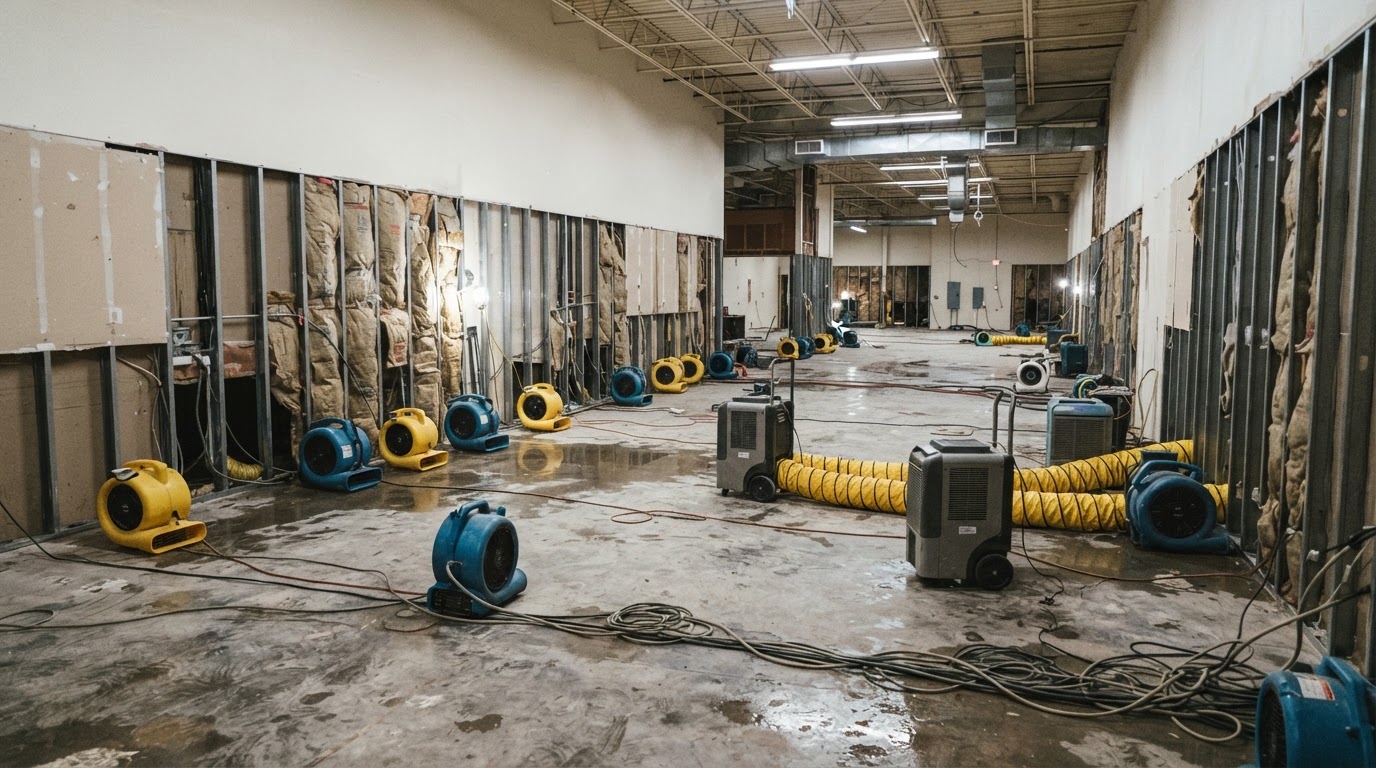
A large-loss project begins with a broader initial assessment than a contained loss, because the scope has to be mapped across the full affected area before equipment and labor are staged. The assessment evaluates safety, the category and extent of water or contamination, the building systems and materials affected, and the stabilization measures needed to prevent further damage. From that scope, the mitigation plan is built: water extraction, containment where contamination is present, and the drying and dehumidification capacity required for the affected area.
Drying a large affected area is monitored over multiple visits with moisture meters and thermal imaging, and the equipment layout is adjusted as conditions change. Materials are evaluated for salvageability versus replacement as the drying progresses, and the full scope is documented for the property owner and their insurer throughout. When the structure reaches an appropriate dry standard, the project transitions from mitigation into reconstruction planning — the repair and build-back phase that returns the property to a finished, usable condition.
Throughout, the coordination is what defines a large-loss project. The restoration provider works with the property owner or manager, the insurer, and any qualified trades required for specialized systems, and the documentation supports the insurance process and the reconstruction that follows. No specific timeline is promised — the duration depends on the scope, the materials, the extent of saturation, and the reconstruction required.
1. Initial Damage Assessment
Evaluate safety, water category, contamination, affected materials, and the full scope across the property.
2. Emergency Stabilization
Contain the loss, remove standing water, and protect the property from further exposure where offered.
3. Large-Scale Water Extraction
Remove standing water from extensive affected areas and map the full moisture scope.
4. Structural Drying & Dehumidification
Stage drying equipment across the affected area and monitor moisture to verified targets.
5. Fire & Smoke Cleanup (if applicable)
Address soot, smoke, and odor contamination alongside water damage where a fire was involved.
6. Contents & Equipment Evaluation
Inventory, document, and evaluate affected contents and equipment for salvage or replacement.
7. Reconstruction Planning
Transition from mitigation to repair planning for materials that require replacement.
8. Insurance Documentation
Compile photographs, estimates, scope records, and progress documentation for the claim.
Large-Loss Restoration in Port Charlotte & Charlotte County
In Port Charlotte and the surrounding Charlotte County communities, large-loss events are frequently tied to hurricanes and seasonal storms. Wind-driven rain, roof damage, and storm surge can compromise a building envelope across an entire property at once, and the combination of slab construction, high humidity, and seasonal occupancy means that moisture can persist in structural assemblies long after the visible water is gone. A large-loss assessment here accounts for those regional conditions rather than assuming a fast, arid-climate drying curve.
Commercial properties — office buildings, retail centers, apartment communities, and warehouses — add the layer of business interruption to a large loss. The restoration plan may need to coordinate around occupied spaces, tenant access, inventory, and operating schedules, and the documentation supports both the property claim and the operational recovery. The surrounding service areas, including Punta Gorda, North Port, Englewood, and Deep Creek, are part of the same regional response footprint.
Related Water Restoration Services
These related services often appear alongside large-loss property restoration in Port Charlotte properties.
Large-Loss Property Restoration FAQs
Clear answers to the questions property owners most often ask about large-loss property restoration in Port Charlotte. Review them, then share your property details so the appropriate next steps can be discussed.
Request Large-Loss Restoration Help
Tell us about the property damage and the location. Submit your inquiry so the appropriate next steps can be discussed.