Emergency Disaster Response & Stabilization in Port Charlotte, FL
After water, fire, or storm damage, the first priority is assessing the property and limiting further exposure. In Port Charlotte, FL, explore emergency stabilization, source control, water extraction, and the distinction between immediate mitigation and later reconstruction throughout Charlotte County.
Request Restoration Help
Tell us about the property damage and the location. Submit your inquiry so the appropriate next steps can be discussed.
What Is Emergency Property Stabilization?
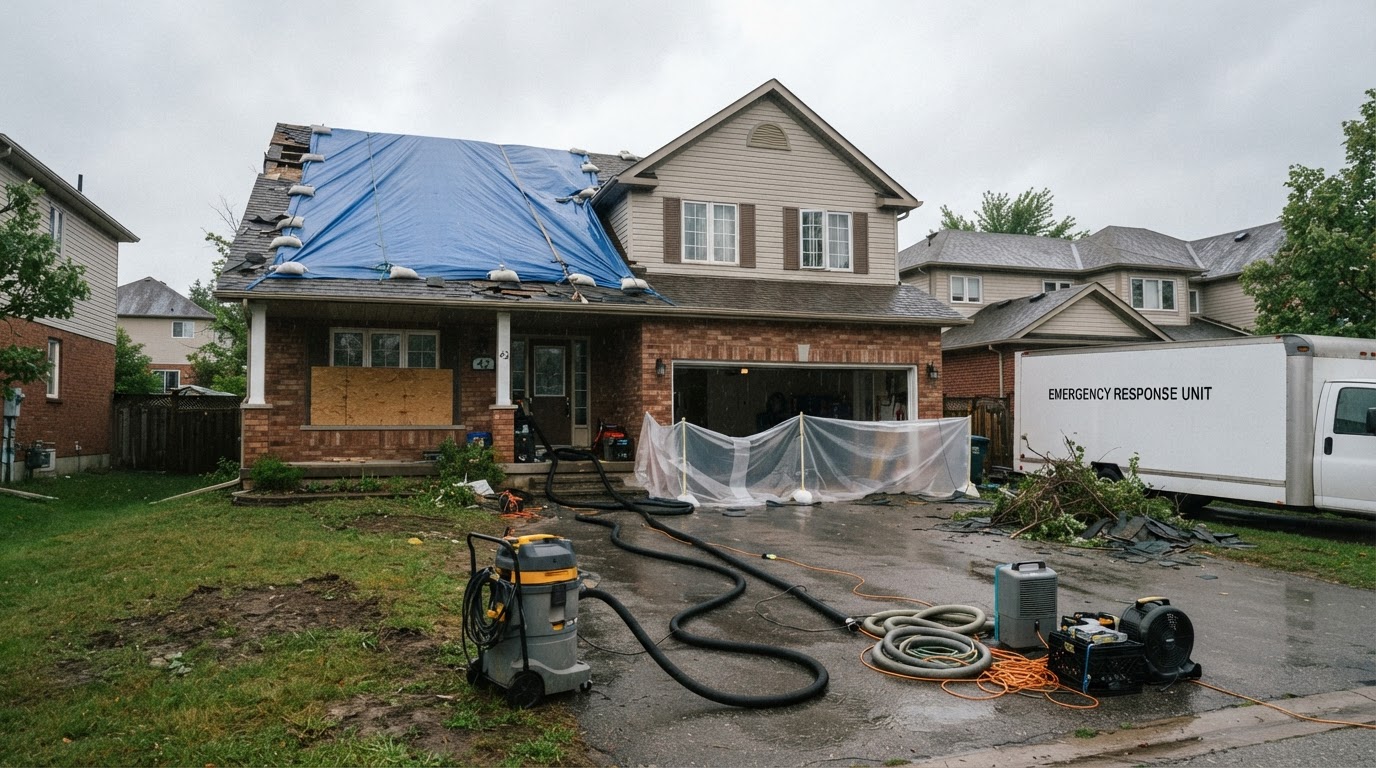
Emergency property stabilization is the immediate, temporary work performed after water, fire, or storm damage to stop the loss from getting worse before full restoration begins. It is not the repair or reconstruction of the property — it is mitigation: controlling the source of the water, removing standing water, protecting the building from further exposure, and documenting the damage so the restoration plan and the insurance claim can proceed from an accurate starting point.
The distinction between mitigation and reconstruction matters because the two phases serve different purposes and follow different timelines. Mitigation is urgent and protective — it limits the extent of the loss and prevents secondary damage such as continued moisture migration or microbial growth. Reconstruction is the later work of replacing damaged drywall, flooring, insulation, and finishes once the structure is dry and stable. A property that skips stabilization and jumps to repairs often ends up with hidden moisture and recurring problems.
This page explains what emergency stabilization involves, when it is appropriate, and how it fits into the broader restoration process for properties in Port Charlotte and the surrounding communities. No 24/7 availability or specific response time is promised unless verified — the information here describes the stabilization process itself, not a guaranteed dispatch commitment.
Emergency Damage Scenarios
Emergency stabilization is typically called for after incidents that are actively causing damage or that will worsen without prompt attention:
Emergency Restoration Process
Emergency response begins with safety. Before any stabilization work, the property is evaluated for electrical hazards, contaminated water, unstable structures, and any conditions that would make entry unsafe. Where fire or structural damage is involved, the property is not re-entered until the fire department or appropriate authority has cleared it. The source of the water is identified and stopped where possible, and electrical service to affected areas is shut off if it is safe to do so.
Once the property is safe to enter, stabilization proceeds: standing water is extracted, the moisture scope is mapped, and temporary protective measures — containment, isolation of contaminated areas, and protection from continued intrusion — are put in place where offered. The damage is photographed and documented to establish the baseline scope for the restoration plan and the insurance claim. From there, the project transitions into the drying, cleaning, and reconstruction phases as the conditions require.
Mitigation and reconstruction are coordinated but separate. The stabilization work is completed — or sufficiently advanced — before repair work begins, because repairing over an unresolved moisture source or undried structure leads to recurring damage. The documentation from the emergency phase carries through the entire project to support the insurer and the property owner.
1. Safety Evaluation
Assess electrical hazards, contaminated water, and structural stability before any entry.
2. Source Control
Identify and stop the water source, and shut off electrical service to affected areas if safe.
3. Water Extraction
Remove standing water and begin mapping the full moisture scope.
4. Containment & Protection
Isolate contaminated areas and protect the property from continued exposure where offered.
5. Damage Documentation
Photograph and document the damage to establish the baseline scope for restoration and the claim.
6. Moisture Evaluation
Map moisture migration into structural assemblies to inform the drying plan.
7. Transition to Restoration
Hand off to drying, cleaning, and reconstruction phases as the conditions require.
Emergency Response in Port Charlotte & Charlotte County
In Port Charlotte and Charlotte County, emergency stabilization is most often needed after hurricanes, seasonal storms, and the plumbing failures that accompany them. Wind-driven rain and roof damage can allow water to enter a building continuously until the opening is protected, and storm surge and heavy rainfall can flood low-lying properties across the region. The combination of slab construction and high humidity means that even after standing water is removed, moisture persists in structural assemblies and drives secondary damage if it is not addressed promptly.
The surrounding service areas — including Punta Gorda, North Port, Englewood, Deep Creek, and Rotonda West — share the same storm exposure and seasonal-occupancy considerations. A property that sits unoccupied for part of the year can sustain a loss that goes undiscovered for days or weeks, by which point the stabilization scope is larger and the documentation more involved. The emergency response accounts for those regional conditions rather than assuming a simple, contained loss.
Related Water Restoration Services
These related services often appear alongside emergency disaster response & stabilization in Port Charlotte properties.
Emergency Disaster Response FAQs
Clear answers to the questions property owners most often ask about emergency disaster response & stabilization in Port Charlotte. Review them, then share your property details so the appropriate next steps can be discussed.
Request Emergency Restoration Help
Tell us about the property damage and the location. Submit your inquiry so the appropriate next steps can be discussed.