
How Much Does Water Damage Restoration Cost in Port Charlotte, FL?
There is no universal flat rate for water damage restoration — every loss is different. In Port Charlotte, FL, explore the variables that shape restoration cost, from water source and contamination to materials and reconstruction, and what a credible estimate should include.
Request Restoration Help
Tell us about the property damage and the location. Submit your inquiry so the appropriate next steps can be discussed.
What Determines Water Damage Restoration Cost?
There is no universal flat rate for water damage restoration because every loss is different. The cost depends on the specific circumstances of the damage — how much water entered the building, where it came from, how long it sat, what materials it contacted, and what reconstruction is required after the structure is dry. A contained supply-line leak caught within an hour and a whole-home flood discovered after a week are not the same project, and they do not carry the same scope.
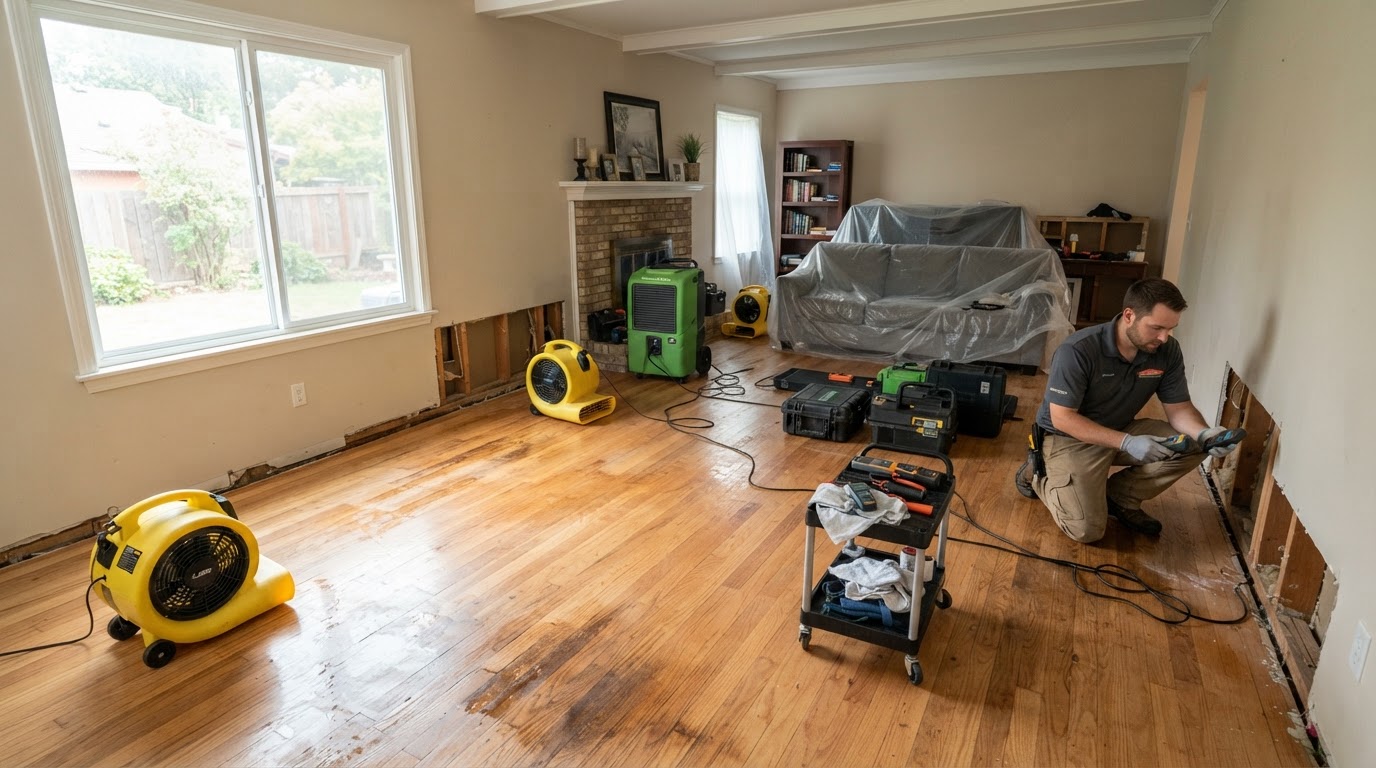
Restoration cost is built from two related phases. Mitigation is the emergency work of removing water, stabilizing the structure, and drying the building — extraction, equipment, monitoring, and demolition of unsalvageable materials. Reconstruction is the later repair work of replacing drywall, insulation, flooring, and finishes once the structure is dry. A credible estimate accounts for both, because skipping the drying phase to move straight into repairs is a common cause of recurring mold and hidden damage.
This guide explains the variables that affect cost so a property owner can understand what an estimate should include and why two losses that look similar on the surface can carry materially different scopes. No local price ranges are invented here — restoration cost is determined through a property-specific assessment, not a published rate card.
What Affects Water Damage Restoration Cost?
These are the variables that shape the scope of a water damage restoration project and, with it, the cost:
How Water Damage Restoration Cost Is Built
A restoration estimate is built from a property-specific assessment, not a flat rate. The provider evaluates the water source and contamination category, maps the full moisture scope — including hidden moisture behind walls and beneath flooring — and identifies which materials can be dried in place versus which require removal. From that scope, the estimate accounts for extraction labor, drying equipment and monitoring, demolition where needed, and the reconstruction that follows.
The estimate should distinguish mitigation from reconstruction so the property owner understands what is emergency cleanup and what is later repair work. It should also document the moisture readings and drying plan, because that record supports both the scope and any insurance documentation. A cost estimate that cannot be determined without an inspection is a sign of a credible process, not a deficiency — the variables above cannot be accurately assessed remotely.
Damage Assessment
Evaluate water source, contamination category, and the full visible and hidden moisture scope.
Scope Development
Identify which materials can be dried in place and which require removal, and map the drying plan.
Water Removal
Account for extraction labor and equipment based on standing water volume and accessibility.
Structural Drying
Stage air movers and dehumidification, and monitor moisture over multiple visits to verified targets.
Material Handling
Demolish and dispose of unsalvageable materials; document what was removed and why.
Documentation
Compile moisture readings, scope records, and photographs for the estimate and insurance claim.
Reconstruction Estimate
Where repairs are required, scope the drywall, insulation, flooring, and finish work separately.
Water Damage Restoration Cost in Port Charlotte & Charlotte County
In Port Charlotte and Charlotte County, several regional conditions shape restoration cost. Slab-on-grade construction means water does not drain into a basement — it spreads across the slab and into wall assemblies, which can extend the drying scope. High ambient humidity slows natural drying and lengthens the equipment-run period that drives cost. And the large share of seasonal and snowbird residences means a loss can run undiscovered for days or weeks, broadening the affected scope before anyone arrives.
Commercial losses add the layer of business interruption. A flooded office, retail store, or apartment community may require coordination around occupied spaces, tenant access, and inventory, which changes the resources and scheduling the project demands. The surrounding service areas — Punta Gorda, North Port, Englewood, Deep Creek, and Rotonda West — share the same regional cost drivers. No specific cost figure is provided here; cost is determined through a property-specific assessment.
Related Restoration Services
These related services connect to water damage restoration cost guide for Port Charlotte properties.
Water Damage Restoration Cost FAQs
Clear answers to the questions property owners most often ask about water damage restoration cost guide in Port Charlotte. Review them, then share your property details so the appropriate next steps can be discussed.
Request Water Damage Restoration Assistance
Tell us about the property damage and the location. Submit your inquiry so the appropriate next steps can be discussed.