Reconstruction After Water & Fire Damage: What Property Owners Should Know
Reconstruction is the repair phase that follows mitigation and drying — replacing drywall, insulation, flooring, and finishes to return a property to a finished condition. In Port Charlotte, FL, explore what reconstruction involves, how it differs from emergency cleanup, and what to expect.
Request Restoration Help
Tell us about the property damage and the location. Submit your inquiry so the appropriate next steps can be discussed.
Reconstruction After Water & Fire Damage
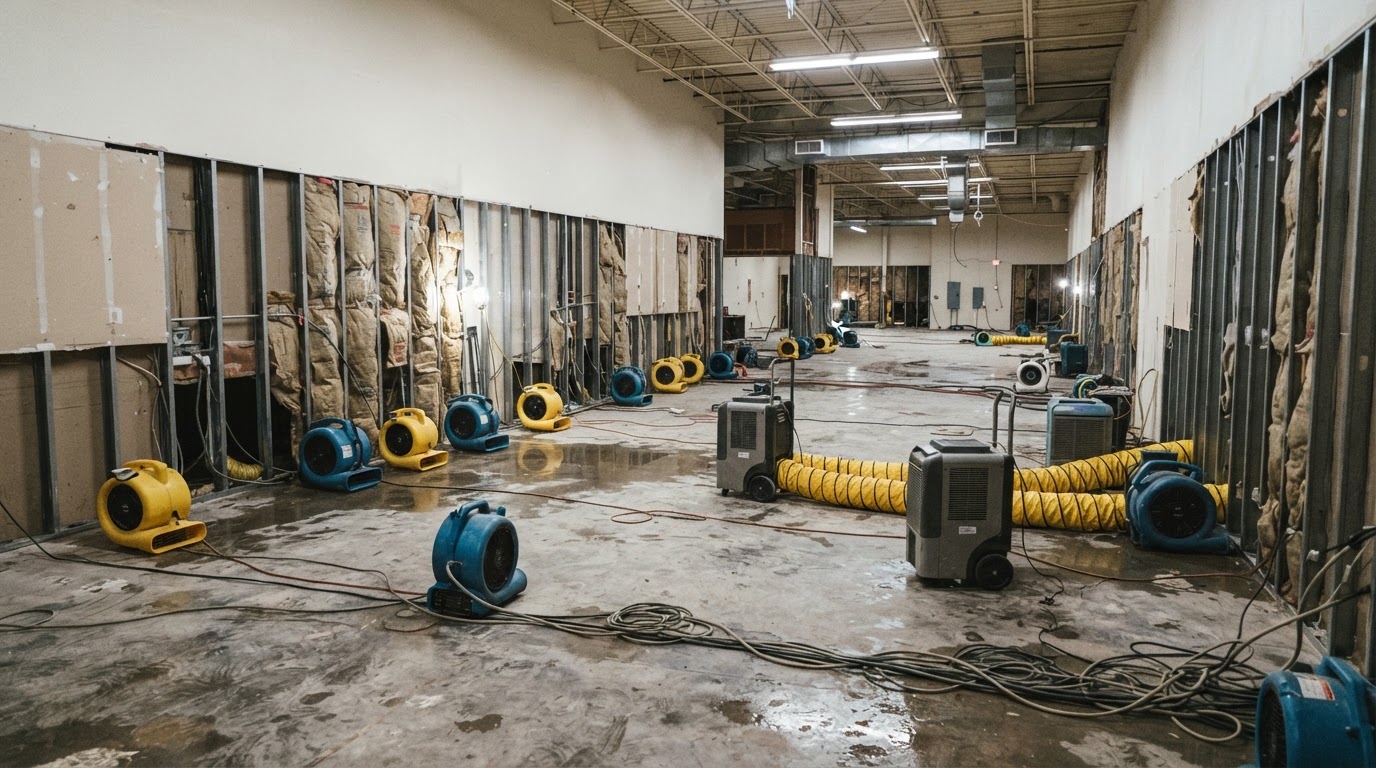
Reconstruction is the repair and build-back phase that follows mitigation — the emergency work of extracting water, drying the structure, and removing unsalvageable materials. It is a separate project phase with a separate scope, and it begins only after the structure is confirmed dry and stable. Installing new drywall, insulation, or flooring over a structure that still holds moisture traps that moisture and leads to recurring mold and material failure, which is why reconstruction is sequential, not simultaneous with drying.
After water damage, reconstruction involves replacing the drywall, insulation, flooring, trim, and finishes that were removed during mitigation because they could not be dried or were contaminated. After fire damage, reconstruction may also involve replacing heat-damaged materials, soot-contaminated finishes, and structural components that were compromised by the fire. In both cases, the reconstruction scope is built from the mitigation documentation — what was removed and why — and the structure is returned to a finished, usable condition.
This guide explains what reconstruction involves, how it differs from mitigation, and what property owners should know about the process, permits, and sequencing. It does not claim that the business holds a general contractor license unless verified, and it does not imply that structural damage can be diagnosed without qualified assessment. Where specialized trades are required — electrical, plumbing, mechanical, or structural — they are coordinated with appropriately qualified professionals.
What Reconstruction Involves
These are the elements that typically make up a reconstruction scope after water or fire damage:
From Mitigation to Reconstruction
Reconstruction follows a deliberate sequence. First, the mitigation and drying phase is completed — water is extracted, the structure is dried to a verified standard, and unsalvageable materials are removed and documented. Only when the structure is confirmed dry and stable does reconstruction begin. The reconstruction scope is built from the mitigation documentation: which materials were removed, why, and what the structure needs to return to a finished condition.
Where the damage involved structural components, electrical systems, plumbing, or mechanical systems, those are evaluated by appropriately qualified professionals before reconstruction. Certain reconstruction work in Florida may require permits and code-compliant installation, and a property owner may wish to confirm a contractor's licensing status. No general contractor license is claimed for this business without verification. The reconstruction is coordinated with the property owner, the insurer where applicable, and any qualified trades required for specialized systems, and the project is sequenced so that each phase — framing, insulation, drywall, finish, flooring — follows the one before it.
Complete Mitigation
Finish extraction, drying, and removal of unsalvageable materials; verify the structure is dry and stable.
Scope Development
Build the reconstruction scope from the mitigation documentation — what was removed and what the structure needs.
Professional Evaluations
Where structural, electrical, plumbing, or mechanical systems were affected, arrange evaluation by qualified professionals.
Permit & Trade Coordination
Where required, coordinate permits and qualified trades for code-compliant installation.
Framing & Structural Repairs
Repair framing, sheathing, and structural components damaged by water or fire.
Insulation & Drywall
Install replacement insulation and drywall in the affected cavities and ceilings.
Finish & Flooring
Complete trim, paint, finish work, and flooring installation to restore the space.
Final Inspection
Review the completed reconstruction and close out the project with the property owner and insurer.
Reconstruction in Port Charlotte & Charlotte County
In Port Charlotte and Charlotte County, reconstruction after water and fire damage is shaped by regional construction. Concrete block and slab-on-grade construction means wall assemblies and slab connections are common repair points, and the finishes common in Southwest Florida homes — tile, laminate, engineered flooring, and drywall over block — each have their own replacement considerations. Hurricane damage adds roof, window, and envelope reconstruction, and the high humidity means drying must be verified before any finish work begins.
The surrounding service areas — Punta Gorda, North Port, Englewood, Deep Creek, and Rotonda West — share the same construction and climate considerations. Certain reconstruction work in Florida may require permits and qualified contractors, and a property owner may wish to confirm licensing status directly. No general contractor license is claimed for this business without verification. The guidance here is general; the reconstruction scope for any specific property is determined through assessment.
Related Restoration Services
These related services connect to reconstruction after water & fire damage for Port Charlotte properties.
Reconstruction After Water & Fire Damage FAQs
Clear answers to the questions property owners most often ask about reconstruction after water & fire damage in Port Charlotte. Review them, then share your property details so the appropriate next steps can be discussed.
Request Reconstruction Assistance
Tell us about the property damage and the location. Submit your inquiry so the appropriate next steps can be discussed.